Sanjeev Ahluwalia | Passport: A New Trauma! Who Is Really An Indian?

Since 2023, a diluted version of dual citizenship is available to persons of Indian origin (defined as a person born to persons born in India) and to their children via the Overseas Citizens of India card. OCIs do not have the same political rights as Indians but they get accelerated rights versus non-Indian origin applicants for citizenship, the same travel, economic and financial benefits, as Non-Resident Indians except they cannot buy agricultural property or plantations
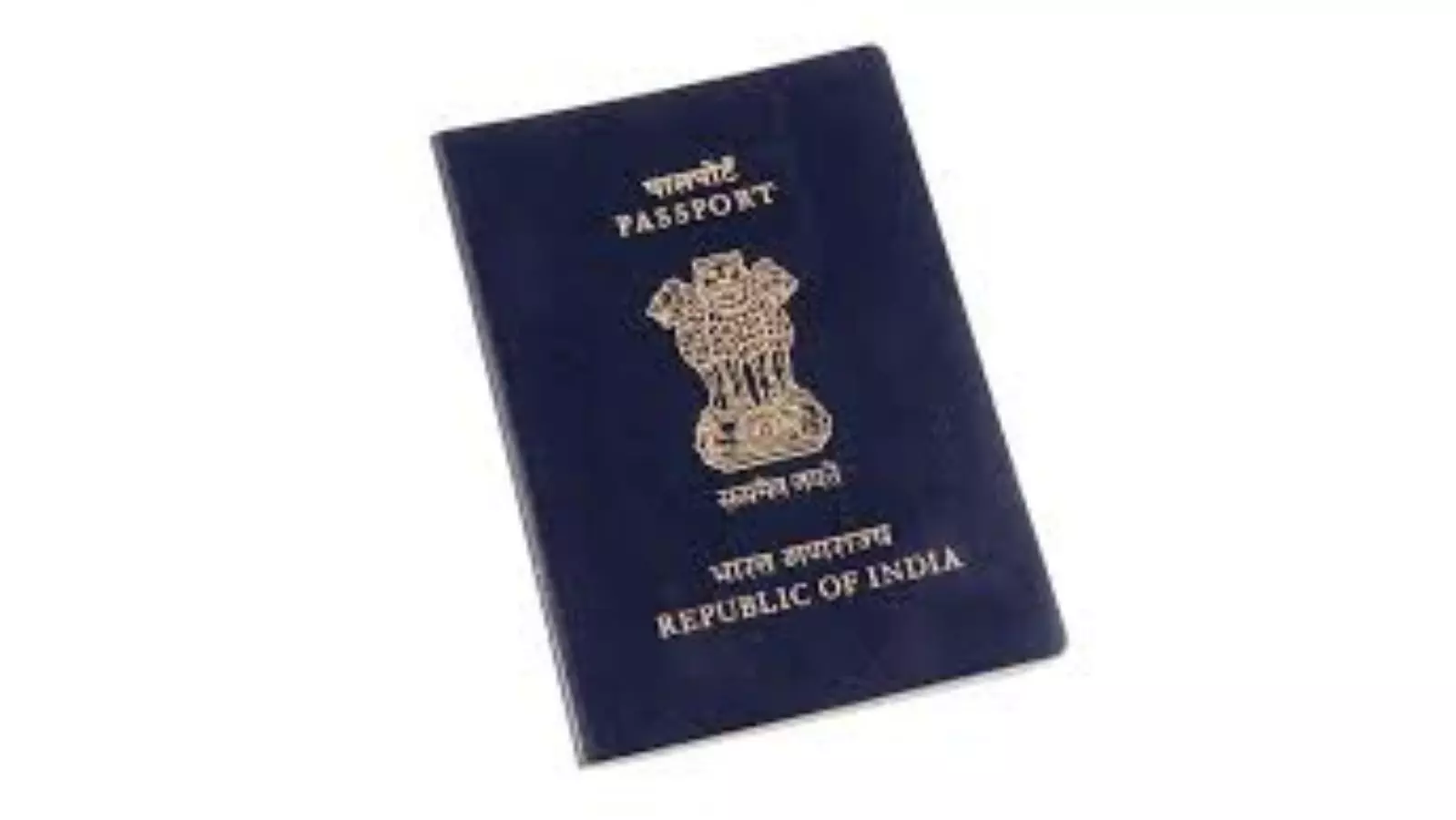
Who is really an Indian? This is an odd question to ask eight decades after Independence in 1947. More worryingly, the stature of the blue Indian passport -- there are about 90 million such in existence -- has been compromised. And, of all people, by the Government of India.
How have we come to this pass when more than 900 million Indians are online, 2.5 billion have retail bank accounts and 1.4 billion have Aadhaar cards?
The answer is that legislating rights or disabilities -- in which we excel-fail to benefit people unless the underlying institutional capacity is also created. The uncertainty associated with Indian citizenship is not a one-off. It is an enduring feature of India’s development story. Complex rules and regulations for everything do very little to assuage the stress and helplessness of the average citizen about their rights and duties. Add under-capacitated implementation agencies and you get a perfect mix of uncertainty, confusion and discretionary decisions for getting work done: like obtaining a passport or establishing one’s Indian citizenship.
How did we get here? As early as 1955, the Citizenship Act reflected the constitutional provision, founded on liberal, inclusive principles, that till July 15, 1947, anyone resident in undivided pre-1947 India was eligible for citizenship. There are three options for claiming citizenship. In all cases, if the applicant was a citizen of any other country, that affiliation must be renounced if the applicant was an adult or at the time of becoming an adult. to avail of Indian citizenship. India remains a reluctant liberaliser by not permitting dual citizenship, which more than one-half of all countries and most developed ones do now allow.
Since 2023, a diluted version of dual citizenship is available to persons of Indian origin (defined as a person born to persons born in India) and to their children via the Overseas Citizens of India card. OCIs do not have the same political rights as Indians but they get accelerated rights versus non-Indian origin applicants for citizenship, the same travel, economic and financial benefits, as Non-Resident Indians except they cannot buy agricultural property or plantations. There are about four million OCI holders -- less than 25 per cent of the 18 million persons of Indian origin living abroad. NRIs (Indian passport holders) living abroad are about 18 million, while another 70 million Indian passport holders live in India.
Till recently, India was relaxed about scrutinising citizenship particulars of residents. The first indication that this carefree “honeymoon” period was over was two decades ago in 2004. The government enacted an amendment to the Citizenship Act, inserting Section 14A, mandating the Union government to issue national identity cards. The Registrar-General of India – an office that exists since 1969, under the Registration of Births and Deaths Act -- was mandated as the Registrar-General of Citizen Registration, and a National Registration Authority was created. Pursuant to a 2023 amendment of the act, a national digital Civil Registration System (CRS) is being created, which would seamlessly correlate births and deaths across the country. But we are not there yet. The data remains fragmented across state governments, which implement the act, and is difficult to obtain, except by approaching the relevant jurisdictions to get a birth and a death certificates. These certificates are crucial to define the category under which citizenship is claimed.
In practice, citizen records -- births and deaths and voter lists -- have tended to be generous and inclusive seeking to record the population which exists on the ground rather than determine birth or descent data forensically. The Registrar-General of births and deaths has multiple functions, including managing the decennial Census operations. Indian families tend to be self-sufficient, storing paper records -- hopefully now in the DigiLocker app -- for safe and secure storage.
The general impression, till now, was that a passport is a high order, prima facie proof of citizenship -- not least because passports mention the citizenship of the holder. So, when and how does one forfeit Indian citizenship despite holding an Indian passport?
Multiple newspapers reproduced a PTI/government source briefing stating that “judgments of the Bombay high court since 2013 have also made it clear that a passport, by itself, is not proof of citizenship”. No one claimed that the government had terminated the passports in question. An additional clarification by the external affairs ministry was as unhelpfully opaque. It argued that the passport is merely a travel document issuable even to persons who are not citizens of India.
The MEA was factually correct. A passport is intended to serve the specific foreign travel needs of an Indian citizen. Even the destination of travel can be limited. Additionally, under Section 20 of the Passports Act 1967, the government can issue a passport to anyone who is not an Indian citizen in the national interest. Think of high-profile foreigners who have taken refuge in India with no recourse to home country privileges and who might need to make trips abroad.
Till the Citizen Registration Card becomes available, a sheaf of certificates would remain necessary -- birth certificates to prove lineage, an Aadhaar card to validate existence, property papers, bills of payment for electricity and water supply to establish length of residence in India and the Election Commission Voter ID card -- whose reliability has been tarnished after the recent Special Intensive Revision exercise, prior to the state Assembly elections earlier this year.
It is unfair to point a finger at the judiciary for being insufficiently supportive of government-issued certificates. Judicial decisions can only test the worth of a document versus the relevant law. Forgeries, fraudulent representations and errors -- intended or unintended -- can compromise the integrity of even a government document and each document must be proved in court.
Just as surely, from the perspective of an innocent citizen, particularly in a society with less than full literacy and low per capita income, it is incumbent on the judiciary and the government to temper its enthusiasm for forceful, politically convenient action sans compassion for the resultant individual suffering. Adopting the principle of “do no harm” – which explicitly sacrifices process efficiency for protecting vested, legal, individual rights -- is in keeping with India’s emerging global profile. India is going intensively digital. Enormous future economic benefits coexist with significant social and human risks. Justice and government efficiency must be tempered by compassion if we are to develop as a caring society.
The writer is Distinguished Fellow, Chintan Research Foundation, and was earlier with the IAS and the World Bank