Sanjeev Ahluwalia | National Tropes Work, But Bipartisan Oversight Key

India’s Constitution generated hope in 1950. It devised a unique formula for dealing with three barriers to development. It offered “inclusion” by putting citizens first via universal adult franchise — which unusually at the time included adults of both genders and judicially guaranteed fundamental rights. Second, a multiparty political model made democracy management competitive, while vertical distribution of powers assured regional aspirations were met. Third, a permanent bureaucracy ensured administrative stability. Most importantly, the convention that the military serves the people via elected civilian, executive control has endured — much to the credit of India’s military establishment
Nations have their affectations — often a narrative or a trope — that brands them. China glories in its historical tradition of unitary rule. The last Qing emperor conceded power to the nominally democratic nationalists in 1912 followed by internal strife till the Communists established full control in 1949. Top-down, single-party ideological rule was pragmatically infused in 1980 with large dollops of “capitalism with Chinese characteristics” to boost economic growth and end income poverty. China now anticipates an exclusive, superpower group of two — a G2 — with America.
America is that “shining city on a hill” redolent with promise and prospects which once welcomed the willing and the brave. Immigrants cling to that hope. But President Trump is underpinning its economy with walled up, domestic competitiveness — a substantive albeit painful transformation driven by its waning unilateral moment, exemplified by the trope, “The US dollar: America’s currency but the world’s problem”, now under threat from global pushback.
India’s national trope is “Satyameva Jayate: Truth will triumph”. And it has. Nearly eight decades after Independence in 1947, our economic “potential”, is pegged at a nominal GDP of $30 trillion by 2047, about 8x current levels. A sub-trope is the “world’s largest democracy” — a prospect which Winston Churchill mocked at the time of Independence when illiteracy and under-development — the outcomes of 190 years of British colonial rule — combined with unparalleled cultural diversity, presented formidable barriers.
India’s Constitution generated hope in 1950. It devised a unique formula for dealing with three barriers to development. It offered “inclusion” by putting citizens first via universal adult franchise — which unusually at the time included adults of both genders and judicially guaranteed fundamental rights. Second, a multiparty political model made democracy management competitive, while vertical distribution of powers assured regional aspirations were met. Third, a permanent bureaucracy ensured administrative stability. Most importantly, the convention that the military serves the people via elected civilian, executive control has endured — much to the credit of India’s military establishment.
Administrative responsibilities and the power to tax are divided between the Union and state governments. A quinquennial finance commission recommends to the Union government, a fair vertical and horizontal allocation of its revenues to ensure fiscal adequacy, for all organs of government, per their mandates. There was a curious exclusion — village and city governments where the rubber meets the road- were left as administrative subsets of the respective state governments. At the time,“trickle down” administration from state governments was deemed sufficient to develop villages and cities. It was not till 1993 — that local governments — both rural and urban, were given Constitutional status, to ensure balanced development and use of public funds. Sadly, the downward delegation of funds and functions is not uniformly adequate across state governments. It can also be argued that the Union is richly funded versus states.
Direct taxes on the income of individuals and corporations — the most buoyant revenue source — is with the Union along with import or export tax. Since 2016, other than excise duty on alcohol, and petroleum products the Goods and Services Tax mops up indirect tax and is shared equally between the Union and respective state government. Any cess or surcharge imposed by the Union is not compulsorily shared with states. This is not a bug. It is a Constitutional feature which makes the states fiscally subservient to the Union government.India is not a federation unlike the US. It is a Union of states — a more devolved multi-party version of China’s unitary state — albeit curiously, much less decentralised in practice.
Opting for a strong Union was a precautionary tactic to preserve national stability. Other artifices to the same end include the All-India Services which play leadership roles across the states and the Union. Special powers vest in the Union to override the vertical distribution of powers. Under Article 352 of the Constitution, the Union government can declare National Emergency. Article 356 allows the Union to impose emergency in states, suspending the right of self-governance and imposing direct Union control.
Abrogation of fundamental rights hits at the heart of democratic functioning. Happily, Article 352 has been used only thrice. Twice to manage external threats — in 1962 the Indo-China conflict and in 1971 the India-Pakistan war which liberated Bangladesh. The exception was 1975 — when Prime Minister Indira Gandhi used it to snuff out the widespread public opposition to her government.
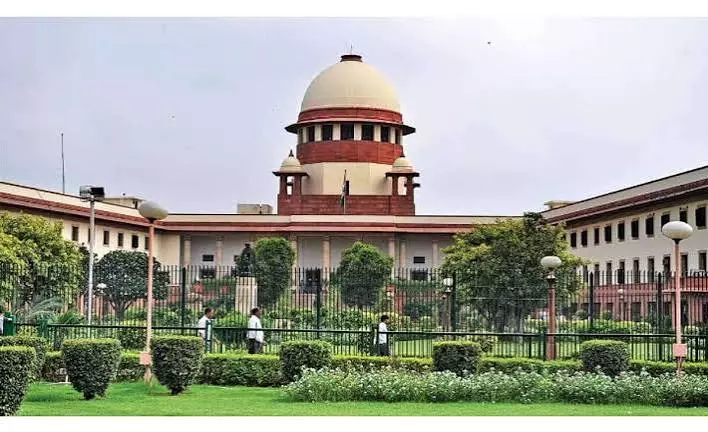
In 1976 a five-judge bench of the Supreme Court ruled in her favour — Justice H.R. Khanna was the lone dissenter opposing the suspension of fundamental rights, thereby putting at risk his possible elevation to Chief Justice of India. Review by a nine-judge Supreme Court bench in 1978 and the 44th amendment to the Constitution re-established the primacy of the right to life and liberty in India. A nine-judge Supreme Court bench delivered the Puttaswamy judgement in 2017, extending the coverage of fundamental rights to the right to privacy.
Article 356 was frequently evoked till 1994 when the Bommai judgement ruled that its imposition was subject to judicial review. Post-2014 it was invoked seven times but only for short periods. In Kashmir, the period extended to six years, pending the fundamental recast of the state. In Manipur it operates since 2025 but is open to judicial review.
The balance between the executive, judiciary and legislature could be usefully rethought. Strengthening Parliament versus the government appears necessary. Democratic checks and balances can be strengthened by enhancing the functional “independence” of constitutional watchdogs like the Comptroller and Auditor General and the Election Commission. Detaching these “democratic sentinels” from government and attaching them to Parliament is one option. Within Parliament, bipartisan appointment and audit review committees would be better equipped to hold government to account on fiscal prudence and hands-off, fair election management.
Might “independent” constitutional appointees become less responsive to government’s domestic and geopolitical compulsions? Yes, they might. But this is not a bug. It is a design feature of a “checks and balances” architecture to curtail government indiscretion. Consider that the SIR indiscretions — nondisclosure of test outcome data on the scale of false positives (verifying ineligible voters) and false negatives (excluding eligible voters) before finalising and applying the now discredited algo-based scrutiny — might never have occurred, had all-party parliamentary committees been managing the process. Shining a light under the hood before pressing the ignition is not paranoia. It is prudence, which only bipartisan democracy watchers can enforce.
Sanjeev Ahluwalia is distinguished fellow Chintan Research Foundation and was previously in the IAS and the World Bank.