Several factors continue to contribute to India’s lower profile in the minds of Japanese investors. The story is a long one and begins in the 1980s when Indira Gandhi managed to persuade Osamu Suzuki to invest in the iconic small car project
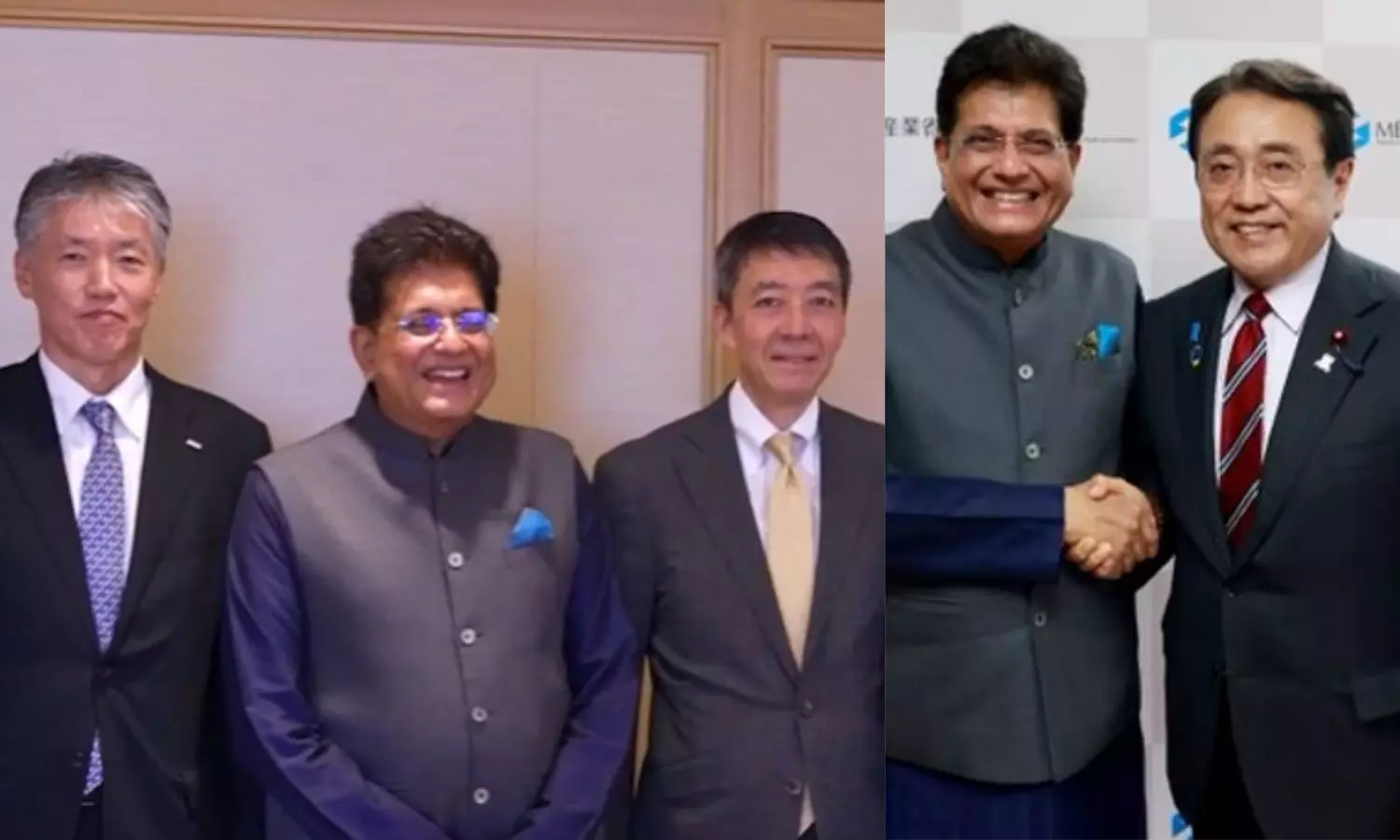
The Union minister for industry and commerce, Piyush Goyal, is known for hype and hyperbole. So it was entirely understandable that he would make much of a muchness about leading the biggest ever business delegation out of India when he landed last week in Tokyo. "We will set up your hotels, your restaurants for your cuisine. We will have your schools, colleges and hospitals in India.” He told his Japanese business audience, urging them to invest in India. He added for good effect, “And we will top it off with a golf course.”
Mr Goyal is not the first Indian minister to try seduce Japanese business into moving away from easier pastures in its neighbourhood to what they view as daunting India. Prime Minister Indira Gandhi tried. So did Prime Minister Manmohan Singh. Indeed, even Prime Minister Narendra Modi did. A decade ago, he even appointed a Japanese speaking person in the PM’s office tasked with the responsibility of helping Japanese business cut through Delhi’s infamous red tape.
For a good half century Indian governments have been trying to get Japan to invest more in India than it has, of all places, in China! Japanese companies have invested a total of US$130 billion in China compared to US$48 billion in India. In 2025 alone Japanese investment into China surged by over 55 per cent, while in India the comparable figure was just over 10%. Southeast Asian economies, including Vietnam, have been able to attract more investment from Japan than India.
Several factors continue to contribute to India’s lower profile in the minds of Japanese investors. The story is a long one and begins in the 1980s when Indira Gandhi managed to persuade Osamu Suzuki to invest in the iconic small car project. I tried to place the history of the relationship in perspective gathering essays by distinguished Indian and Japanese analysts in my book The Importance of Shinzo Abe: India, Japan and the Indo-Pacific (HarperCollins, 2023). The fact is that from the mid-1980s India has been trying to attract Japanese investment, with sporadic bouts of success.
Prime Ministers Gandhi and Yasuhiro Nakasone set up an India-Japan Study Committee headed by Manmohan Singh (then deputy chairman, Planning Commission) and the eminent Japanese economist Saburo Okita. They outlined a framework for increased interaction between both countries. Through the 1990s several ‘Study Groups’ arrived in Delhi from Tokyo to examine investment opportunities in India and returned home leaving behind a long list of demands.
My friend the late Shoji Ito, of Tokyo’s Institute of Developing Economies, used to be a regular member of these study groups. Ito-san was always candid. Japanese investors find China, Taiwan and South-East Asia easier to do business in than India. I would, however, draw his attention to the fact that while Japan’s ‘zaibatsu’ were still ‘studying’ India, South Korea’s ‘chaebol’ were moving in fast. By 1998 Hyundai’s Santro had begun to challenge Suzuki’s Maruti. Over the next decade Korean brands began edging out Japanese ones across several markets.
India came back on to the radar of Japanese corporate boards only after Prime Minister Shinzo Abe landed in New Delhi in August 2007 to launch a new phase in the relationship. Thanks to the leadership of both Prime Minister Abe and Manmohan Singh there was a spurt in Japanese investment into India after 2006 and that enthusiasm was revived after Abe’s return to office in 2012, with Modi taking charge in 2014. Japan has been an important partner for India, investing in urban infrastructure, transportation and a range of industries.
However, India expects more, wants more. This is also because over the past decade the growing strategic partnership in the spheres of defence and military engagement, which has strengthened the foundations of the ‘India-Japan Special Strategic and Global Partnership’, has also generated greater expectations in India. During the visit of Prime Minister Sanae Takaichi to India in July the two heads of government re-affirmed their commitment to ‘Advancing a Partnership of Strategic Convergence and Trust for Shared Growth, Prosperity and Resilience.’ Several columns have been written since on the growing strategic convergence between the two nations and how the shadow of China’s rise and the confusion in Washington DC with respect to US policy in the Indo-Pacific have elevated the importance of the Japan-India relationship.
The problem, however, is that there may be strategic convergence within the bureaucratic and political establishments of two countries without a similar commitment in corporate board rooms. The assumption that ‘trade follows the flag’, so to speak, that business-to-business relationships will develop automatically in step with government-to-government relations has often been proved wrong. This is now visible across many of India’s external relationships.
One key to opening more Japanese doors to India is, ironically, China. Part of the problem for many Japanese companies that may wish to invest in India is the latter’s constraints on China. In a world of supply chains and cross-border business links Japanese companies with links to China have been wary of Indian restrictions on doing business with the latter. Any easing of Indian restrictions on doing business with China could in fact facilitate greater Japanese investment in India.
A recent study by an Australian think tank, Lowy Institute, reported: “Politically and militarily, Japan confronts China with its toughest stance yet. Economically and technologically, however, Japanese firms continue to deepen their ties with China through joint funds and partnerships based in Saudi Arabia, Switzerland, or the UK. Japan is demonstrating a form of nintai: a capacity to absorb pressure while maintaining economic flexibility. …Despite rising political tensions, major Japanese firms are increasingly adopting an ‘in China, for China’ strategy.” Perhaps India too needs her own ‘nintai’.
The bottom line, however, is the need for a change in mindset in Japan. India is still viewed as a difficult place to do business in. The attractions of the domestic market are not in themselves adequate to attract sizeable foreign investment. India and Japan require an ‘Indo-Pacific’ strategy for business as a complement to their ‘Free and Open Indo-Pacific’ strategy for defence cooperation. This requires more than a promise of Japanese restaurants and golf courses. There has to be a meeting of minds at the highest levels of business as there appears to be at the highest levels of government.
