A people-powered campaign shows how listening and real change can rebuild democracy.
Democracies are not rescued by vibes. They are rebuilt by timely and practical choices. New York just made one.
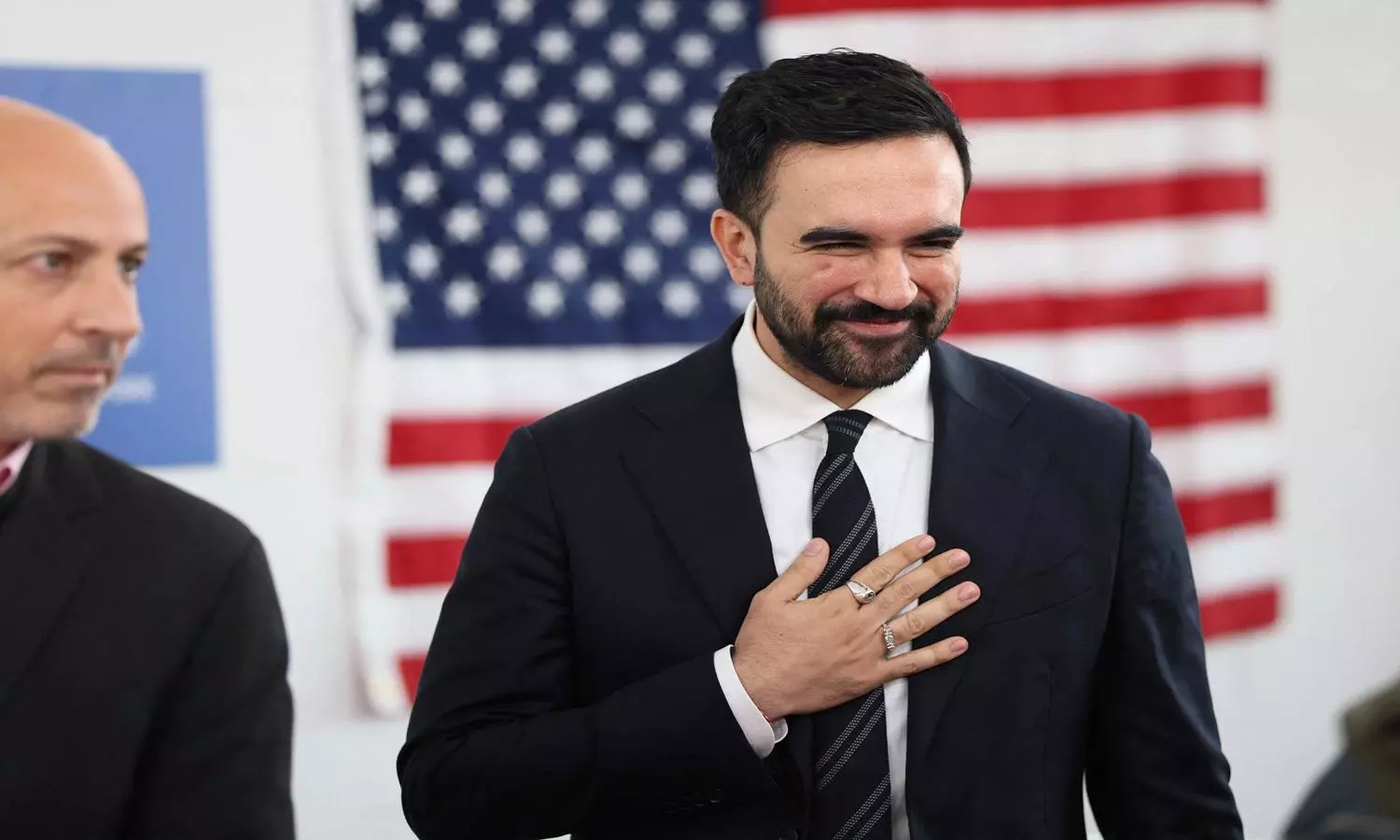
Voters in America’s largest and most diverse city have elected Zohran Mamdani, a 34-year-old son of Uganda and India, a Muslim, and an unabashed democratic socialist, as its 111st mayor. He is the first New York City mayoral candidate since 1969 to clear a million votes, in a turnout that was unmatched for 56 years. The surge came from newly registered young voters, from transit-using and renter-heavy districts, and from lower and middle-income Black and Hispanic precincts.
The demographics tell a story that offers a method. That method can travel from Virginia and New Jersey in 2026 to India and beyond.
Zohran Mamdani set out his vision in 2019. He said that he was a democratic socialist because of its commitment to a state that could provide what is necessary for people to live a dignified life. In the shadow of Wall Street, he argued that the market cannot decide who gets that dignity. Many called this utopian. He ignored the chorus and built a campaign whose means embodied its ends.
He started at the bottom by listening. He treated politics as a neighbourly duty and went door to door, block to block, bodega (Hispanic store) to bodega, kirana store to kirana store, and bus stop to bus stop. Affordability was not a slogan but a weekly bill paid by a real person.
He quickly turned that learning into tangible policy outcomes. Affordable housing, universal childcare, cheaper groceries and faster, fare free transit. Voters rewarded a campaign that treated politics as rent due, childcare you can count on, a $30 minimum wage and fairer taxes. Door knocking turned socialist ideology into felt needs.
He made small business a partner rather than a backdrop. Cafes, bodegas, salons, lunch counters, book stores and corner groceries became organising rooms rather than rows for billboards. Associations from bodega owners to taxi drivers found a place in the plan. So did kirana stores and kebab joints.
He kept the coalition broad. He said that housing affordability helps Muslims and Jews alike and rich and poor. He criticised policies abroad that he saw as authoritarian by leaders like Benjamin Netanyahu and Narendra Modi, yet paired that with visits to synagogues, temples, gurdwaras and churches. When the line is that if your cook can afford the rent, then your kitchen stays open, solidarity does its own maths. He showed respect while staying disciplined on a message about shared costs and shared gains across lines of faith, ethnicity and class.
He wore identity without weaponising it. African, Indian, American, Muslim, left of centre, he showed up as himself in dress, food, music, and neighbourhoods. Identity felt like a simple fact, specific and joyful in African fabric, India kurtas and snappy New York entry-level slim suits.
That authenticity reached the most sceptical bloc in Western politics, the young. Arsenal fandom, a partner met on an app, anxiety about rent, none of it was staged and all of it sounded like life.
His relatability, inclusivity and lived experience helped him scale volunteers to the size of a megacity. A hundred thousand volunteers knocked on three million doors, across religion, class and ethnicity. Social media was buzzing because of supporters and not paid influencers. While the campaign visuals were vintage Bollywood, neither the campaign visuals nor the volunteer visuals showed him as “the leader on a stage”. He danced, he sang, he chatted and lingered in small shops, parks, and cafes.
He chose hope and small donors over fear and big checks. Tens of thousands of volunteers did the work. Eighty per cent of the donations he got were less than $250. He even capped fund-raising and said no when he had to. The ground game beat the air war and had an impact on major Democratic victories across the country, including the governorships of New Jersey and Virginia.
But a bigger test arrives next November. America will vote in the mid-term elections (held two years after every presidential election year). For now, President Donald Trump holds the White House, the Supreme Court and both chambers of the US Congress, with friendly judges on the bench and Republican majorities on Capitol Hill.
The Senate is unlikely to change hands. The House is another matter. With a narrow Republican edge and the usual mid-term swing against the party in power, all the indicators point to a potential Democratic takeover within a year. If that happens, the rubber stamp becomes a real check on the President’s powers, with the authority to investigate and hold both Mr Trump and his top officials to account.
The Democratic Party should study Zohran Mamdani’s win because it offers a concrete answer to the charge that the Democrats are out of touch. After a June low in approval, he showed how to rebuild trust from the ground upwards. If by September 2026 a voter can say that the bill is lower or the bus is quicker, Democrats will have a proof point that punctures the strongman story.
That lesson travels far beyond the United States’ borders. In every country which is struggling to hold on to democracy, the antidote to strongman politics is visible service, not louder speeches. Meet people where they live and work. Criticise policy without condemning community. Turn chai stalls, bodegas, cafés and markets into organising hubs for cleaner streets, safer lighting, quicker permits and cheaper commutes. Make belonging tangible and real.
This is not a plea for centrism. It is a plea for seriousness. The headwinds are real. People worry about the hangover from inflation and about cuts to health insurance and food assistance. Many are totally exhausted by campus clashes over the Gaza violence or are uneasy at the sight of uniforms at deportation raids. Into that fear, strongman politics offers a familiar bargain, narrow the idea of who belongs in exchange for a promise of order.
The reply that works is to define order as something you can time. A bus that arrives. A permit that clears in days rather than months. A rent that climbs by single digits rather than double. A clinic where a nurse answers the phone. Make the abstract visible. Make the visible truly consistent. And keep the consistent an integral part of the system.
Ruchira Gupta is the author of The Freedom Seeker & I Kick and I Fly, founder of NGO Apne Aap and a professor at NYU. Follow her on Insta: RuchiraAGupta, on Twitter: RuchiraGupta
