REFLECTIONS | Widening Tax Net In India: Will Tail Still Wag The Dog? | Sunanda K. Datta-Ray

Filing tax returns may seem like just another feel-good formality for the more and more individuals whose numbers spiralled from 3.35 crores in 2013-14 to 7.54 crores in 2023-24 and who seem to make a habit of filing zero-income tax returns
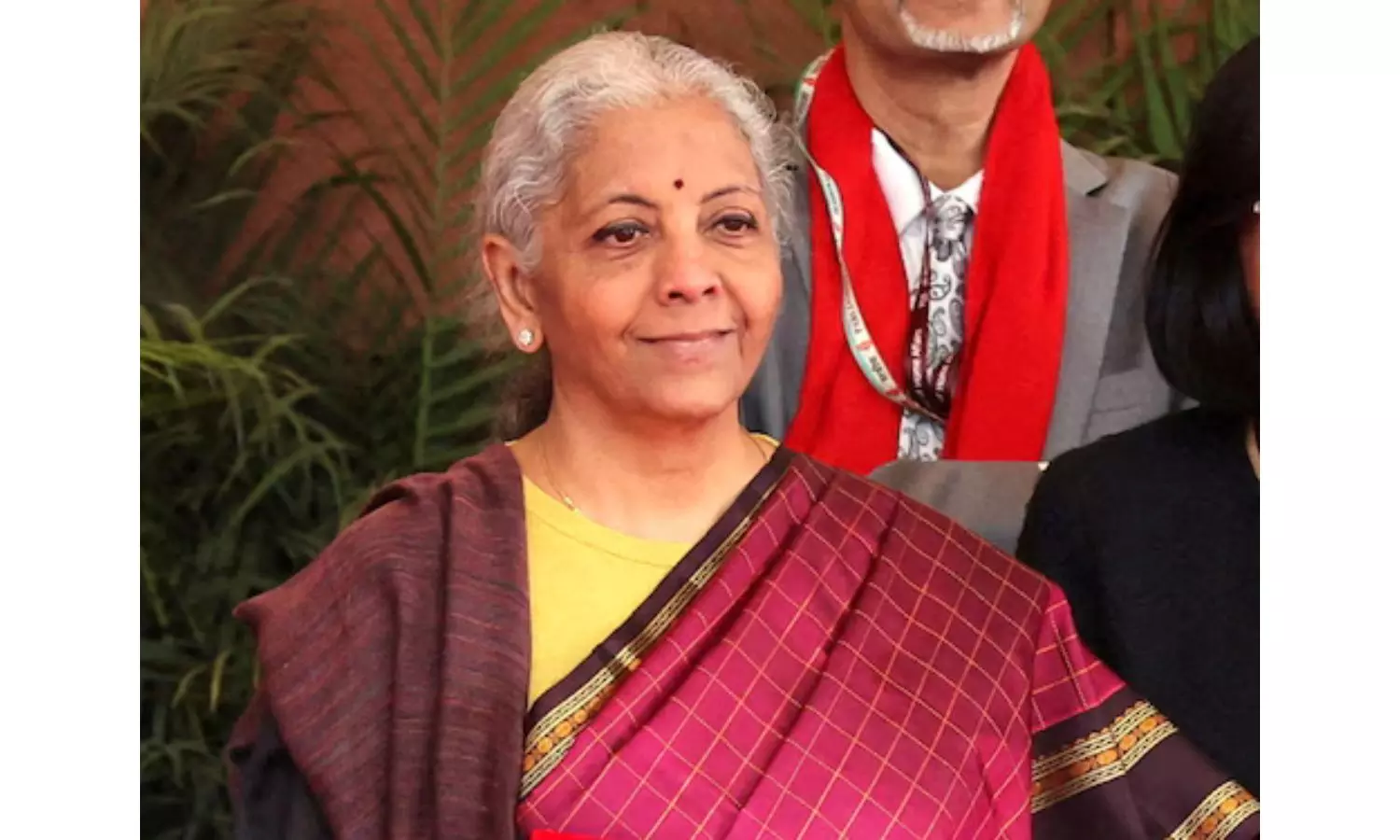
Finance minister Nirmala Sitharaman’s “more of the same” ninth Budget might have been somewhat less disconcerting if one of her ministerial colleagues, Piyush Goyal, hadn’t also lauded it as “futuristic”. The adjective implies that costs will remain frozen while the government merrily sets about training care helpers, building high-speed rail corridors, creating five university townships and launches a Rs 53.4 lakh crore plan for what the finance minister rather inelegantly called “SHE-Marts” -- community-owned marketplaces dedicated to rural women-led enterprises. As a housewife herself (perhaps now a non-practising one!), Ms Sitharaman should be well aware that even her boss’ devalued currency doesn’t grow on trees. Prime Minister Narendra Modi will not get away without increasing taxation, perhaps even reintroducing a wealth tax, if she wants concrete achievements and not only lofty rhetoric.
No wonder Senator Barry Goldwater, the American politician who was once a Republican presidential hopeful, held that the income-tax created more criminals than any other single act of government. Even that might arguably have been tolerable if Ms Sitharaman’s accounting were based on the Biblical principle of taking from each according to his ability and giving to each according to his needs. But living and working in countries that are not your own and dabbling in public -- not personal -- funds only provide exciting peepholes into wealth that is not yours and lifestyles that are to be enjoyed without being owned. Some might say that politicians alone enjoy the ultimate in luxury on the never-never.
But with Albert Einstein, no less, confessing that “the hardest thing in the world is to understand the income-tax”, it should surprise no one if even a stellar cast is baffled by the challenge of Nirmala Sitharaman’s arithmetic, especially when every crisis – Covid-19 for instance -- seems to create as many triumphant billionaires as it does paupers and fatalities.
India thrives on misfortune.
This is not the only conundrum. With more than 15 lakh lusty young people in Uttar Pradesh scrabbling and scrambling for the fewer than 5,000 police jobs that chief minister Yogi Adityanath has created, Rahul Gandhi -- who may well be a shade touchy on the question of employment -- rightly accuses the government of being “blind to India’s real crises”. Filing tax returns may seem like just another feel-good formality for the more and more individuals whose numbers spiralled from 3.35 crores in 2013-14 to 7.54 crores in 2023-24 and who seem to make a habit of filing zero-income tax returns. They are like the notional assesses recorded by the Kolkata Metropolitan Development Authority whose wares on display showed that they couldn’t possibly make a living with that stock but whose self-respect or some other compelling internal reason demands keeping up the pretence of buying and selling. Tax evasion, low wage growth, high unemployment, and high exemption limits mean that very few people qualify actually to have to hand over money for income-tax.
Additionally, accounting loopholes, low audit quality and the generous income-tax relief provided in 2019 have resulted in very few of our canny corporations actually paying income-tax. Many of the returns that they file are zero-tax returns, submitted for compliance purposes. Despite the global appearance of a dynamic economy galloping ahead in its determination to catch up with the US and China in leading the world, the number of individual Indians who file zero-income tax returns more than doubled, from 1.69 crores to 4.73 crores, during the same period. The result is that the number of individuals who actually contribute to the treasury crawled up very slowly indeed between 2013-14 and 2023-24, from 1.66 crores to 2.81 crores, to be precise.
The exemption limit has been raised successively since 2013-14, it being Narendra Modi’s boast that no government in India’s history has supported the well-being and empowerment of India’s middle class as much as this government. Among individuals who do pay taxes, almost half (47%) report incomes of up to Rs 5 lakhs; 37% earn between Rs 5-10 lakhs, 13% between Rs 10-25 lakhs, and only 1% admit to earning above Rs 50 lakhs. The colourful flamboyance of Mr Modi’s attire is unlikely to be inspired by Matthew 19:24, which stipulates that “it is easier for a camel to go through the eye of a needle than for a rich man to enter the kingdom of God”. If anything, the echo is of Ozymandias’s stern injunction: “Look on my works, ye Mighty, and despair!”
It must be admitted that the government is far from being harsh when it comes to tinkering with income-tax slabs, although the reason is political and not economic. High taxes are of only theoretical interest when 84 per cent of the population earns less than Rs 10 lakhs annually – India’s per capita income is just around Rs 2 lakhs -- and individuals earning up to Rs 7 lakhs don’t have to pay any tax under the new regime. In fact, the top one per cent of ITR filers pay 50% of India’s total personal income-tax collection, while the top 9% pay 87% of the total tax, highlighting significant inequality and the challenges in trying to widen the tax net and raise essential funds for running a vast country.
The corporate situation is worse. Of the total 10.7 lakh corporate ITR filers, 57% report zero income, and another 33% earn under Rs 50 lakhs. In total, 90% of companies report earnings of just up to Rs 50 lakhs (corporations are taxed on profits, not income). Half (48%) of corporate filers pay zero income-tax, while another 36% pay less than Rs 5 lakhs. In terms of value, 84% of corporate filers contributed almost nothing to the total corporate tax collections of Rs 7.16 lakh crores in the assessment year 2023-24. Again, the top 1% of corporate ITR filers pay 85% of total corporate income-tax.
All this highlights significant inequality and raises questions about the financial health of India’s corporate sector. Another catch is that agricultural income is still exempt from taxation -- meaning that about half of about 14.7 billion Indians contribute virtually nothing to national overheads. While that might arguably make socio-economic sense, caste imperatives should be ignored to bring at least wealthy farmers under the tax ambit to boost tax collections. Personal income-tax, corporate tax and GST collections account for one-third each of the Central government’s total receipts. There is therefore a limit to the resources that can legitimately be raised. In this, as in so much else in India, it’s the minority tail that wags the dog.