REFLECTIONS | How To Live After Defeat: Lessons From Near, Far | Sunanda K. Datta-Ray

No one among India’s nearly 50 lakh Central government employees and 69 lakh pensioners can predict exactly what benefits the Centre has already approved for the Eighth Pay Commission whose recommendations will be implemented this New Year’s Day. But in his bid not to lag behind any previous Prime Minister -- and especially to outstrip Jawaharlal Nehru -- Narendra Modi is bound to be generous with lavish gifts that bear his name, dominate headlines and impress the public
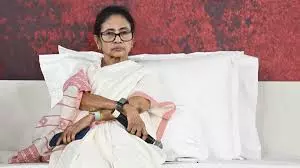
Ironically, Indian women (at least in several parts of the country) have been granted the right to travel free on buses just as the country’s most prominent female politician has been thrown out of her high-profile job.
Not that the 71-year-old Mamata Banerjee would ever have jumped for joy at the privilege of free bus rides. In fact, calling her a spinster without a job would be as inappropriate as a British politician’s famously jaundiced description of Queen Victoria and her heir, the future King-Emperor Edward VII, as a pensioned widow and her unemployed son. Ms Banerjee’s word was law for some 100 million Bengalis during the 15 years when, as chief minister of West Bengal, she fully deserved to be called the only man in a government of women.
But as another footloose and fancy-free politician without a job on the global stage may be finding out, retirement throws up other problems as well. Indeed, the mental and psychological ones may sometimes be far more burdensome than niggling material worries. John Healey, the former British defence minister who quit recently complaining that his boss, Prime Minister Sir Keir Starmer, had left Britain defenceless, possibly hopes to rally Labour MPs to his cause and even perhaps turn the tables on his former leader. While Mr Healey can claim the moral high ground by pleading ideology as the cause of his unemployment, Ms Banerjee had no choice in the matter. Rejected by the voters of two constituencies, she is forced to fall back on the old plea of most defeated Asian politicians and lay the blame on hostile election officials and tampered polls.
It's of little comfort to either politician to reflect that the seeds of eventual decline and downfall are embedded in all electoral politics, most so in the democratic process. Nothing lasts. No matter how dazzling the career, as Gray’s haunting Elegy tells us: “The paths of glory lead but to the grave”. The story goes that when one day Robert Walpole, reckoned to be Britain’s (and the world’s) very first Prime Minister, bumped unnoticed into a contemporary -- also once as famous and powerful as himself -- in a Westminster lobby, he exclaimed: “My Lord Bath, you and I are now as insignificant men as any in England!”
Wisdom lies in being able to come to terms with insignificance when the time comes. It's the inability to do so that causes the anguish and heartburn that prompt so many politicians, civil servants and eminent achievers in what has been called their “anecdotage” to bore others with memories of battles lost and won … usually in the telling won. Perhaps the club bore is more a British than an Indian phenomenon. Rudyard Kipling, that profoundly misunderstood and unsuspected English admirer of ancient Hindu precepts, certainly thought so.
Kipling’s short story, The Miracle of Purun Bhagat, reminds us that India’s “Old Law recommends twenty years a youth, twenty years a fighter, and twenty years (as) head of a household”, as the recipe for a fulfilled life. In the case of the celebrated Dewan Sir Purun Dass, KCIE, his household was the nation. Having completed his apprenticeship in its service, “he died" (disappeared) in Kipling’s simple prose. While the world wondered where he had gone, the silent millions knew exactly who the mysterious nameless sanyasi who had moved in with his rolled-up prayer mat and the polished brown scooped-out nut that he used as a begging bowl was. They knew too, as Kipling concluded, that “so long as there is a morsel to divide, neither priest nor beggar starves” in India.
That is not to deny the need for officially approved comprehensive retirement benefits so that men and women who have given of their best to society in their prime are not at the mercy of others in the twilight of their lives. It reveals much about national priorities that while India’s defence budget represents 14.67 per cent of the Central government’s expenditure, spending on the social services (including health, education and welfare) ranges between only 6.5 per cent and 7.8 per cent of the nation’s GDP. Not for nothing do they say that life is cheap in the East.
No one among India’s nearly 50 lakh Central government employees and 69 lakh pensioners can predict exactly what benefits the Centre has already approved for the Eighth Pay Commission whose recommendations will be implemented this New Year’s Day. But in his bid not to lag behind any previous Prime Minister -- and especially to outstrip Jawaharlal Nehru -- Narendra Modi is bound to be generous with lavish gifts that bear his name, dominate headlines and impress the public. Many former defence service personnel nowadays admit that their retirement benefits exceed the last pay drawn while they were still in service.
Despite Mr Healey’s charge of inadequate defence spending, Britain probably boasts one of the world’s most rational military budgets. But British frivolity sometimes creates an erroneous impression. Reports that the hero of El Alamein in World War II, Field Marshal Viscount Bernard Montgomery, had turned up at the welfare office in London in his chauffeur-driven Rolls-Royce to claim his military pension caused some confusion. Montgomery’s unanswerable logic was that he was only claiming his legal entitlement. I don’t know about our two field-marshals but, by and large, highly-placed Indians shy away from any action that might be construed as seeking power or -- heaven forbid -- wealth. The most grasping operator would condemn acquisitiveness as demeaning.
However, it’s all right for government flats in Kolkata boldly to proclaim that only senior IAS officers can live there. Or for occupants of a Lutyens’ bungalow in New Delhi to cling on for dear life for as long as they can. The gun salutes of Indian princes were no more ostentatious than the brahmin’s thread; a bureaucrat’s peon’s uniform repeats all the symbols of his master’s rank.
When Sardar Vallabhbhai Patel asked Nehru to persuade Rajendra Prasad to allow Chakravarti Rajagopalachari to be India’s first President, a seemingly astounded Prasad protested in injured innocence that never having sought any position at all, he could not cease seeking to do so in the case of the presidency. The Westernised Nehru, who couldn’t cope with Prasad’s tortuous affectation, would have been left gaping by Mr Modi’s favourite comment: “Hum to fakir aadmi hai, jhola leke chal padenge” (I am an ascetic; I will just pick up my bag and leave).
To go where? No one has dared ask the question.