Pradeep S. Mehta | Assessing the Cost of ‘Unease of Living’ to the Population

Reliable water, power, healthcare and education must define governance, not merely the number of schemes launched.
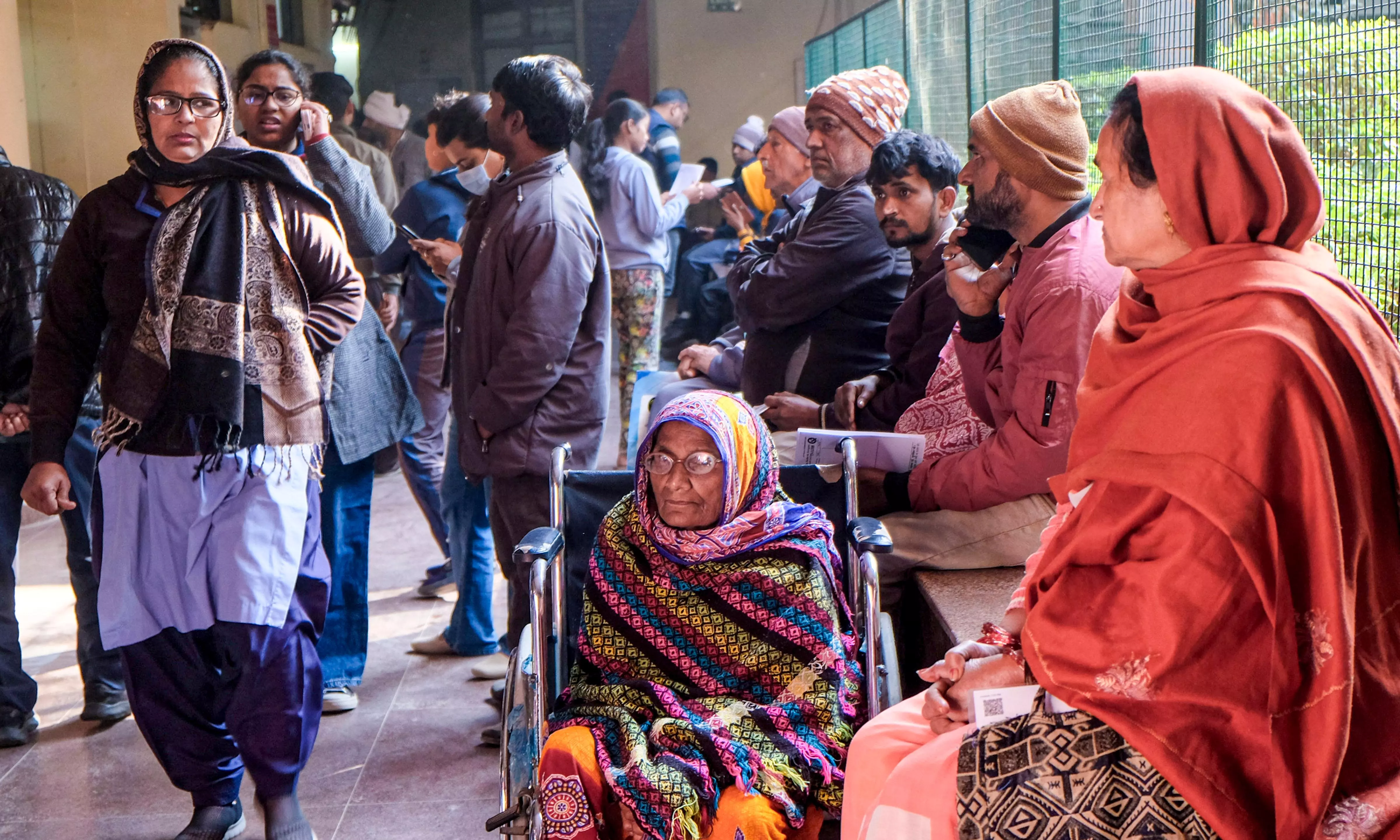
Think of what an ordinary family pays for, beyond its tax bill. Water bottles, because the tap water is not safe to drink. Private tuition, because the school cannot give a child the attention and support needed. An auto or cab for the daily commute, because public transport is unreliable. An inverter, to get through frequent power cuts. Private tests and consultations, because public healthcare often falls short. Everyone, even the poorest, pay taxes and thus have an inalienable right to basic services which are funded by the state exchequer. The cost of Unease of Living on the poor citizens is rather high.
On November 17, the venerable P.K. Mishra, principal secretary to the Prime Minister and an acknowledged economist, spoke at a Niti Aayog workshop titled “Leadership as Mission”. He told officials that the next phase of governance should be judged less by the number of programmes run and more by the experience of the citizen who comes to any officer for help. For the citizen, he said, the government is one. People expect to be heard, to get a decision quickly and to be treated with dignity. They should not be made to return again and again for the same work, or left to find their own way between departments.
Our bright Cabinet secretary Dr T.V. Somanathan made a similar point at the same event. Review meetings, he said, should look at outcomes and not only at how much money has been spent. If a family has to pay privately for water, schooling, transport, power backup and healthcare, then the system has not yet delivered to them, whatever the scheme figures say.
There is another side to this. When shared resources are degraded, the cost does not fall evenly. A car gives comfort to its owner, while the traffic congestion and pollution affect the entire neighbourhood. When waste is dumped into a river, the saving belongs to the person who dumped it, and the damage affects everyone who depends on that water. Those who can afford it protect themselves with air purifiers and bottled water; others are left to breathe the polluted air and depend on whatever water is available. In short, the privileges remain private while the consequences become public.
This is where Ease of Living (EoL) and Ease of Doing Business (EoDB) must be seen together. The government has rightly focused on EoDB through deregulation, fewer licences, simpler approvals, less paperwork and now Regulatory Impact Assessment to scientifically remove unnecessary hurdles. That effort should continue with vigour. The Prime Minister has also stressed the need to advance both, including at the Council of Ministers meeting in May 2026. The two are not competing priorities; they reinforce each other. Businesses need reliable power, clean water, good human capital and safe roads, all of which depend on public systems that work well.
For lower-income families, there is an even harder truth. Many cannot afford to buy their way out of these problems. Private tuition, a private doctor or a power backup is simply beyond their budget. They queue, wait, or go without. Even those who manage to pay often have to borrow to do so. The result is a widening gap between those who can afford protection from poor public services and those who cannot. The medical expenses of the poor are often a huge amount of the cost of treatment.
How should we measure progress, then? Government performance is often counted by what goes in, schemes launched, connections given, buildings constructed. These matter. But a tap connection means little if the water is unsafe or flows for only a short while each day. A school building is of limited value if teachers are absent or children are not learning or roofs are collapsing.
EoL needs measures that people can actually feel in daily life. How many hours of electricity do households receive? Is tap water safe to drink? Is safe public transport available when people need it? How long does it take to resolve a complaint? How many visits does it take to obtain a document? Such indicators, tracked and published locally, would help citizens assess public services and enable officials to identify where improvements are needed. We can also devise the cost of Unease of Living and use their results to educate our civil servants and the polity.
There is a consumer dimension here too. The rights to safety, to be heard and to seek redress are basic consumer rights assured under the Consumer Protection Act, 2019. Citizens who use public services may not always be consumers in the legal sense, but they should be able to expect the same basic standards — a fair hearing, a time-bound decision and respectful treatment. Grievance systems with clear timelines and local bodies that are accountable to the people would do much more to improve everyday life than expecting people to find private alternatives.
EoL cannot be measured by how many things a household can buy to cope with daily difficulties. It should be measured by how many of those difficulties the system has removed juxtaposed with an exercise in assessing the cost of Unease in Living.
The writer is the secretary-general of CUTS International, a 40+-year-old global public policy research and advocacy group. The article has been coauthored with Ms T.B. Simi, senior research associate with CUTS International.