Pradeep C. Nair | NIA’s Arrest Of 6 Foreigners Exposes Plot To Hit India In N-E
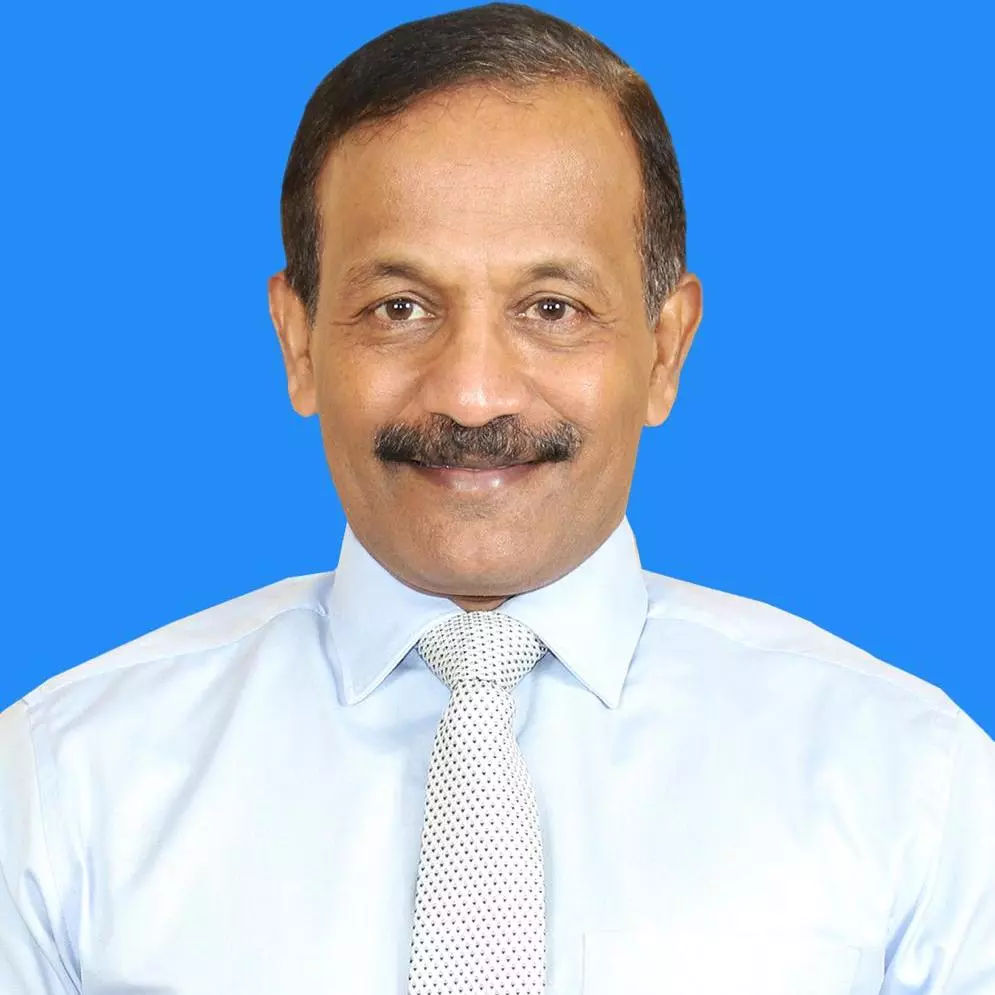
Ukraine’s ambassador to India, Oleksandr Polishchuk, handed over an official note of protest demanding the immediate release of the Ukrainian citizens and consular access to them
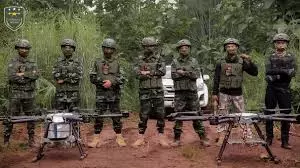
On March 13, the National Investigation Agency (NIA) arrested Matthew Aaron VanDyke, an American citizen, along with six Ukrainian nationals under the Unlawful Activities (Prevention) Act, Section 18 (terrorist conspiracy). VanDyke was detained at Kolkata airport while attempting to board a flight to Dubai, while the Ukrainians were apprehended in Lucknow and New Delhi airports under similar circumstances. According to court filings, all individuals had entered India on tourist visas and travelled undetected to Mizoram without obtaining the mandatory Restricted Area Permits (RAP). They subsequently crossed the unfenced international border into Myanmar’s Chin state. While in Myanmar, they allegedly provided training to ethnic armed organisations (EAOs), some of which are known to support proscribed Indian insurgent groups operating in the Northeast.
The training reportedly included drone operations (drone assembly and jamming techniques, besides weapons handling). The NIA has further claimed that the group imported a large consignment of drones from Europe. The reactions of the concerned embassies have been mixed. A US embassy spokesperson said: “We are aware of the situation. For privacy reasons, we cannot comment on cases involving US citizens.”
Ukraine’s ambassador to India, Oleksandr Polishchuk, handed over an official note of protest demanding the immediate release of the Ukrainian citizens and consular access to them.
The incident has triggered a wide spectrum of reactions, some veering into hyper-nationalistic rhetoric. However, the issue demands a nuanced and balanced analysis, taking into account developments not only in India but also in neighbouring Myanmar over the past few years. Following the military coup in Myanmar on February 1, 2021, the National Unity Government (NUG) emerged as a pro-democracy shadow administration. It seeks to overthrow the ruling military junta, restore democratic governance, and establish a federal political structure, primarily through its armed wing, the People’s Defence Force (PDF).
In Chin state -- where the accused individuals are believed to have operated -- multiple armed groups are active (they number about 25,000). These include the Chin National Army (CNA), Chin National Defence Force (CNDF), and the Chin Defence Force (CDF), which is a loose network of local resistance units that emerged after the coup.
Additionally, there are alliances such as the Chin Brotherhood and the Chin-land Council, which have amongst them militias like the Maraland Defence Force (that has linkages with the Maras of South Mizoram) and the Kuki National Army-Burma (which has linkages with the Kuki National Army of Manipur). The Zomi Revolutionary Army (ZRA) and its faction, the ZRA-Eastern Command, operate across the India-Myanmar border, spanning Manipur, Mizoram, and Myanmar’s Chin state, advocating for a unified Zomi homeland and clashing with the Chin National Army (CNA), besides aligning with the Myanmar military junta.
A significant development in the Myanmar conflict has been the rapid evolution of drone warfare. Initially emerging during the resistance phase between late 2021 and 2023, drone usage grew from improvised reconnaissance tools to sophisticated offensive systems.
Technically skilled former protesters (demonstrating against the coup), contributed to this transformation by sharing their expertise with resistance groups. The PDF has leveraged drones as a form of “air power” against isolated military positions. This capability was prominently demonstrated during “Operation 1027”, when resistance forces deployed large-scale drone swarms, dropping thousands of munitions on military installations and capturing significant territory. By the end of 2023, Myanmar had become one of the most active theatres for drone-based conflict globally, which it still is.
Concerns about foreign involvement in this evolving conflict are not entirely new. In March 2025, the chief minister of Mizoram had raised an alarm in the state Assembly by stating that an unusually high number of foreign nationals (approximately 2,000) had entered the state between June and December 2024. Many of them did not engage in typical tourist activities and were seldom seen in public spaces, he said. It was further suggested that some individuals, particularly from Western countries, may have crossed into Myanmar’s Chin Hills to provide military training and assistance to local armed groups. Reports also indicated the possible presence of Ukrainian war veterans among them. Additionally, the chief minister linked these developments to a rise in drug trafficking within the state. Mizoram has, incidentally, emerged as the centre for narcotics trafficking in the Northeast, accounting for over 50 per cent of drug seizures by the Assam Rifles in the past four years. This highlights the broader security challenges posed by porous borders and transnational networks.
The growing sophistication of militant tactics and the use of technology by militants in the region is also now very evident. In November 2025, an Assam Rifles post in Manipur was targeted in a drone-based attack by the People’s Liberation Army (PLA), a first of its kind and marking a new phase in the operational capabilities of the group.
Taken together, these developments suggest an emerging convergence between local insurgent movements and global conflict dynamics. The alleged activities of VanDyke and his associates, the ongoing instability in Myanmar, cross-border ethnic linkages, and the introduction of advanced technologies such as drones, collectively point to an evolving security landscape in Northeast India.
While the Government of India continues to pursue peace agreements with various insurgent groups and accelerates development initiatives in the region, these efforts must now contend with increasingly complex and technologically advanced threats. Policy measures such as the expedited implementation of a revised Free Movement Regime (FMR)
and the acceleration of border fencing, thus become necessary. Similarly, the security forces must adapt to these changing dynamics by enhancing technological capabilities, improving intelligence-sharing mechanisms, and strengthening inter-agency coordination.
Addressing these challenges effectively will be crucial to preventing future incidents and ensuring long-term stability all across India’s Northeast region.
The writer is a former Assam Rifles D-G and is currently the vice-chancellor of St. Mary’s Rehabilitation University, Hyderabad