Pavan K. Varma | Put Principle First Or Lose Standing As Peacemaker

My concern, therefore, is about what India did or did not do in this unfortunate war. In this context, a new debate has emerged between so called ‘realists’ and ‘idealists’
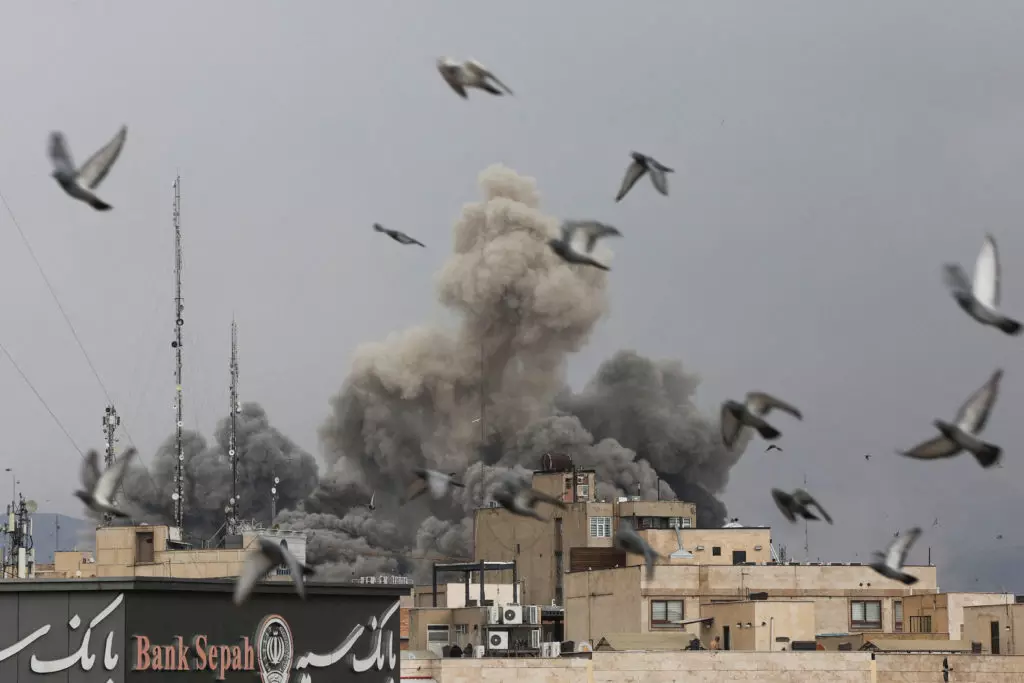
Frankly, I do not care a fig whether a tinpot dictatorship like Pakistan, with a bankrupt economy and a defunct polity, gets a fleeting moment under a dubious sun to play the role of mediator, facilitator or whatever in the ongoing Iran war. That this is a slight to India is ludicrous. Pakistan is a failed state. India, on the other hand, while not without its problems, is the world’s largest democracy, a major economy, a nuclear weapon state, a civilisational power and home to 1.4 billion people, with a legitimate claim to sit on the high table of the global community.
My concern, therefore, is about what India did or did not do in this unfortunate war. In this context, a new debate has emerged between so called ‘realists’ and ‘idealists’. At first glance, the argument of the realists appears compelling. The world, they insist, is not a moral classroom but a competitive arena where power, not principle, determines outcomes. In such a world, they argue, the pursuit of immediate economic advantage and transient strategic leverage must override any abstract commitment to ideals. For relatively weaker nations, the logic is to be silent, speak softly, align cleverly, and survive. Idealism, in this view, is not merely naïve — it is a liability.
Yet, this perspective, while pragmatic in tone, is impoverished in vision. It reduces nations to transactional entities, devoid of identity, memory or moral imagination. It assumes that the currency of global respect is power alone, when history suggests a more nuanced truth: that enduring influence often rests on a combination of credibility, consistency, and conviction. For instance, the anti-colonial struggles of the 20th century were not won merely by military strength; they were sustained by moral arguments that exposed the hypocrisy of imperial domination. The articulation of principles — sovereignty, self-determination, equality — became, in time, instruments of power in their own right.
This is not to suggest that foreign policy should be conducted as a sermon. Nations must, of necessity, calibrate their responses to the realities of the world. But calibration is not capitulation. There is a difference between strategic flexibility and moral abdication. A nation that abandons its stated principles at the first hint of inconvenience risks eroding not only its credibility abroad but also its self-respect at home.
The assertion that weaker nations cannot afford a strong voice is, in fact, a deeply internalised form of defeatism. Strength in international relations is not measured solely in military or economic terms, which, of course, we must aspire to. It also resides in the clarity of a nation’s positions and the consistency with which they are articulated. When a country speaks with conviction — even if it cannot enforce its will — it contributes to shaping the normative environment in which global politics unfolds. Silence, on the other hand, is seldom neutral; it is often read as acquiescence.
The critique of idealism as inefficient and counterproductive similarly rests on a narrow understanding of national interest. Economic gains secured at the cost of long-term credibility may prove ephemeral. Nations that are perceived as opportunistic or supine may find themselves taken for granted, or excluded from a meaningful role in geo-political equations. Conversely, those that demonstrate a principled approach, even when inconvenient, often command a moral authority that amplifies their influence beyond their material capabilities.
It is in this broader context that one must examine our role when the US and Israel attacked Iran, and assassinated its head of state. The violation of sovereignty and the targeted elimination of a national leader raise profound questions about the norms governing international behaviour. India has friendly relations with America and Israel, but also diplomatic and age-old cultural ties with Iran. Regardless of one’s assessment of Iran’s policies, the blatant violation of its sovereignty and the targeted elimination of its national leader, should have led a country like India — with its long-standing commitment to the principles of sovereignty, non-interference and the peaceful resolution of disputes — to immediately express deep concern if not outright condemnation.
The defence of the principles of sovereignty, non-interference and the peaceful resolution of disputes is not an idealist posture, but a matter of vital national interest for India. To remain silent, or to respond with studied ambiguity, in the face of actions that contravene these principles, risks emboldening predatory behaviour of this nature in our neighbourhood, especially from China. Moreover, the unprovoked attack on Iran, and the ensuing mayhem in the Gulf region, directly impacts our economy, and we see this unfolding even as I write this.
Similarly, while a trade deal with America is welcome, it cannot be concluded at the cost of sovereignty, where a diktat is issued that we cannot buy oil from Russia. This assertion of sovereignty is not, as the realists claim, ineffectual ‘grandstanding’. Respect in international relations comes from the courage to articulate and defend your beliefs, even when doing so entails risk.
Foreign policy, in this sense, is an expression of a nation’s character. In the final analysis, respect in international relations is not bestowed solely upon the powerful. It is earned by those who demonstrate the courage to articulate and defend their beliefs. For India, the choice then is not between idealism and realism, but between a narrow realism that confines itself to deliberate ambiguity, and a broader realism that recognises the enduring value of principles. The former may yield quick dividends; the latter builds lasting stature.
Foreign policy, at its best, is an expression of a nation’s character. India has a role in restoring sanity, and as the current chair of BRICS, even play a role to end this war. But if our neutrality — and credibility — is in doubt, can we play such a role, even when to do so is in congruence with our national interest? To speak, therefore, when our principles — and national interest — is at stake is not an act of sterile idealism. It is an assertion of sovereignty in its most profound sense — the right to define one’s voice, and the courage to let it be heard.