Pavan K. Varma | PM’s Address Must Remain Non-partisan; Devise Code

Traditionally, such addresses have been reserved for moments of national import: war and peace, economic crises, pandemics, natural calamities or transformative policy announcements
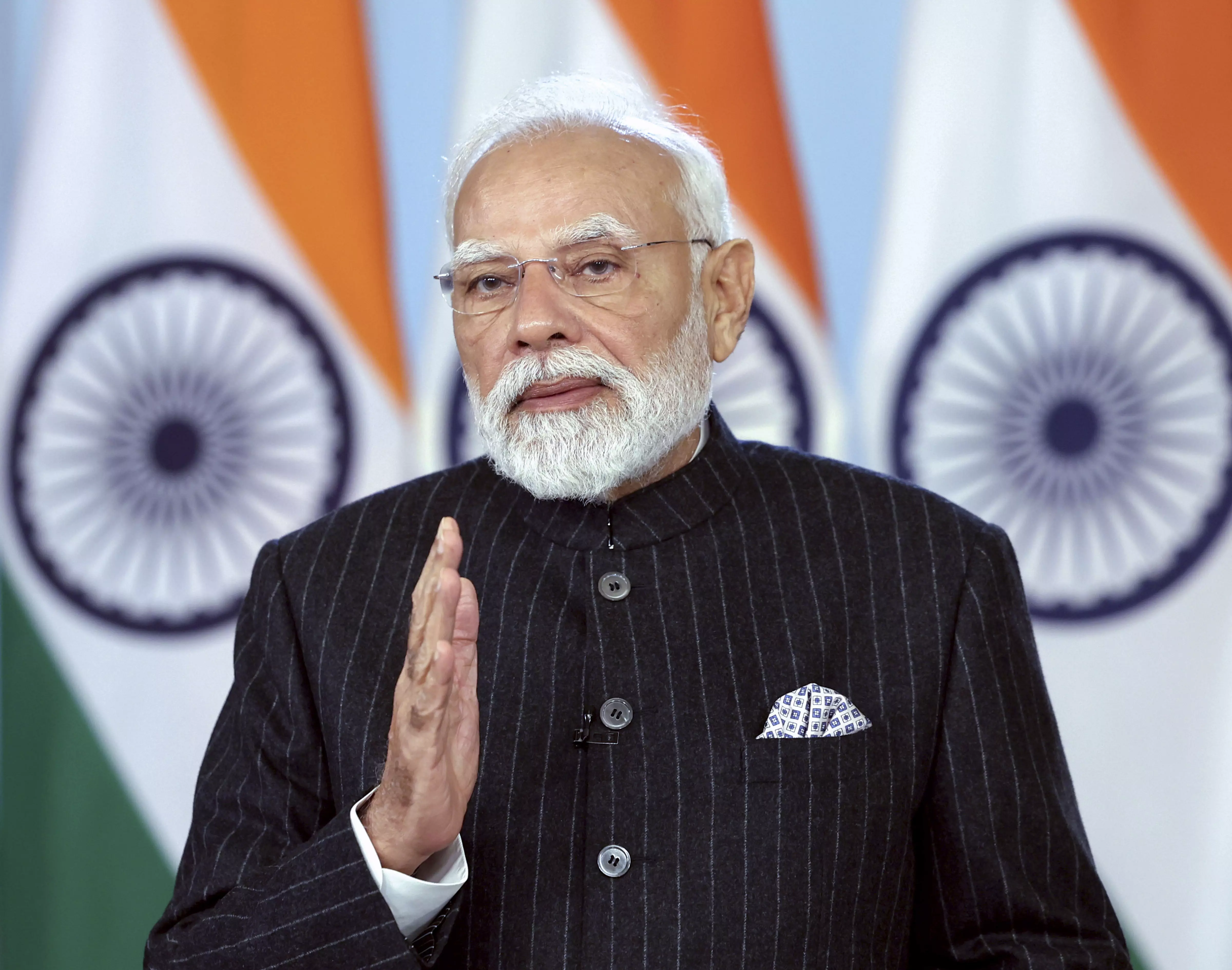
On April 18, 2026, Prime Minister (PM) Narendra Modi made an Address to the Nation. This was just after the operationalisation of the Women’s Reservation Bill was defeated in Parliament, since it was linked to a hurried — and unprepared — attempt to link it to the exceptionally complex, contested and sensitive issue of delimitation.
In any democracy, words spoken from the highest office carry a weight that transcends the immediate moment. When the PM addresses the nation, the expectation is not merely of communication, but of statesmanship. The office is not partisan; it is constitutional. It embodies the collective will, anxieties and aspirations of over a billion people. Therefore, the occasions on which a PM chooses to speak directly to the nation — and the tenor of that speech — are of profound significance.
Traditionally, such addresses have been reserved for moments of national import: war and peace, economic crises, pandemics, natural calamities or transformative policy announcements. When Jawaharlal Nehru spoke on the eve of Independence, it was to articulate a civilisational transition. When Indira Gandhi addressed the nation during the 1971 war, it was to steady a country in conflict. More recently, addresses by Manmohan Singh during the global financial crisis, or by Narendra Modi himself at the onset of the Covid-19 pandemic, were intended to inform, reassure, and unify.
These moments underline an unwritten but widely understood principle: an address to the nation must rise above the fray of party politics. It must speak to citizens as citizens, not as voters only. It must heal, not divide; explain, not inflame.
Yet, the nature of the PM’s last speech was such that the distinction between a national address and a political speech became blurred. Unfortunately, the PM used the platform of a nationally televised address to largely critique Opposition parties, question their motives, or advance narratives that are indistinguishable from campaign rhetoric. This raises fundamental questions about propriety and constitutional ethics.
Can an address to the nation be used almost solely to criticise the Opposition? Strictly speaking, there is no codified law that prescribes the content of such speeches. The Constitution is silent on the matter. But democracies are sustained not only by laws, but by conventions — those invisible guardrails that prevent the erosion of institutional integrity. A Prime Minister is, of course, a political leader. He leads a party, contests elections and engages in adversarial politics. But when he addresses the nation in his official capacity, he must momentarily transcend that role.
To do otherwise is to risk conflating the state with the party, the government with the ruling formation. This is not a trivial distinction. It goes to the heart of democratic fairness. The airwaves used for such addresses — whether through public broadcasters like Doordarshan or All India Radio — are not the property of the ruling party. They are public resources, funded by taxpayers, and meant to serve the entire nation impartially.
This is all the more so when such an address is made during the enforcement of the Model Code of Conduct (MCC), overseen by the Election Commission of India (ECI). The Code is designed precisely to ensure a level playing field during elections. It restricts the use of official machinery, public funds and government platforms for electoral advantage. If an address to the nation, delivered on the eve of elections in states like West Bengal or Tamil Nadu, veers into partisan territory, it raises legitimate concerns about whether the spirit — if not the letter — of the Code has been violated.
Indian political history offers few parallels where a formal address to the nation has been reduced to the tenor of an election rally. Even during periods of intense political contestation, earlier PMs have generally maintained a distinction between official communication and campaign speech. This brings us to the larger question: should there be norms or rules governing addresses to the nation? The answer, to my mind, is an unequivocal yes. Democracies evolve through the codification of best practices. What was once assumed to be self-evident must sometimes be articulated explicitly, especially when conventions begin to fray.
Unfortunately, the ECI did not react, even though it has both the authority and the responsibility to act as the custodian of electoral fairness. While it may be constrained by the absence of explicit legal provisions governing the content of a PM’s address, it is not powerless. It can issue advisories, seek explanations, and, if necessary, censure actions that undermine the level playing field. More importantly, it can lay down prospective guidelines to ensure electoral fairness in the future.
Such norms could include clear distinctions between official addresses and political speeches; restrictions on partisan content in nationally broadcast addresses; and safeguards during election periods to ensure that public broadcasting platforms are not used for electoral advantage. These are not constraints on free speech; they are protections for democratic fairness. In fact, it would be best if the PM himself, in consultation with constitutional bodies and other political parties, would take the lead in defining a code of conduct for national addresses. This would not only restore public confidence but also elevate the dignity of the office.
Ultimately, the issue is not about any one individual or party. It is about preserving the sanctity of a democratic tradition. When a PM speaks to the nation, he occupies a space that is larger than politics. His words must reflect the inclusiveness, restraint and responsibility that such a space demands. In a country as diverse and vibrant as India, where political contestation is both inevitable and healthy, there must still remain certain moments that belong to the nation as a whole. The address to the nation is one such moment. To dilute it to partisan political content is to diminish not just the office, but the idea of a fair democracy.
The challenge, therefore, is clear: to reclaim that space, to reaffirm those conventions and to ensure that when the PM next speaks to the nation, he does so as its voice — not merely as the leader of a party seeking its mandate.