Pavan K. Varma | India At Crossroads On Bail For Umar Khalid & UAPA

For decades, Indian jurisprudence has rested on a foundational principle: “Bail is the rule, jail is the exception.” This doctrine was memorably articulated by Justice V.R. Krishna Iyer, in the celebrated case of State of Rajasthan vs Balchand (1977)
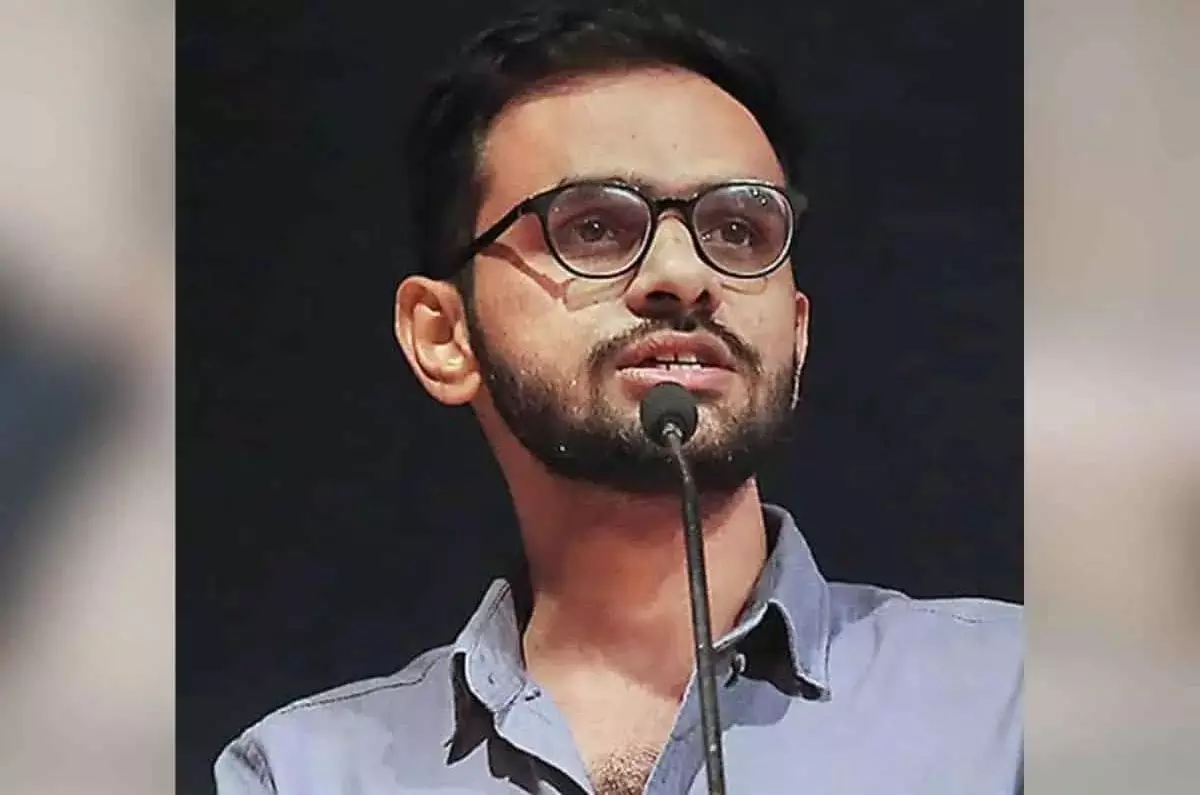
The case of Umar Khalid has become an important test of the Indian republic’s commitment to liberty, dissent and constitutional morality. The question is no longer confined to the guilt or innocence of one individual. It has now acquired a much larger significance: Can a democracy, governed by a Constitution that places individual liberty at its heart, keep an accused person in jail for five years without trial and without bail, while the judicial process itself moves at a glacial pace?
For decades, Indian jurisprudence has rested on a foundational principle: “Bail is the rule, jail is the exception.” This doctrine was memorably articulated by Justice V.R. Krishna Iyer, in the celebrated case of State of Rajasthan vs Balchand (1977), where the Supreme Court underscored that personal liberty cannot be casually sacrificed before conviction. The principle was reaffirmed repeatedly, including in Gudikanti Narasimhulu vs Public Prosecutor (1978), where the Court stressed that deprivation of liberty before conviction must remain an exception justified by compelling circumstances.
More recently, in Union of India vs K.A. Najeeb (2021), a three-judge bench of the Supreme Court held that even the stringent provisions of the Unlawful Activities (Prevention) Act (UAPA) cannot eclipse constitutional guarantees under Article 21 when prolonged incarceration and delayed trials become instruments of injustice. The Court observed that under such circumstances, the rigours of Section 43D(5) of the UAPA could “melt down”.
Yet, despite this settled jurisprudence, Umar Khalid has remained incarcerated since September 2020 in connection with the Delhi riots conspiracy case. Five years later, the trial has scarcely advanced in any meaningful sense. The delay is staggering. Thousands of pages of documents, innumerable witnesses, procedural adjournments, and the cumbersome architecture of UAPA prosecutions have created a judicial labyrinth from which the accused appears unable to emerge.
The troubling question therefore arises: If the state, with all its powers of investigation and prosecution, cannot conclude the process within a reasonable time, should the accused continue to languish in prison indefinitely? Is this not, in effect, punishment before conviction?
The Supreme Court itself now appears to be wrestling with precisely this dilemma. In January 2026, a bench comprising Justices Aravind Kumar and P.B. Varale denied bail to Umar Khalid and Sharjeel Imam, while granting relief to several co-accused. The bench held that delay in trial could not become a “trump card” for bail in UAPA cases and stressed the gravity of the allegations.
However, in a remarkable development only months later, another Supreme Court bench comprising Justices B.V. Nagarathna and Ujjal Bhuyan publicly expressed “serious reservations” about that earlier ruling. While granting bail to an accused in a separate UAPA-related case on May 18, 2026, the bench emphatically reiterated that “bail is the rule and jail is the exception,” even under UAPA. It observed that the earlier denial of bail to Umar Khalid appeared inconsistent with the larger bench ruling in K.A. Najeeb.
This is no minor procedural disagreement. When one bench of the Supreme Court publicly questions the soundness of another bench’s interpretation on a matter involving liberty, it signals that within the highest court there is debate on whether or not the balance may have tilted too far in favour of state power at the expense of constitutional freedoms.
There are both legal and practical implications here. Legally, if an accused can be imprisoned for half a decade without conviction, and without meaningful progress in trial, then does not the process itself become the punishment? In such circumstances, acquittal after 10 years would not restore the lost years, damaged reputation, broken family life or psychological trauma endured during incarceration.
In my view, a larger question is involved. It concerns the increasingly expansive use of draconian laws such as the UAPA. Enacted originally to combat terrorism and grave threats to national security, these provisions have gradually migrated into the domain of political dissent and ideological contestation. The threshold for invoking anti-terror legislation has, in practice, become disturbingly elastic.
The consequence is that the validity of dissent itself — so vital in any democracy — is under challenge. Criticism of the government, participation in protests or provocative political speech can potentially attract charges under laws where obtaining bail becomes extraordinarily difficult. The message sent to citizens is unmistakable: Even if eventual conviction is uncertain, the state can ensure prolonged incarceration through procedure itself.
A democracy confident of its legitimacy does not fear dissent. Indeed, dissent is not an inconvenience to democracy; it is one of its essential safety valves. The framers of the Indian Constitution, having themselves struggled against colonial repression, understood this instinctively. That is why they placed such extraordinary emphasis on liberty, free expression and protection against arbitrary state action.
The Umar Khalid case has consequently attracted substantial international attention. Human rights organisations, civil liberties groups, academic circles and sections of the global press have repeatedly questioned how a constitutional democracy can reconcile prolonged pre-trial detention with the presumption of innocence. To raise such concerns is not to prejudge guilt or to justify genuine cases of sedition, terrorism or unacceptable violence. Courts alone must determine culpability on the basis of evidence. But constitutional morality demands that the state prove guilt within a reasonable timeframe, not incarcerate indefinitely while the machinery of justice crawls forward.
The Supreme Court, as guardian of the Constitution, now stands at a critical crossroads. Its recent observations suggest an awareness that excessive deference to stringent statutory provisions can erode the deeper constitutional promise of liberty itself. The court appears to recognise that Article 21 cannot become subordinate to endless procedural delay.
In the final analysis, the question before India is larger than Umar Khalid. It is whether the republic wishes to preserve the delicate constitutional equilibrium between state authority and individual freedom. If liberty can be suspended for years without trial, then constitutional guarantees risk becoming abstractions rather than lived realities.
The apex court has raised the right question. It is reported that this matter of principle will now be referred to a larger bench. One can only hope that this will be expedited. The nation awaits the right answer.