Pavan K. Varma | If Cong Doesn’t Transform, New Alternative Inevitable

Has the Congress withered away? The question arises with every successive electoral setback. The idea of the Congress is still relevant, but the party that can implement it has tragically unravelled
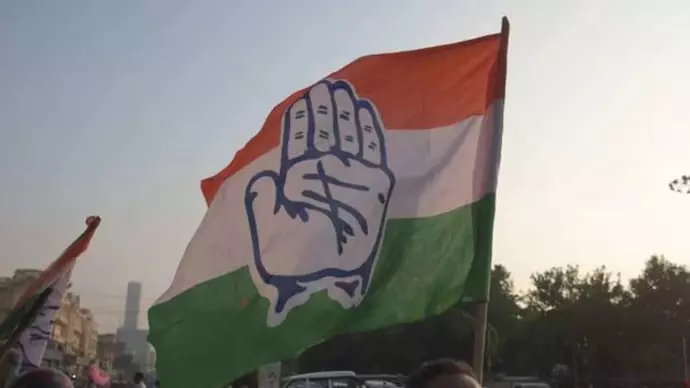
In the recently concluded Assembly elections, the Opposition in Bihar, including the new start-up Jan Suraaj, has been decimated. The NDA coalition has swept the polls. A key take-away from these elections, is the steep electoral decline in the Congress, the only national Opposition party. In Bihar the Congress managed to get just six seats, and a meagre vote percentage of 8.7 per cent.
The Indian National Congress was once not merely a political party; it was a national movement, a repository of ideals and a crucible of leadership that shaped the destiny of a new nation. However, today the Congress finds itself in a state of unrelenting atrophy, as if trapped within a mausoleum of its own past glory.
Has the Congress withered away? The question arises with every successive electoral setback. The idea of the Congress is still relevant, but the party that can implement it has tragically unravelled. 1984 was the last time the Congress got an absolute majority. Since then, it has lost a long series of Lok Sabha and state elections. The erosion has been particularly precipitate after 2014, with the rise of the BJP under Narendra Modi. If one adds up all the parliamentary seats the Congress has won in three successive national elections — 2014, 2019 and 2024 — it still adds up to 195, 78 seats less than a simple majority.
Yet what is most striking is the absence of accountability, the refusal to introspect with the rigour that adversity demands. Among all the political formations in the democratic world, few exhibit the baffling ability to endure repeated failure with hardly a semblance of internal upheaval. The Congress appears locked in a cycle of denial; leadership remains centralised, decision-making opaque, and dissent stifled with both aggression and indifference.
Why is the party bereft of the ability for internal reform? The answer perhaps lies in a structural inversion the party underwent over decades. The Congress that fought colonial rule was a decentralised mosaic of regional leaders, ideological currents, and ground level presence. In recent times, the same Congress has become, increasingly, a dynastic fiefdom, without organisational muscle, rewarding loyalty more than merit.
The Gandhi family cannot but bear a major responsibility for this state of affairs. It has either directly helmed the party during the period of decline, or indirectly been the de facto apex power. In any other organisation, public or private, repeated failure of this nature would have demanded change in leadership. If this has not happened in the Congress it is a myth that there can be no other alternative. However, such is the statis or inexplicable passivity within the party that this has not happened. A putative attempt was made by the so-called ‘G-23’, where some senior leaders attempted to start an internal debate on the need for urgent remedial action. It was a half-hearted and diffident attempt. All that its many meetings achieved was one letter to party president Sonia Gandhi.
But the hostility and aggression with which the family — and the predictable coterie that surrounds it — responded to this well-intentioned attempt, was surprising to say the least. Those who were part of the grouping were almost equated with being betrayers encouraging something tantamount to mutiny. Many of the prominent leaders who were part of the group were ostracised, or their role in the party’s management and projection marginalised, leaving them in no doubt that they did not anymore enjoy the trust of the leadership. At least two prominent names come to mind in this context, Shashi Tharoor and Manish Tiwari.
It is true, of course, that the BJP put all its publicity machinery to lampoon Rahul Gandhi, sometimes unfairly and viciously. Yet, this expected diatribe from political opponents cannot be the sole cause for the party’s poor performance. Rahul must understand that memes and social media trolling is amplified precisely because the party continues to stumble from one electoral fiasco to another. Much of the malevolent animosity directed towards him would be neutralised if the electoral performance of the party substantially and qualitatively improves.
Can a new Congress arise from the ashes of the old? Historically, political regeneration in India has often required schism. The Congress itself has witnessed splits that paved the way for reinvention — from the early divisions of the pre-Independence era to the 1969 rupture that created the Congress (O) and Congress (R), eventually redefining the party’s ideological contours. A party so weighed down today by inertia and internal sclerosis may indeed benefit from a decisive moment of reconstitution. New leadership liberated from hereditary entitlement, fresh ideological clarity and, above all, an organisational revamp rebuilding the party from the grassroots upwards, is imperative. The last is particularly important because even if Rahul Gandhi attracts attention on social media, there can be no substitute for organisational strength which has today almost ceased to exist in many states, of which Bihar is only one example.
The nation must bluntly confront a fundamental truth: Indian democracy cannot flourish without a credible national opposition. A ruling party, however powerful or efficient, must be counterbalanced by an equally persuasive alternative. Democracy is not merely about electoral arithmetic; it is about the constant presence of choice. If one pole becomes overwhelming and the other collapses, the equilibrium that sustains democratic vitality is lost. The existence of a strong Opposition compels introspection within the government, moderates excesses, and enforces accountability.
Regional parties, even if dynamic, are not equipped to offer a cohesive national narrative. They remain anchored to local aspirations, indispensable in their contexts, but incapable of carrying the full weight of India’s pluralistic imagination. The Congress once offered that unifying narrative, one that bridged regions, religions, languages, and classes. Its retreat from that role has seriously narrowed the space for ideological plurality.
If the Congress cannot — or will not — undertake this transformation, then the emergence of a new Congress, or a new alternative, born from the political bankruptcy of the old, may be inevitable. History rarely rewards institutions that refuse to evolve. But it often welcomes new political formations that rise to fill the vacuum left behind. Congress leaders and workers need to act before it is too late.