Patralekha Chatterjee | Shadows of Truce: Fragile Peace & India’s Job Market

Job uncertainty and weak markets hit young workers hard
For India’s youth, distant wars have become psychological choke points. They deepen anxiety in an already jittery job market. The two-week ceasefire announced by the United States and Iran has been widely welcomed. However, given the massive trust deficit between the warring sides in West Asia -- the US and Israel on one side, and Iran on the other -- the ominous shadow lingers.
Rising energy prices, continuing LPG shortages, and early signs of supply chain disruptions are straining manufacturing clusters and raising the spectre of a serious blow to employment generation. For India’s youth, this external shock looms at a cruel moment -- when prospects for secure, salaried work have already been bleak for years, leaving millions vulnerable to deeper economic precarity if the turbulence intensifies. Barring those with generational wealth and connections, it is tough going for everyone -- informal blue-collar workers as much as graduates seeking white-collar jobs.
Between 2021-22 and 2023-24, India added 83 million jobs. Yet, as the Azim Premji University’s “State of Working India 2026” report notes, most were in agriculture or precarious self-employment. Salaried employment -- which offers stability, better earnings, and dignity -- has grown far too slowly.
India possesses the world’s largest youth population -- 367 million people aged 15-29. The number of higher education institutions has jumped from 1,644 to 69,534 since liberalisation. Yet, graduate unemployment continues to be high, with nearly 11 million graduates aged 20-29 unemployed as of 2023. Many young men are leaving higher studies to support household incomes. Formal degrees are no longer a guarantee of secure work.
Self-employment has risen, not always from entrepreneurial zeal but from the lack of better alternatives. Migration from Bihar, Uttar Pradesh and Odisha to industrial hubs, once a pathway to opportunity, is now fraught with uncertainties.
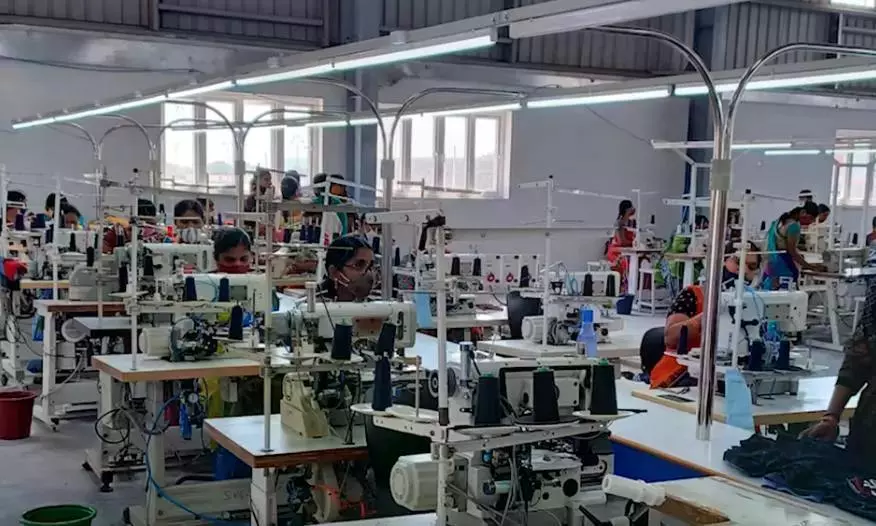
Industry warnings indicate that the conflict, involving military strikes by the US and Israel on Iran, and the latter’s retaliatory attacks, has actively disrupted both domestic employment in India and overseas migration. According to one estimate, over 300,000 job placements for Indians in the Gulf region could be delayed. Since March 2026, thousands of Indian nationals, including large numbers of blue-collar workers, have already returned home due to safety concerns and energy shocks. Sectors such as textiles, chemicals, fertilisers and construction are facing direct hits. In major hubs like Surat, factory supervisors report workers leaving for their hometowns due to rising costs and potential plant shutdowns.
The conflict also threatens annual remittances from the Gulf countries, which account for nearly 38 per cent of India’s total inflows. A prolonged crisis could slash this vital income for households in Kerala, Uttar Pradesh and Bihar.
As Dr Mrinalini Jha, of the O.P. Jindal Global University and Azim Premji University, puts it: “It is too early to talk about the impact of the ongoing West Asia conflict on India’s job market. However, any sector directly affected by the conflict or facing its downstream effects is likely to suffer: aviation, oil and gas, hospitality, and several others. An economic slowdown is highly probable, and new hiring may stall. We must also bear in mind the state of employment in the country even before the conflict. While unemployment has declined, the quality of jobs remains a serious concern. There is now considerable evidence that the two segments showing a sharp rise are unpaid family helpers and ‘own-account’ employment (self-employment). At the household level, in many instances, family incomes have been sustained largely by increasing the number of family members working. If the war continues and the Indian economy slows down, like many other economies, it could significantly dampen hiring. The stock market has already been hit, and the net worth of many businesses has declined steeply. It is difficult to predict who will suffer more: youth or older workers. With reduced liquidity, businesses are likely to postpone expansion plans, directly affecting employment. Possible scenarios include hiring freezes, layoffs, or hiring at lower salaries. All of this points to an expansion in the number of people living in precarious economic conditions.”
Dr Jha’s assessment is already materialising on the ground. India’s MSME sector, with 78.9 million enterprises employing nearly 340 million people, is the largest source of jobs for the country’s young workers, particularly migrants. “Last month, many migrant workers left because of the LPG crisis. The worst-affected were those involved in weaving. But many of us are running community kitchens for our migrant workers… we are hoping for peace, critical for markets”, said Jitendra P. Vakharia, president of the South Gujarat Textile Processors Association.
The India SME Forum, an industry body representing micro, small and medium enterprises, has highlighted the deeper structural risk: “The present challenge is not merely a matter of rising input costs. In several clusters, energy stress is now beginning to affect worker subsistence and labour continuity. Where production is irregular and living costs are rising, migrant workers begin to reassess the viability of staying in urban industrial centres. This creates a slow-burn but serious risk for MSME clusters that depend on concentrated pools of skilled and semi-skilled migrant labour. A calibrated response today would be far less costly than rebuilding disrupted production ecosystems tomorrow,” it says in a policy brief.
For blue-collar migrants, the situation is equally harsh: fragile livelihoods are eroding just as household dependence grows. The impact is spreading slowly across key clusters like Morbi’s ceramics industry, Tiruppur’s knitwear sector and Firozabad’s glass industry.
As the India SME Forum argues, if the disruptions persist, MSMEs risk production slowdowns and shutdowns in key clusters, erosion of export competitiveness -- particularly against Vietnam, Bangladesh and China -- supply chain fragmentation affecting larger industries, loss of skilled labour pools that are difficult to rebuild, and increased informality and financial stress.
A proactive and coordinated response can prevent disruption of industrial clusters, protect employment, safeguard export competitiveness, and build long-term resilience against future global shocks, it says. Energy relief for stressed clusters, liquidity support, measures to retain migrant labour, and diversification of fuel sources are now essential.
The conflict in West Asia is geographically distant, but its consequences for India’s job market are immediate. For millions of young Indians, these risks potentially turn a difficult situation into a generational crisis. This decade was our best chance to absorb a massive, educated youth into productive jobs. Instead, structural weaknesses combined with repeated external shocks are undermining that historic opportunity. While India’s working age population is likely to decline after 2030, urgent, targeted action is crucial under the shadow of West Asia’s fragile truce.