Parsa Venkateshwar Rao Jr | PM’s Austerity Call Timely, Govt Should Also Follow It

PM urges fuel saving, restraint and renewables amid prolonged oil supply stress.
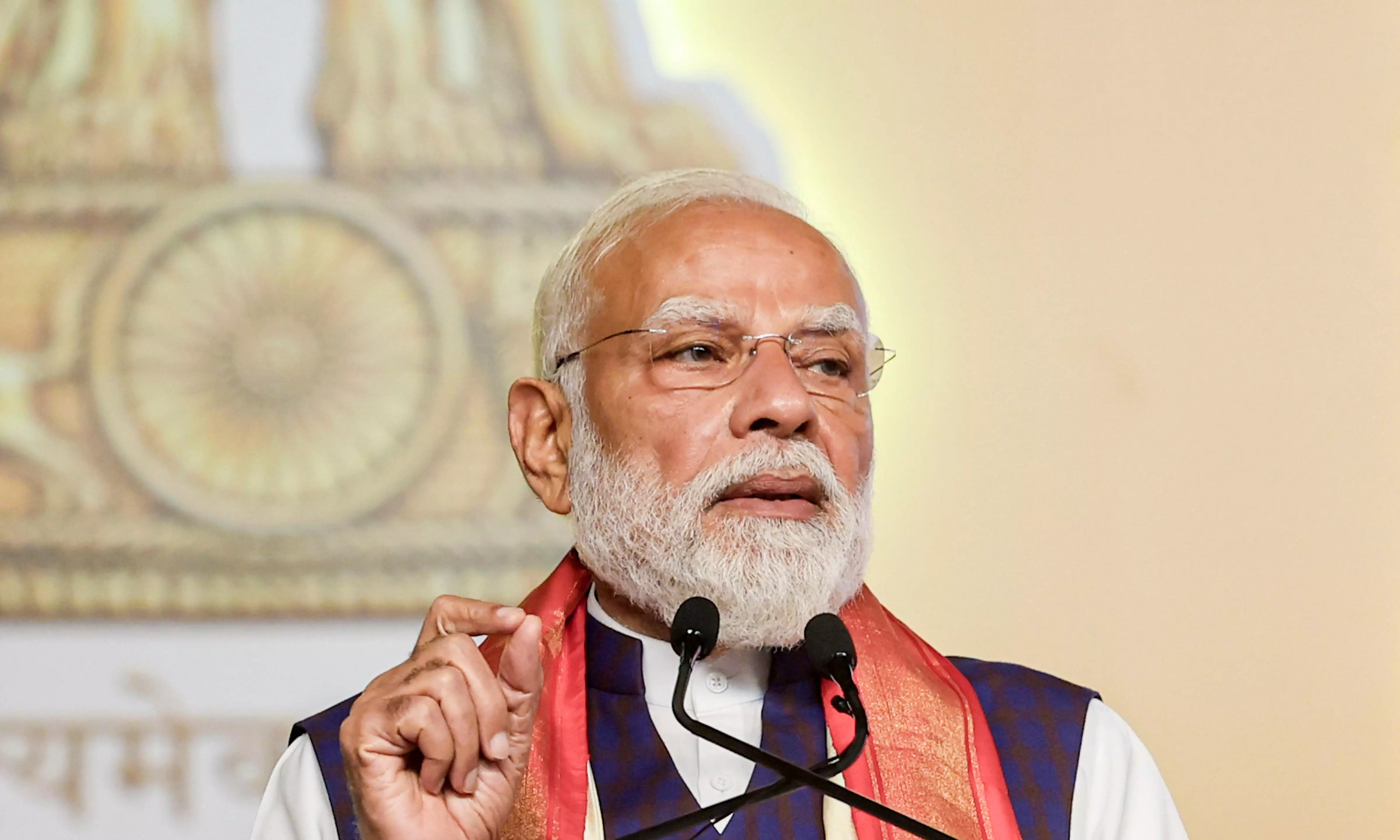
Prime Minister Narendra Modi’s exhortation at a BJP public meeting in Hyderabad on Sunday to use less petrol and diesel by travelling less, car-pooling, of working from home, of switching to electric vehicles (EVs), of not undertaking foreign travel and of buying less gold can be interpreted as a positive advisory, though it comes two months after the eruption of the war in West Asia on February 28. The expectation that the war would end in a few days or a few weeks turned out to be totally unrealistic with the two sides, the United States and Iran, digging in their heels despite the realisation that the conflict cannot last for too long. But the ceasefire of April 7 has not led to the certainty of peace that would stabilise the shattered economies of the Asian region, extending from west to east. It would appear Mr Modi felt the need to tighten the economic belt, as it were, because the effects of the oil supply and trade disruptions due to the Strait of Hormuz choke point continue to linger and may last longer, at least for a year. The Ministry of Finance’s monthly report for April has already hinted at the economic stress, if not distress, this would cause India. Mr Modi’s first public expression of the need to trim economic sails is a clear sign that the country will have to prepare itself to bear the pain of sliding economic growth as a consequence of the war.
It will always be debatable whether the Prime Minister should have spoken of the looming economic distress earlier. The government will say that the war had no impact in March and even in much of April, but now that the “no-peace-no-war” situation has started to impact economic prospects, and the Prime Minister has spoken at the right time. Nevertheless, it will be necessary for the government to set an example by cutting down its own conspicuous consumption patterns. The act has to start at the very top, with the Prime Minister, his Cabinet colleagues and top government officials travelling less within the country and abroad. The public rallies that had become a necessity for the ruling BJP during the recent state Assembly elections, which mark political fanfare and extravaganza, will have to end to prove that the government is willing to practice what the prime minister wants the people at large to do. It would set a good example if senior ministers and officials used public transport, and the Metro where it exists, to travel to their work place. It might seem unrealistic to expect that the administrative staff of the government can resort to work from home as digitisation is not total in the government as it should be. It is also open to question whether the public transport system, as it exists today in urban India, can bear the pressure if people using two-wheelers and cars were to take to buses and Metro networks. It is always the case that a crisis is an opportunity, and the present crisis in oil supplies should help change behaviour patterns of commuters. It is the right time for more people to switch to public transport. It is again a suggestion that the finance ministry’s April report had hinted at.
Mr Modi’s advice to the people to buy less gold is a curious one. The government has the option to impose restrictions on the import of gold but Mr Modi possibly realises any governmental intervention would be pressing the panic button. Therefore, he wants the restraint in gold transactions to be voluntary. It is indeed a hard choice. The question is whether the Prime Minister was doling out a homily or whether there is any hard evidence that the consumption of gold is hampering economic activity. That is not yet clear.
It would appear that Mr Modi makes momentous public announcements based on expert analysis inside government. This was in evidence when Mr Modi announced the lockdowns during the earlier phase of Covid-19 in April-May 2020, and there was not enough preparation to move to a complete shutdown.
If the austerity measures that the Prime Minister has hinted at in his public speech are to be effective, appropriate government action is required. What the Prime Minister’s exhortation is suggesting is a slowdown in economic and daily lives, reducing energy consumption, especially the fossil fuel-based ones. It means oil and gas supplies for the next six months and more are under stress. This would require that generation of power from renewable sources of energy has to be stepped up. Of the 533 GW electricity installed capacity, solar contributes 150.26 GW (28.21 per cent) and coal contributes 228.56 GW (42.90 per cent). Solar provides 21.5 per cent of peak level demand and 66.9 per cent comes from thermal (coal)-based generation. India has improved by tremendously in increasing the power generation from renewable sources to more than 50 per cent of installed capacity. But there is some way to go before the dependence on fossil fuels can be reduced further.
There is also the fact that India has remained a silent spectator in the West Asian crisis. India has a direct stake in peace in the region because nine million Indian workers are living and working in the Gulf Arab states, and they contributed 38-40 per cent of record remittances of $135.4 billion in 2025. India should have played an active role in pushing for a ceasefire between the United States and Iran.
There has been a strange reluctance on the Narendra Modi government’s part to make it voice felt in resolving the conflict. India has a major economic stake in peace in West Asia, and that it refuses to throw in its weight for talks between the combatants remains a puzzle. The argument that India has no sufficient influence either with the US, Iran or Israel is almost a declaration of helplessness. India should be actively pushing for peace in West Asia because its national interests are involved. India’s refusal to say or do anything in the matter is reducing India’s legitimate weight in global affairs as a major economy and an attractive big market for investments that could spur global economic growth. India may not be the ostentatious “Vishwa Guru”, but it is still a major player on the global stage and it should play its part.