Parsa Venkateshwar Rao Jr l Did Lalu’s Image Hit RJD Chances? Next time, Chirag The Man to Watch

Psephologist and political analyst Yogendra Yadav rightly pointed out that the NDA had access to larger segments of the voting public while the RJD was largely restricted to its traditional Yadav base
The National Democratic Alliance, comprising the BJP, Janata Dal (United), Lok Janshakti Party (LJP) and others, have emerged the undisputed winners in the Bihar Assembly elections, leaving the main Opposition party, Rashtriya Janata Dal (RJD), and its Congress ally far behind. The RJD was left to fight the strong NDA combine alone, and it turned out to be an unequal contest. Psephologist and political analyst Yogendra Yadav rightly pointed out that the NDA had access to larger segments of the voting public while the RJD was largely restricted to its traditional Yadav base. The Muslim vote as a factor seems to have melted away. The Rs 10,000 loan disbursement by Prime Minister Narendra Modi has done its bit while chief minister Nitish Kumar’s election promise of Rs 10,000 handouts must have made it a reasonably attractive proposition. But this can’t be the sole reason for the Modi-Nitish victory.
The election result must be accepted at face value. The NDA has won, and the Mahagatbandhan has lost. Did the Special Intensive Revision (SIR) in Bihar in the run-up to the polls determine the outcome in any way? It does not appear so. The difference in seats that each side won doesn’t leave much room for speculation. There could have been doubts if it had been a close contest.
In comparison to Uttar Pradesh, its western neighbour, it’s not a straight contest in Bihar. Alliances are important. If the BJP and JD(U) had not fought together, there would have been no winners. Neither the BJP nor JD(U) are in a position to form the government on their own. Chirag Paswan would have played a key role if the two big NDA parties had not won a large number of seats on their own. But Mr Paswan has shown he has a large enough base of his own. His strategic importance will only grow in inverse proportion to the strength of the other two parties. He simply cannot be ignored.
That leaves the RJD with its Yadav base rather alone. The Congress has proved to be a weak partner. This is as far as it goes in terms of political arithmetic.
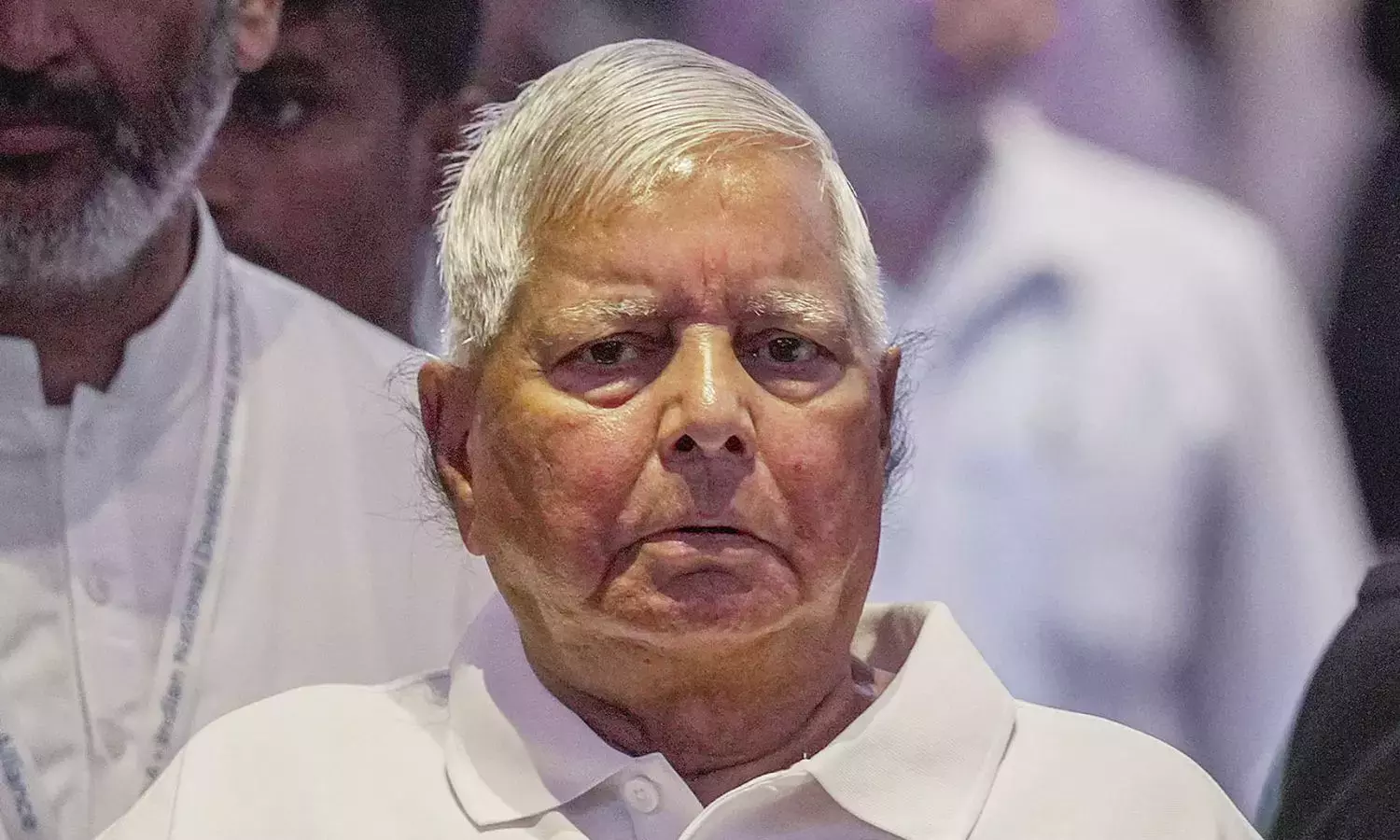
There is also the perception factor, which cannot be played down. The perception of the RJD as dominated by the Lalu Prasad Yadav family is quite large in the public mind. The record of Lalu Yadav and Rabri Devi had not been good enough in plain terms. Like with the Congress, corruption charges stick. It is something that can’t be shaken off easily. Like with UP’s Samajwadi Party, the RJD in Bihar evokes negative images of Yadav misgovernance. Besides widening its electoral base, the RJD has to do something to clean up its image, in terms of perception.
The BJP under Prime Minister Modi and Union home minister Amit Shah had mastered the art of winning elections. Its strike rate has been impressive, though it had faced setbacks earlier in Delhi, Rajasthan, Punjab, Chhattisgarh, Jharkhand and West Bengal. The victories have more than compensated the losses. Today the saffron arc stretches from Gujarat and Maharashtra to Odisha and Assam. It can be compared to the Mughal Empire from Akbar to Aurangzeb. The BJP and its sycophants would not relish the comparison with the Mughals, but it holds in terms of extending the BJP's footprint across North India from the west to the east. The BJP’s electoral successes are gratifying to Mr Modi and Mr Shah. It is the fulfilment of a dream for the BJP and its ideological mentor, the RSS. The hegemony of Hindu nationalism is now an achieved goal.
The question is whether the overwhelming electoral success of the BJP is good for Indian democracy. This question came up from the 1960s to mid-1970s when the Congress was the single dominant party. Of course, no one can create a democratic alternative. It must emerge naturally from the democratic churn itself. There were people who had wanted the Congress to facilitate the emergence of a respectable Opposition. It will thus be unreasonable to expect the BJP to create space for the Opposition. The Opposition parties must get their act together on their own. If it doesn’t happen, then democratic roots in the country would weaken.
Despite the Nehru family’s dominance, the Congress remained fiercely democratic in its inner workings. The party is full of feuding factions and noisy dissidents. The BJP is not a democratic party in its workings. Its working is patterned on that of the RSS, which is almost like a secret society: it has a more ordered system. This can be traced to its shakha system, or parade ground drill regime. You fall in line and follow orders. The RSS is under the aegis of the sarsanghchalak, or supremo. The BJP follows the leader. It is Narendra Modi. Unlike Atal Behari Vajpayee or L.K. Advani, Mr Modi’s frame of mind is that of sarsanghchalak. He leads and the party follows him. The danger to democracy arises from this leadership principle.
The immediate goal of the BJP after the victory in Bihar is West Bengal. It is going to be difficult to dethrone Mamata Banerjee because it is Mamata, and not the Trinamul Congress, which stands between the BJP and victory in that state. No election is the final seal. Every election needs to be fought. Victory is not guaranteed. The winning party and the loser have to fight every election. There is no such thing as a carryover in the democratic process.
Electoral outcomes might often seem unfair and unseemly. They can well be manipulated through both fair and unfair means. But there is the statistical factor. Things eventually get sorted out. The electoral graph rises and falls.