Parsa Venkateshwar Rao Jr | After the Ruling: Kejriwal Gets Big Boost; Aap-BJP War To Intensify

Judge quashes charges; verdict seen as setback for BJP
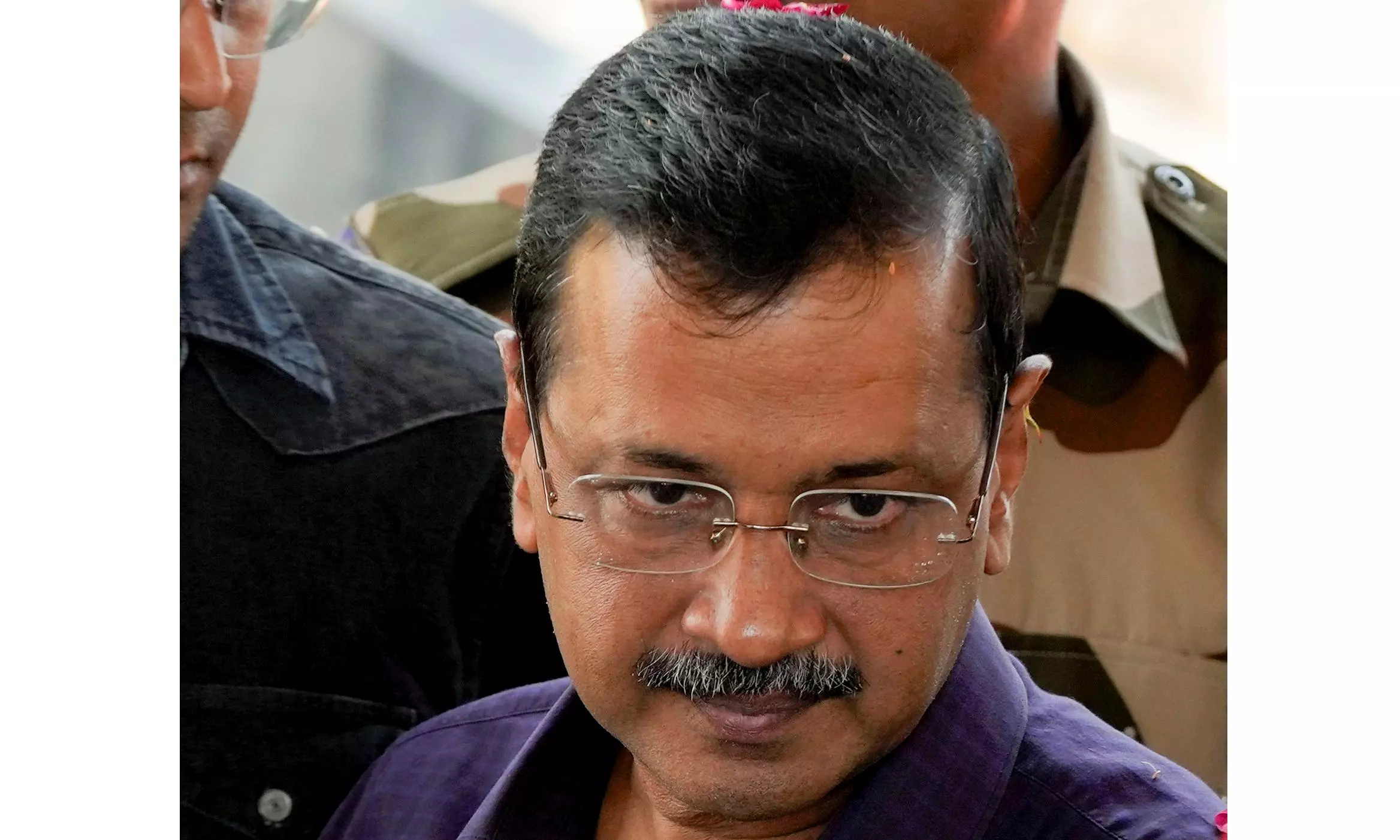
Arvind Kejriwal is certainly relieved as special judge Jitendra Singh quashed the case filed by the CBI and the Enforcement Directorate over the privatisation of liquor sales in Delhi. The Kejriwal government repealed the policy after the controversy of corruption surrounding it. Mr Kejriwal’s colleagues and several others also have been acquitted. Judge Singh rebuked the investigating agencies for filing the case based on weak charges, which did not pass the legal threshold. It is the most resounding rebuke to the Narendra Modi government because both the CBI and the ED are agencies which work under the supervision of the Central government. The CBI is part of the Department of Personnel and training, which comes under the Prime Minister’s Office. The ED is part of the finance ministry.
Whatever the merits or demerits of the liquor sales policy of the Kejriwal government, the corruption case filed against the former Delhi chief minister, against former deputy chief minister Manish Sisodia and many others in the AAP was clearly seen as the BJP’s determined attempt to tarnish the anti-corruption crusading party’s knight-in-shining-armour image. It is also quite clear that the corruption case and the high-profile arrests of top AAP leaders played a decisive role in the BJP’s victory in the Delhi Assembly elections in February 2025. Though the BJP and the Modi government are sure to deny any ulterior motive in pursuing the corruption charges, it is much too evident that it was part of a political strategy.
Now that the charges and accusations have been overturned by the court, it remains to be seen what the Delhi high court will have to say as the CBI has filed an appeal challenging the lower court’s verdict.
Mr Kejriwal, of course, expects to make his way back to the political helm. In many ways, Mr Kejriwal is the undeclared supremo of the AAP. The party however wants to prove that it is based on its clean governance rather than on the personality factor of Mr Kejriwal, but given the social dynamics of Indian politics it is the leader who is the anchor of a political party’s fortunes. Mr Kejriwal is an essential factor of the AAP’s success.
The media made much of Mr Kejriwal’s emotional breakdown when he cried before the cameras. The media has generally been quite contemptuous of Mr Kejriwal’s personal issues. It had made a point of focusing on his bouts of cough a decade ago when he was fighting the election a second time in 2015. The emotional breakdown could be seen as a symptom of Mr Kejriwal being not hard enough to take the blows of a powerful adversary, especially that which is at the helm in the Central
government, and that the tears may indicate that the gentle middle-class individual that he is he cannot stand up to mental and physical torture of accusations, interrogation and imprisonment. But Mr Kejriwal is a consummate artist who can use his personal vulnerabilities as a political trump card.
Prime Minister Narendra Modi faces stiff competition from Mr Kejriwal in political theatrics. The court verdict acquitting Mr Kejriwal and his AAP colleagues is sure to turn public sympathy in his favour, and there is good enough reason for the BJP to lose sleep over it. The stinging judgment delivered by Judge Singh provides enough rhetorical ammunition for Mr Kejriwal to turn the tables against Mr Modi and the BJP.
There are plenty of political stratagems lurking behind these developments. What is of significance is that both the AAP and the BJP belong to the rightist end of the political spectrum. The question to be asked is whether the AAP has the endorsement of ideological mentor Rashtriya Swayamsevak Sangh (RSS)? It would appear that it does. So, the RSS would not have liked the BJP-Modi operation to demolish the AAP. It is then possible that the invisible army of RSS volunteers could lend support to the AAP. The struggle for influence and power in the political arena between the AAP and BJP will be fought behind the scenes. Mr Kejriwal’s India Against Corruption movement was no ordinary middle-class movement which the likes of Prashant Bhushan and Yogendra Yadav believed it was. Mr Kejriwal’s innate Hindu middle-class conservatism lent a different political profile to the AAP, and this played a significant role in the electoral victories of the AAP in 2015 and 2020.
Is there then room for two right-wing parties? The argument would be that AAP will remain a regional party, and the BJP will be a national party. The demarcated spheres of influence of the AAP and the BJP need to be marked out.
Mr Kejriwal and the AAP became part of the Opposition INDIA bloc, but the AAP does not appear to be too comfortable in the company of the Congress and the Communists, and even socialist organisations like the Samajwadi Party (SP) and the Rashtriya Janata Dal (RJD). A clear hint that the AAP is a right-wing Hindu conservative party was given when Mr Kejriwal made the celebration of Ram Navami an official programme.
The mortal combat between the AAP and BJP can be intense and even cruel. The BJP and the Narendra Modi government will try to work their way around the special judge’s indictment of the investigative agencies. It won’t be surprising if the government were to come up with a fresh set of charges or cover the holes in the earlier charges. Mr Kejriwal can’t rest too long on the victory afforded by the special judge’s verdict. The BJP does not want to share political power with anyone, either ideological rivals like Mamata Banerjee’s Trinamul Congress or M.K. Stalin’s DMK, or ideological fellow-travellers like Mr Kejriwal’s AAP. Narendra Modi and the BJP want to reign supreme and alone.