Pakistan Stirs the Hornet’s Nest with War on Taliban, Strikes on Kabul

The Afghan Taliban government is horrified at the audacity of the Pakistanis flexing their obvious air superiority vis-à-vis the non-existent air defences of the still ragtag Afghan Taliban regime.
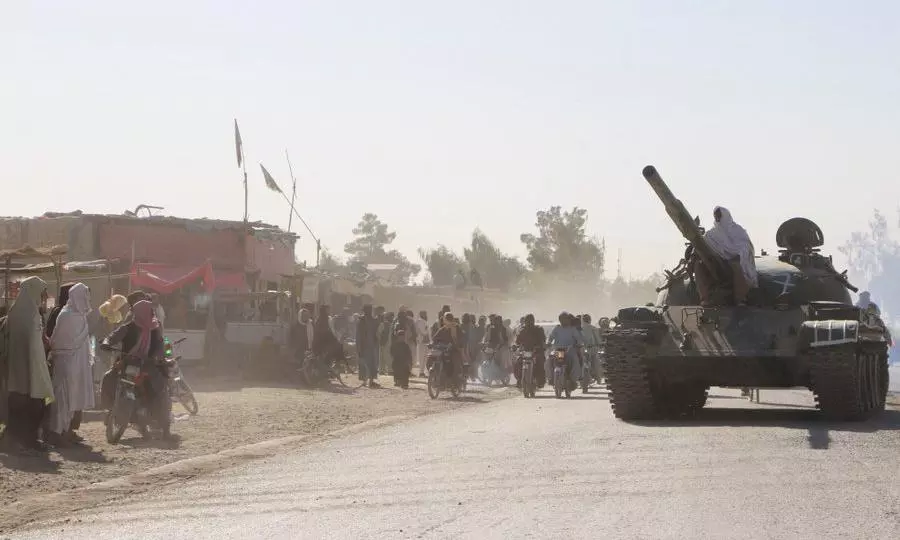
In the unforgiving swathes of Afghanistan thrives the time-honoured code of conduct called the “Pashtunwali”. One of the Pashtunwali’s most sacred tenets is “Badal” – implying the insistence on restoring honour against the enemy, which is more than simply revenge. The obligation to undertake “Badal” may last for generations, as giving up on any task is regarded as an unacceptable loss of honour. This is an anathema to the proud Pashtun, who has for centuries fought furiously and worn out the mighty superpowers of their time, such as the British Empire, the Soviet Union and, most recently, the United States of America. As the Afghan saying goes: “A debt of blood never expires” (obligation to answer a perceived insult endures timelessly)!
Today, a counter-intuitive and dangerous situation has spiralled out of control between the two neighbours, Islamic Republic of Pakistan and Islamic Emirate of Afghanistan, which till not long ago described their bilateral relations fraternally as “brotherly Islamic nations”. It is particularly ironic for the Afghan Taliban movement (founded by Mullah Mohammad Omar), that was groomed and nurtured in the dusty Deobandi madrasas in places like Quetta and Peshawar — fully supported by Pakistan’s infamous spy agency Inter-Services Intelligence (ISI).
As late as August 2021, when the Afghan Taliban stormed into Kabul and took over the reins, the unmistakable hand of Pakistan was well established. The optics of the surreal dash by the ISI’s then D-G, Lt. Gen. Faiz Hamid (now court-martialled), to Kabul to hobnob and sip tea with the Afghan Taliban leaders to ensure the presence of ISI lackeys in the new government, are frozen for posterity.
But soon enough, the proud Afghan Pashtuns refused to kowtow to Pakistani diktats blindly. Such a stand against the once-sponsor of the Afghan Taliban (meaning Pakistan) had widespread public backing as Pakistan has always had a murky reputation of being a pesky and unreliable neighbour.
Soon enough, two specific codes of the Pashtunwali — “Melmastia” (hospitality) and “Nanawatai” (granting asylum or sanctuary) came into play as Pakistan started demanding action against the Pakistan-facing militant groups with bases across the unrecognised Durand Line, which serves as the de facto border between Afghanistan and Pakistan. It is culturally unacceptable and simply dishonourable to let down “guests”.
The fact remains that both the Afghan Taliban and the Pakistan offspring, Tehreek-e-Taliban Pakistan (TTP), were born of the same fount and share ideological moorings, as once instilled by the Pakistani ISI. It is the same combination of codes and spirit that had led to the US invasion of Afghanistan in 2001, as the Afghan Taliban, who had nothing to do with the 9/11 attacks on America, simply refused to turn in the chief perpetrator of 9/11, Osama bin Laden from Saudi Arabia, who had sought — and got — protection in Afghanistan.
As the honeymoon between the Pakistanis and Afghanistan got over rather early after their second coming in 2021, the attacks on Pakistan by groups like Tehreek-e-Taliban Pakistan (TTP), Daesh, Al-Qaeda or even the Baloch groups have been relentless.
Pakistani frustrations did lead to regular border skirmishes, and even occasional airstrikes into ostensible “bases”. Over time, the hatred and suspicion between the Pakistanis and the Afghans had only worsened.
But it hit an all-time low with the recent and unprecedented Pakistani attack on Afghanistan, pointedly named Operation “Gazab lil-Haq” (righteous anger for the sake of truth). Islamabad claims to have retaliated following attacks at 53 sites on the Afghanistan-Pakistan border. Deep and mammoth aerial attacks on 22 Afghan locations as far as Kabul, Kandahar, Khost and Paktika, among others, were conducted. Islamabad claims to have killed 274 “terrorists” with about 400 injured.
Naturally, the Afghan Taliban government is horrified at the audacity of the Pakistanis flexing their obvious air superiority vis-à-vis the non-existent air defences of the still ragtag Afghan Taliban regime. Considerable hardware destruction, including more than 100 Afghan tanks, armoured vehicles and artillery pieces, are claimed.
However, despite the initial bravado of having “hit” the Afghan infrastructure and fighters of what Pakistan calls “Fitna Al Khawarij” (pejorative term for the TTP group), the portents for the Pakistanis are darkly grave. The Afghan side (both the government and the Pakistan-facing groups) are the battle-hardened masters of asymmetric and long-drawn warfare of unimaginable fury and tenacity.
This attack, especially strikes in Kabul, will trigger extreme passions on the Afghan side and no element in the Afghan Taliban government can now afford any sort of affiliation with Pakistan. The breach of trust is now complete and decisive.
Revered emotions like the Pashtu saying “Sar ba warkom, nang ba na warkom” (I may give my head, but I will not give my honour), will come into play. Retaliatory attacks by the Afghans and Pakistan-facing groups are bound to escalate.
The biggest asset that the Afghan side has is the sheer presence of well over 1.5 million Afghan refugees in Pakistan, even after nearly two million were forcibly deported recently. The angst within this angry community can unleash its own dynamics that are virtually uncontrollable for the already-stretched Pakistani armed forces.
Activities like cross-border attacks, hit-and-run guerrilla warfare, suicide bombers, IED usage, creating safe havens and, above all, a strategy of patience that had earlier consumed superpowers, can now wear out the Pakistanis as they have stirred the hornet’s nest.
With an historic and institutionalised culture of “Badal” and “Nang” (honour) besetting the militarily inferior Afghan side, the past masters of winning brutal wars of attrition — Afghans — will ensure “Badal”.
The writer is a retired lieutenant-general and a former lieutenant-governor of the Andaman and Nicobar Islands and Puducherry.