OF CABBAGES AND KINGS | Of Satyajit Ray and Bollywood… Mother India & Modern Myths | Farrukh Dhondy

Though the entire event was molto interesting, this column is not, gentle reader, going to bore you with a resume and account of these. Just a way to introduce a lecture by the distinguished Malayali editor and filmmaker, Bina Paul, on “independent” cinema in India
“Is the repentance of the guilty a game?
A sort of act to alleviate their shame?
Does the imagination rehearse the pain?
Were years of sincere emotion all in vain?
The mind is deceived when the eyes are green
Distorting the value of what has been!”
From The Proverbs of Cat-Alone-Here, by Bachchoo
I have spent the last week in Terrassa, a spectacular ancient town near Barcelona in Spain, attending a conference and workshop of distinguished directors and some novice screenplay writers.
I came away from the event with a souvenir mug, a notebook – errr... no … not those … with new friendships and humble, respectful and very happy memories. And yes, some of us indulged in vino bianco -- others other exhilarating somas.
Though the entire event was molto interesting, this column is not, gentle reader, going to bore you with a resume and account of these. Just a way to introduce a lecture by the distinguished Malayali editor and filmmaker, Bina Paul, on “independent” cinema in India.
Bina’s thesis was a comprehensive account of the break from “Bollywood” of regional cinema with valuable advice to the young film-maker audience on funding, festivals and the world of independent filmmaking.
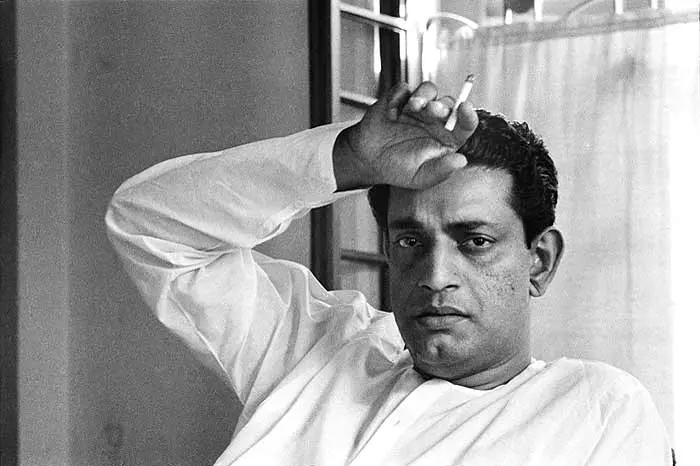
She landmarked the break with the traditional Hindi film with the works of Satyajit Ray and Mrinal Sen. Obvious. And it made me think!
In the history of literature, the Europeans broke with the myths of religion and the epics of legend to invent the “novel” -- the literary form which embraced observed reality and fictionalised it -- with all its defiant contradictions. Yes, Tolstoy, Dostoevsky, Baudelaire, Rimbaud, Proust, Austen, George Eliot… etc.
And then, of course, the Bengalis followed. That was where the novelistic conviction of Satyajit Ray departed from the modern myths of the Hindi, “Bollywood” filmmakers.
Modern myths? Yes! Their founder was the genius, Raj Kapoor. Gandhi, Nehru and a million others fought for and achieved Independence from colonial rule.
Yes, we were free citizens in our own democracy, but who the Fuckleberry Hinn were we? Raj Kapoor set out to provide, through the universal idiom of film, a mythical answer.
We were the nation of the peasant on whose lips truth always resided, whose heart was dedicated to purity, whose guests were to him or her more precious than the soul itself.
Remember?
Hoton pey sachchahi rehti hai/ Jahan dil mey saffai hoti hai/
Hum oos desh key vaasi hai/ Jis desh mey Ganga behti hai...
Really??? Yes, the geographical reference of the land of the Ganga is accurate… but “truth on every Indian lip”?
And when Nargis broke from Raj Kapor and took on the role of Mother India, she was acting a role, not in Raj’s modern myth of Indian ethics and societal virtue, but the ancient Indian myth in which a mother sees her duty to her dharma above her maternal love for her son.
Independent cinema -- yes, Satyajit Ray onwards -- broke from modern and ancient myths to embrace observed, novelistic reality -- even though Pather Panchali championed the wretched of the Indian earth.
Yes, Indian independent cinema built not only on observation of reality but on political sympathy for parts of it. Think of the films made by the “art” cinemawallas, which presented the deprivations and degradations of sections of the Indian population to which they certainly didn’t belong. It was “behalfist” cinema -- with very noble, socially complaining, but progressive intent.
Indian independent cinema religiously held the song-and-dance portrayals of popular cinema in contempt and avoided these routines, which I always considered metaphors for portraying sexual desire and interaction -- which of course could not be portrayed, as Western films did, in graphic realism. Sexual portrayal has to remain India’s hypocritical, hidden reality.
The myth-novelistic reality dualism exists in Hollywood. Though I have no statistics to prove it, instinct tells me that America’s mythical product, born of its history, travels internationally to a much greater degree than its novelistic counterpart.
Hollywood’s first enduring myth was that of the “cowboy”, an agricultural worker in any culture, becoming the arbiter of right and wrong, and the hero and dispenser of justice. The supreme historical irony of this myth is the fact that it’s based on the invasion of the lands of the native Americans by ruthless, armed settlers.
The myth that succeeded this “cowboys and Indians” arrogance, arose from the rapid industrialisation of the United States. This is the myth of Captain Marvel, of Superman and other human creatures who acquire or manifest mechanical and technological powers. They can fly, they have X-ray vision and extraordinary powers by which they can transform themselves from human to superhuman. Some of the heroes of this mythical dimension are given to cultural appropriation, dressing up and acquiring the powers and predilections of bats or spiders.
Bina’s lecture said that it was the regional language films, starting perhaps with Bengali, that pioneered and developed Indian independent cinema. While the “Bollywood” myths and fantasies of an unarmed hero fighting off hordes of armed villains, or two hundred village women appearing out of nowhere to do a perfectly choreographed dance, have a wide national appeal, the realism of regional cinema has evolving, smaller but increasingly-dedicated audiences.
It is obvious that just as Ray’s films appealed very widely to non-Bengali audiences, the regions will inevitably provide some genius/geniuses whose films will have wide national and even international appeal. Even now? Yes!