OF CABBAGES AND KINGS | Of Robert Clive, The Spice Trade And Famine During The British Raj In India | Farrukh Dhondy

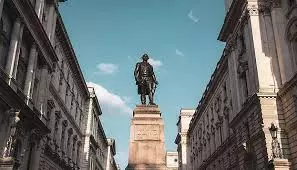
Of course, the bronze statue in Whitehall is a monument to the view of British colonial history as a great civilising force bringing enlightenment in all sorts of ways to the countries it colonised and exploited
Baroness Thangam Debbonaire (yes, real name) is a member of Britain’s House of Lords. She used to be the MP for Bristol West from 2015 to 2024 and had served in Sir Keir Starmer’s shadow cabinet as secretary for culture, media and sport.
She lost her seat in the 2024 election and was given a peerage by Keir Starmer. At the Edinburgh Literary Festival this August, she used a platform speech to demand the removal of the statue of Robert Clive from outside the Foreign and Commonwealth Office in Whitehall, in central London, which she says she passes on most days of the week.
The bronze statue towers over tiny, supposedly-Indian figures who seem to look up to the pioneering colonialist. Debbonaire objects to what she terms a distorted and untrue view of history and of the Indian attitude to Clive. She also strongly objects to glorifying the East India Company’s clerical worker who rose to fame through deploying the Company’s troops as mercenaries in the disputes of Indian rulers -- first in the South Indian kingdom of Arcot and then in Bengal. Clive was, of course, the first Governor-General of what became the British colony of India.
He accumulated vast wealth through his Indian connection and was tried by the British Parliament for corrupt practices and the misuse of his authority. There was even proof of his forging the signature of Admiral Charles Watson on a document promising a Bengali general, Mir Jafar, the throne of Bengal after the British Company troops would fight and dethrone Siraj-ud-Daulah, the reigning nawab.
Admiral Watson refused to sign this agreement or entreaty with Mir Jaffar and Clive forged his signature. There is no dispute about his accumulation of vast wealth in India and even though the British Parliament acquitted him of the levelled charges, there is little doubt that he had engaged in swindling and side deals while an employee, albeit of “Nabobian” stature, of the East India Company.
Debbonaire is right in claiming that Clive established the colonial status of, at first, Bengal. Under subsequent Governors-General, the rest of the subcontinent succumbed -- mainly through the force of arms.
The East India Company entered the subcontinent for trade but failed to sell wool in a hot country or sell their guns and swords as these were outclassed by the Indian indigenous weaponry. Nevertheless, they established through their mercenary endeavours a trade in spices.
During Clive’s governorship, the Bengal famine of 1770 devastated the population and he was accused of causing it through administrative inaction during drought and floods. Literally millions of peasants perished. Was Thangam’s demand inspired by this fact?
In 2020, when she was still a Bristol MP, a statue of Bristol citizen Edward Colston, a slave owner, was, in the wake of the Black Lives Matter international movement, torn down and thrown into the sea by BLM activists. It was later salvaged by the town council, but not restored to its plinth. Thangam didn’t participate in the action but obviously approved of it.
So, Thangamji is not unfamiliar with toppling statues of historical wrongdoers.
Gentle reader, I seriously doubt if her plea will get a positive response. There are of course thousands of Bangladeshis in London and in other cities of Britain, but again I doubt if they will respond to Baroness Debbonaire’s demand by taking things into their own hands and pulling the statue down and chucking it into the nearby Thames.
If the statue of Clive was erect in a prominent place in Kolkata, it would be perfectly fitting for it to be officially or unofficially pulled down and even smashed up. Debby is right -- the Bengalis never had and have no love for the looter Robbie Clive.
Of course, the bronze statue in Whitehall is a monument to the view of British colonial history as a great civilising force bringing enlightenment in all sorts of ways to the countries it colonised and exploited.
That the main train station in Mumbai is no longer called Victoria Terminus, even though it was built during her reign, is absolutely justified, though I wouldn’t, gentle reader, approve of the statue of Flora in “Flora Fountain”, at the centre of the same city, being removed. I mean, Flora is just a Roman goddess and the Romans, to my knowledge, never did no Indians any harm.
Certainly, countries oppressed by the tyrants of other countries are justified in de-glorifying their oppressors.
For instance, on a visit to Budapest you can take a bus ride a few miles out of the city to a walled compound situated on barren ground where the Hungarians have moved the statues of Stalin and Lenin and other figures supposedly depicting the “glories” of Russian Communism. They have been moved to this open air, barren-ground museum of Russian oppression. One pays to enter and can buy a book outlining the struggle of the Hungarian patriots against Russian dominance.
Complementary to this museum of the oppressors is a museum in Budapest honouring the martyrs of the 1956 Hungarian revolt against Soviet Russian rule, which was brutally suppressed by Russian troops in a matter of two weeks. It is fittingly housed in the city centre.