M.P. Nathanael | With Top Leaders Wiped Out, India’s Maoist Movement Is Disintegrating

The killing of top leaders like Basvaraju, the general secretary, Ramchandra Reddy and Satyanarayana Reddy in encounters and the surrender of others like Venugopal Rao, Sudhakar and Rupesh, along with several comrades last month, not only had a debilitating effect on the Maoists’ ranks but also a cascading influence on others to step forward to join the mainstream
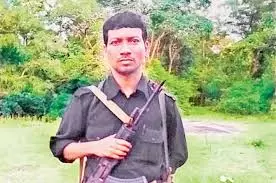
The recent killing of dreaded Maoist leader Madvi Hidma in an encounter with the elite Greyhounds in Andhra Pradesh’s Alluri Sitarama Raju district has sounded the death knell of the Maoist movement nationwide. Five others, including his wife Raje, were also killed. In the continuing crackdown, seven others were also killed the next day, including explosives expert Tech Shankar, by the Greyhound and CRPF personnel. Fifty other Maoists who were seeking sanctuary, were nabbed in five other Andhra districts. Unconfirmed reports suggest that general secretary Tippiri Thirupathi has also been arrested.
The decade-long movement began in 1967 in Bengal’s Naxalbari by peasants against landlords spread across the country in what became known as the “Red Corridor”, extending from Nepal to Andhra and Kerala, through Bihar, Odisha, Jharkhand, Chhattisgarh, Maharashtra and West Bengal. While the police of these states grappled with the Naxal menace and suffered heavy losses, it was the CRPF’s induction in West Bengal and later in other states that made the difference. While the situation had been brought under control in West Bengal, the Naxalites shifted base towards the South, where it struck a chord with the intelligentsia in Andhra and spread further to Kerala. The leadership gradually shifted to Telugu-speaking youngsters.
The CRPF’s deployment and the raising of highly-trained Greyhound commandos in Andhra started yielding results. The security of police stations facing Maoist attacks to loot weapons was strengthened. These attacks ceased. The Greyhounds worked in small groups and confronted the Naxalites in their forest hideouts. The state police and the CRPF smashed their network in the state, forcing them to shift to neighbouring Chhattisgarh and Maharashtra. The dense Abhujmad forest was the ideal space for sanctuary, where they could train, plan and launch attacks on the security forces.
After many setbacks initially, the CRPF and Chhattisgarh police hit back with a vengeance. Lack of metalled roads made their movements difficult. Vehicles were targeted by IEDs planted on kachcha roads. Efforts to develop the region were sabotaged by Maoists as they prevented the laying of metalled roads. In the last few years, metalled roads were finally built linking remote villages, with the CRPF securing the routes. With the induction of security forces in the Abhujmad region and setting up nearly 100 Forward Operating Bases, the Maoists’ bastion crumbled, forcing them to shift to the Karreguta hills on the Chhattisgarh, Telangana, Maharashtra axis.
The three-week Operation Black Thunder. with a massive force of over 10,000 paramilitary personnel, including the CRPF, the COBRA force, BSF and ITBP, and Chhattisgarh police units, in Karreguta hills in May this year led to 30 Maoists getting killed while the remaining melted in small groups across the border into Telangana to make good their escape. Madvi Hidma is believed to have escaped the dragnet.
The killing of top leaders like Basvaraju, the general secretary, Ramchandra Reddy and Satyanarayana Reddy in encounters and the surrender of others like Venugopal Rao, Sudhakar and Rupesh, along with several comrades last month, not only had a debilitating effect on the Maoists’ ranks but also a cascading influence on others to step forward to join the mainstream. Many of those thinking of surrender, it appears, are studying the rehabilitation policies of various states before deciding on where to surrender. Sunita Oyam, 23, a Bijapur native and an area committee member with a reward of Rs 14 lakhs on her head, chose to surrender to the elite Hawk Battalion in Balaghat district of Madhya Pradesh, where she would be paid Rs 23 lakhs for rehabilitation, house construction and studies apart from Rs 50,000 for her marriage.
Venugopal preferred to surrender in Maharashtra as his wife Tara Akka, carrying a bounty of Rs 1 crore, had already surrendered there and was in touch with chief minister Devendra Fadnavis for a mass surrender with 60 of his comrades in Gadchiroli.
The Chhattisgarh government doles out Rs 50,000 immediately on surrender and thereafter Rs 1 lakh for marriage and a house, besides arranging their skill training and gainful employment thereafter. It’s no wonder that many have accepted the lucrative offer offered by chief minister Vishnu Deo Sai under the rehabilitation policy.
The mass surrenders and deaths of many top leaders have left the Maoists rudderless. Battalion No. 1 of the Peoples Liberation Guerrilla Army is now believed to be headed by Deva Barse, a lieutenant of Hidma. He is on the radar of the security forces. The battalion is in disarray as the pressure built up by the forces forced them to split in small groups. Known for its aggressive posture and equipped with sophisticated arms, the battalion had unleashed a reign of terror.
While much is publicised in the media about the encounters and surrenders in Chhattisgarh, the fact that over 450 Maoists have surrendered in Telangana has gone virtually unnoticed. The Andhra Pradesh police has been keeping track of Maoist movements in the state and has achieved praiseworthy success. Karnataka has disbanded its anti-Maoist police task force as it is now free of Maoist elements.
With just three districts -- Sukma, Bijapur and Narayanpur -- of Chhattisgarh listed as “most affected” and eight others districts in Jharkhand, Odisha, Maharashtra and Madhya Pradesh still among Maoist-affected spots, the focus would now be on these districts. In the ongoing operations, Inspector Ashish Sharma of the elite Hawks commandos lost his life in an encounter with the Maoists on November 19 in the Kanghurra forest on the Chhattisgarh-Madhya Pradesh border.
With no let-up in operations against the Maoists by the affected states, the day may not be far -- well before the deadline of March 31, 2026 set by Union home minister Amit Shah -- when the entire nation can heave a sigh of relief that it is free from the Maoist menace.
The writer is a retired CRPF IGP