M.P. Nathanael | Top Cops Must Lead by Example, Push for Law Against Torture

Custodial torture calls for strict oversight, police reforms and a dedicated anti-torture law.
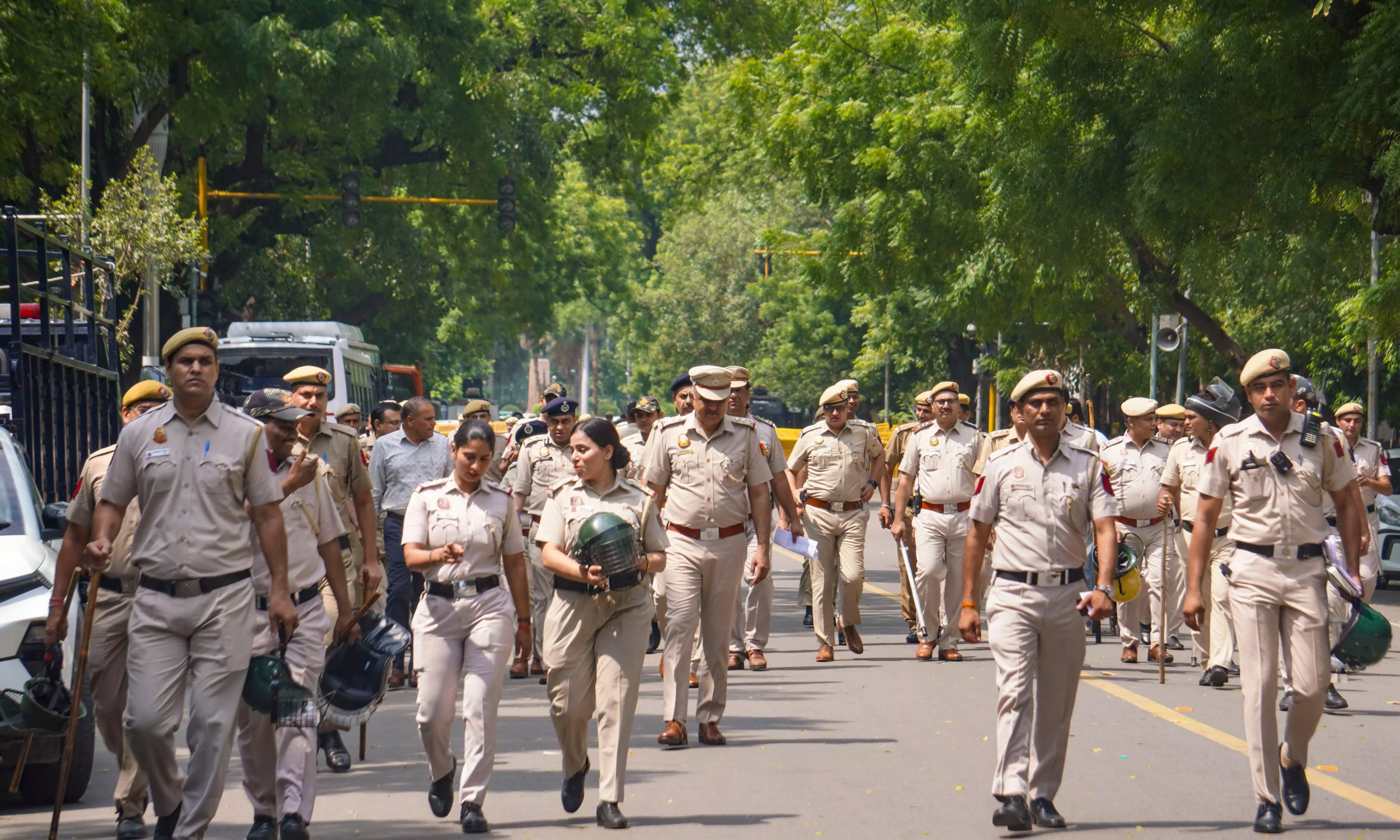
Speaking at the launch of a book, “Policing the Republic”, by a former IPS officer, Yashovardhan Azad, on September 4, Supreme Court Judge Justice Ujjal Bhuyan, while referring to the July 20 NEET students protest at the Jantar Mantar, said, “All of us are dismayed when we see young officers of the Indian Police Service (IPS) personally going and assaulting protestors and demonstrators. This is something very, very distressing to observe.”When senior officers themselves take the lead, the message goes down the ranks that they have a free hand to tackle the situation in a manner they choose to, even if it amounts to excessive use of force.
A division bench of the Gujarat High Court in Vadodara directed the Gujarat Home Department on August 14 to transfer Rajdeepsinh Nakum, deputy commissioner of police, Surat district, stating that his continued presence could affect the fairness of the preliminary inquiry against him by intimidating witnesses, including subordinate police personnel. Mr Nakum is reported to have publicly beaten and humiliated accused persons, videos of which went viral. The accused were handcuffed, paraded in public, “dragged by their hair, slapped and beaten with lathis in full public view under the supervision of senior police officers”.
Balveer Singh, a 2020-batch IPS officer, was suspended by the Tamil Nadu government on March 29, 2023, for alleged human rights violations in police stations while serving as assistant superintendent of police. On March 10, as ASP in Ambasamudram town in Tirunelveli district, he allegedly took nine men, including two teenagers, into custody when two groups had clashed. At the police station, he reportedly wore gloves, pulled out the detainees’ teeth with cutting pliers, crushed one person’s testicles, stuffed pebbles into their mouths, and slapped them forcefully, causing severe dental trauma.
An FIR was lodged against Balveer Singh on April 17, 2023, and an enquiry ordered. Ms P Amudha, a senior IAS officer, enquired into the allegations and submitted her report. One of the victim’s counsels Henry Tiphange informed the judicial magistrate that the report contains damning statements about several police personnel receiving bribes, switching of CCTV during the torture and even named a doctor who gave fitness certificates to the victims despite their injuries. Meanwhile, the Madurai bench of Madras High Court stayed the proceedings against the officer. He has since been posted as ASP, STF, in Erode.
Another IPS officer, Avinash Pandey, was attached to the Uttar Pradesh DGP’s office after he allegedly manhandled Digvijay Bhati, president of the B.R. Ambedkar faction of the Bharatiya Kisan Union, on August 19, 2026. Mr Pandey was serving as SSP, Meerut, when Mr Bhati and his associate, Mohit Jatav, approached him to remove their names from an FIR registered over a July 8 protest. The SSP and Special Operations Group personnel detained them for nearly 12 hours and beat them up ruthlessly. Mr Bhati alleged, “the SSP repeatedly kicked me with his shoes, damaging my eye”. Mohit Jatav’s legs were swollen, and his hearing impaired after the severe beating.
An enquiry into the allegations is under way. While the SHO Akhilesh Gaur has been suspended, eight others involved in the brutality have been attached to police lines.
When senior police officers take the law into their own hands and resort to brutality, they send wrong signals to their subordinates about violence being a legitimate tool for maintaining law and order. Custodial torture then comes to be seen as a routine way to extract confessions or control alleged criminals. Small wonder, therefore, that police personnel use torture with impunity, confident that they will not be held accountable for serious injuries — or even deaths — in custody.
According to the Status of Policing in India Report 2025, 34 per cent of IPS officers are inclined to justify custodial torture, while 37 per cent of interrogators view it as part of the process. Overall, 80 per cent of police personnel considered beating suspects to be normal.
The fact that most police personnel justify custodial beating and torture is deeply troubling. It points to serious flaws in recruitment and training, including inadequate scrutiny of candidates’ latent streak of brutality during interviews for the Civil Services Examination and other subordinate service examinations. There is a definite need to observe every probationer closely to assess his or her mental status in training institutions to gauge their psyche so that they are counselled or kept away from duties that expose their brutal side. Such observations need to be conveyed to their state police heads through pen-pictures that are normally initiated at the end of the basic training. Officers who have earned infamy for their brutality ought to be kept under close observation of senior officers or posted to such offices where their dealings with the public would be minimal.
India signed the United Nations Convention against Torture on October 14, 1997, but has still not ratified it. Former law minister Ashwani Kumar has said that, on the directions of then Prime Minister Manmohan Singh, he drafted the Prevention of Torture Bill, 2010. However, the bill could not be passed for various reasons, including repeated disruptions in Parliament, and it eventually lapsed. When Mr Kumar petitioned the Supreme Court in 2016 seeking directions to Parliament to enact the bill, the court held that it could not direct the legislature to pass a particular law.
With hundreds reportedly maimed or dying in police custody each year, India urgently needs a Prevention of Torture Act to curb this menace and ensure accountability. Because “torture” remains undefined in law, such legislation would define the offence, prescribe action against offenders, lay down clarity regarding compensation to be paid to victims and thus deter those who resort to it.
Though the apex court in one of its seven directives to the Centre and all states in the Prakash Singh case in 2006 stated that police complaints authorities at the district and state levels be established, these do not seem to be very effective due to lack of awareness among the public and also fear of getting on the wrong side of police establishment.
To create awareness all police stations must have boards prominently displaying names of officials of district and state police complaints authorities with their telephone numbers and e-mail IDs. The police hierarchy must be held accountable when custodial deaths go on unchecked. Torture is inconsistent with human dignity.