M.P. Nathanael | Can Corruption In India Be Weeded Out, Or At Least Curtailed, In The Near Future?

There are instances of overlap in the duties of the anti-corruption bureau and the vigilance department and at times even the CBI, as has happened in the case of suspended DIG H.S. Bhullar of the Punjab police, who demanded a bribe of Rs 8 lakhs from a complainant
Deputy superintendent of police Rishikant Shukla, the circle officer of Mainpuri (UP), was suspended last month after a special investigation team probe revealed he had amassed assets of over Rs 100 crores by extortion in league with a lawyer and 11 other police personnel.
A senior manager of Indian Tourism Development Corporation was caught red-handed accepting a bribe of Rs 40,000 from a complainant in New Delhi last month to clear his pending bills.
Small wonder that special judge Prashant Sharma of Rouse Avenue court in New Delhi, while sentencing 13 accused to imprisonment ranging from two to five years, commented: “In a civilised society, corruption is a cancer-like disease which, if not detected in time, is sure to malign the polity of the country leading to disastrous consequences.” The 13 accused had duped the Delhi Development Authority and Registrar of Cooperative Societies by falsifying documents to revive a defunct housing society after over two decades.
Venality in our society has seeped in to an extent that it is almost impossible to get any work done in government agencies without having to the grease the palms of a few. It is considered a normal way of life.
Any resistance to offer bribes is frowned upon and often people say it is better to bribe once and get the work done rather than to visit the offices repeatedly and face harassment and avoidable expenditure in commuting.
Unsurprisingly, though it may sound paradoxical, while the people crave for a clean administration, society turns partner in malpractices by doling out and accepting bribes. This starts right from the elections, when cash and freebies are doled out to the gullible to influence the voters. The candidate’s clean image notwithstanding, the votes are cast in favour of those who satisfy the desires of voters. Criminals stand to gain and enter into the portals of Parliament and the state legislatures. According to a report by the Association for Democratic Reforms on the 2024 elections, as many as 151 sitting MPs and MLAs were booked for crimes against women, including rape. It also stated that criminals stood a better chance of winning than those with a clean image. Corruption thus pervades the highest policy-making bodies of our republic.
Being a universal phenomenon, efforts to root out corruption across the globe are a constant, ongoing endeavour, though with little success. While Transparency International rates the Corruption Perception Index (CPI) of 180 countries every year, no country can boast of being a completely corruption-free nation. On a scale of 0 to 100, with 0 being most corrupt and 100 the cleanest, Denmark, with a score of 90, emerged as the best with least corruption, followed by Finland with 88, last year.
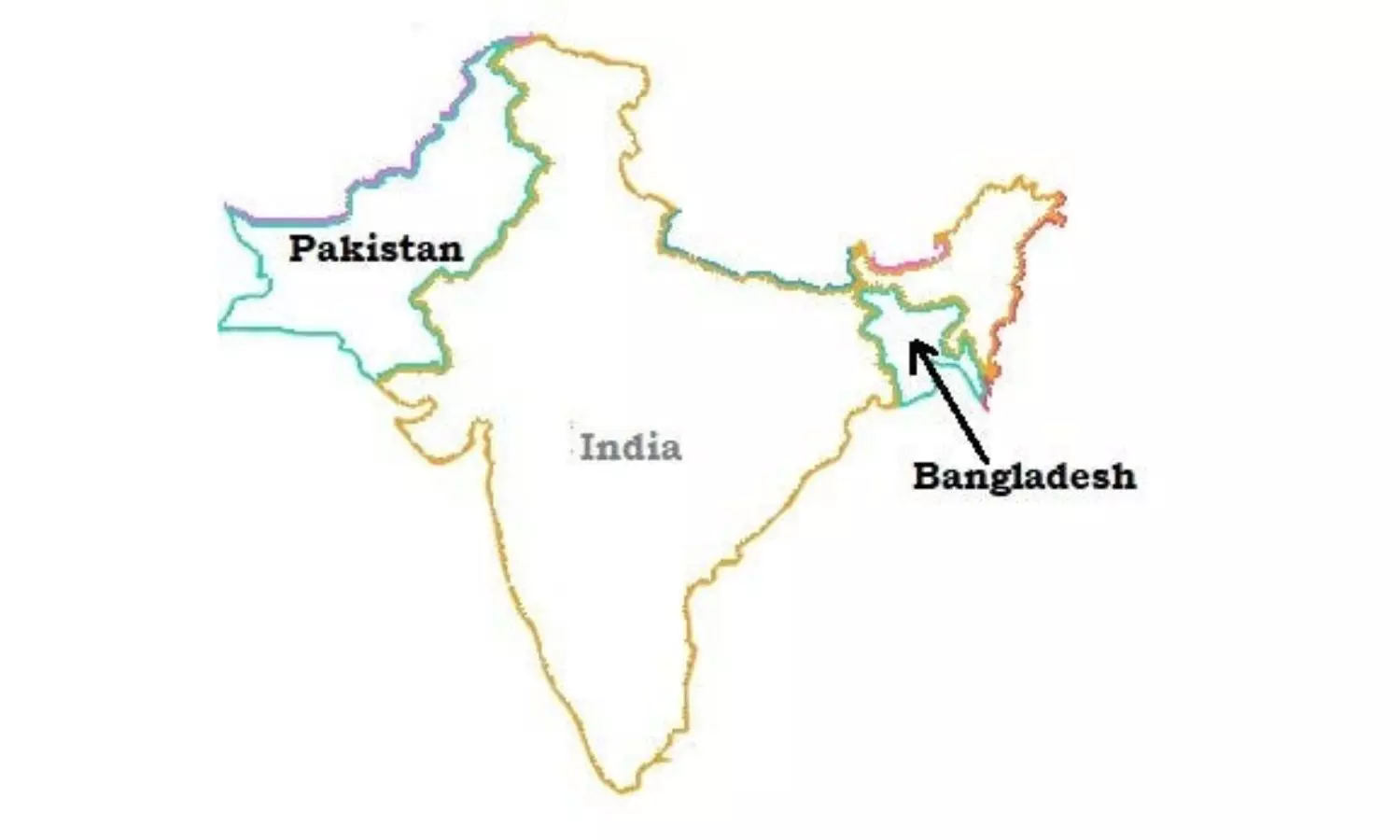
With a score of 38, India ranks 96, while our close neighbours Pakistan and Bangladesh, with scores of 27 and 23, trail in the 135 and 151 spots respectively. With a dismal score of 8, South Sudan, the most corrupt country, is at the 180 spot. While strict measures are taken by most countries to curb corruption, it would be fanciful thinking to expect it to be rooted out completely. Top leaders of several countries have been held in prison on charges of corruption, but that has not deterred others. Eight top officials, including a general known to be close to President Xi Jinping, were sacked on corruption charges in China in September. Misgovernance coupled with corruption has been the bane of our neighbouring countries -- Nepal, Myanmar, Bangladesh and Sri Lanka -- which has led to the turmoil and unrest resulting in a change of governments.
While it is acknowledged that corruption cannot be rooted out completely due to the mindset nurtured over the years, efforts need to be made to minimise it. The process of online applications and processing has ameliorated the plight of many ordinary citizens. Yet there are several fields where personal appearance is necessitated to ward off fraudulent activity. Transparency in all government departments could go a long way in curbing corruption.
In India, from the time the RTI Act 2005 has been enforced, 74 whistle-blowers have been killed and 164 assaulted for daring to expose corruption in the government and the private sector. The Whistle Blowers Protection Act 2014 must be strengthened and implemented to dispel fear among those who are hesitant to expose the corrupt.
There are instances of overlap in the duties of the anti-corruption bureau and the vigilance department and at times even the CBI, as has happened in the case of suspended DIG H.S. Bhullar of the Punjab police, who demanded a bribe of Rs 8 lakhs from a complainant. The court reprimanded the Vigilance Bureau, as the CBI was investigating the case. There ought to be clearly demarcated fields of jurisdiction to avoid a tussle between these organisations.
Speedy disposal of cases relating to corruption would save the government exchequer doling out salaries or subsistence allowances to officials facing investigation. According to a Central Vigilance Commission report, there were 60 cases of departmental inquiries pending against 60 officials of the CBI, of which 39 were against Group A officers, as on December 31, 2024. Twenty-two of these were pending for over four years.
Large vacancies in the CBI have led to inordinate delays in investigation of cases of corruption. As many as 1,502 vacancies against a sanctioned strength of 7,300 posts is bound to have a debilitating effect on the efficiency of the agency and in curbing corruption.
The delay in prosecution sanctions by the concerned states and departments stall departmental proceedings against errant officials, giving them the opportunity to continue with their nefarious activities. Two hundred cases were pending with the CBI for want of departmental clearance. Those stalling the clearance need to be taken to task for the delay.
The writer is a retired CRPF IGP