Monideepa Banerjie | After Hasina Verdict, Will The Spirit Of ’71 Survive?

Bangladesh wants its former Prime Minister Sheikh Hasina, to be extradited to her country, now she has been sentenced to death for “crimes against humanity” by a court that Dhaka recognises as legitimate, but the rest of the world does not. India, legally, does not have to send her back
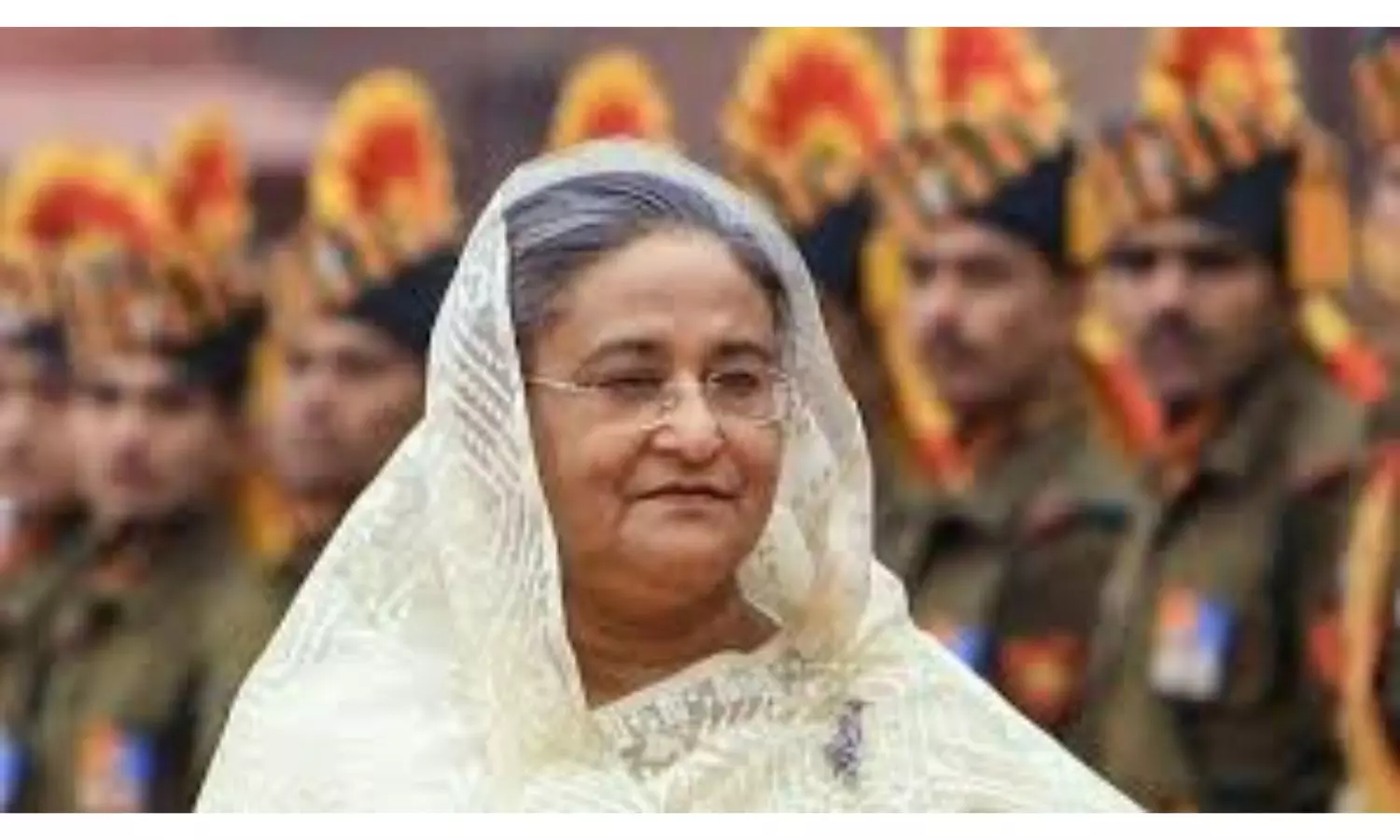
What’s the plan for Vijay Divas this year? On December 16, 1971, the Pakistani Army surrendered to the Indian Army in Dhaka, leading to the birth of Bangladesh. The Indian Army marks the day annually, with the grandest observance at Kolkata’s Fort William, the headquarters of the Eastern Command which led the campaign to liberate then East Pakistan. Last year, with Sheikh Hasina already taking refuge in New Delhi, the ceremony at Fort William was subdued and fewer than usual Bangladeshi defence officers or freedom fighters of the Mukti Bahini attended. Will there even be a token exchange of goodwill that day this year?
This question may not be India’s top priority today as it grapples to manage its relationship with Bangladesh, its most steadfast friend in the neighbourhood for the last 15 years. But it is symbolic of the diplomatic tight spot India finds itself in. Bangladesh wants its former Prime Minister Sheikh Hasina, to be extradited to her country, now she has been sentenced to death for “crimes against humanity” by a court that Dhaka recognises as legitimate, but the rest of the world does not. India, legally, does not have to send her back. There is enough wriggle room in the extradition treaty. But not sending her back will be viewed, Dhaka has warned New Delhi, as an “unfriendly” act.
It’s an unhappy predicament for India. Not only does it risk alienating Bangladesh at the political level, the anti-India sentiment among ordinary Bangladeshis is an unhappy reality that is going nowhere. Bangladeshis would like good neighbourly relations but the violence of July-August 2024 has left deep scars. That India is sheltering the “perpetrator” of that pain is a cause of grief.
India shares a 4,000-km border with Bangladesh and has suffered from radical Islamic groups slipping in and causing violent unrest here at home. Also at stake is the growing warmth between Dhaka under the interim government led by Muhammad Yunus and Islamabad. The frequency of visits by Pakistani ministers and top military officers is reason for great disquiet. There is also the superpower trio —US, China and Russia — keeping a strategic eye on the Bay of Bengal.
Given the complexities, India needs to design a tactical response keeping all of this in mind. The MEA’s guarded statement, saying it has “noted” the verdict on Sheikh Hasina and was “willing to engage with all stakeholders” to ensure “peace, democracy, inclusion and stability in that country”, needs a take two. And soon.
Some Bangladesh watchers have lately suggested a solution that India may eventually have to explore. It may use its good offices to pursue asylum for Sheikh Hasina in another country. Western nations did not oblige when she fled to India in August 2024. But at that time, the option of her settling in a Middle Eastern or Central Asian country was on the anvil and, analysts suggest, it might be time for India to revisit that option. Also, Sheikh Hasina now has the death penalty hanging over her head. That might persuade countries opposed to the death sentence, such as in Europe, to consider asylum.
Return to Bangladesh? Shiekh Hasina’s son Sajeeb Wazed has been quoted as saying that he is confident his mother will return to Bangladesh sooner or later. But the message Dhaka is sending out is, no entry, unless she arrives to appeal against her sentence in the Bangladesh Supreme Court, which is something technically possible but improbable. In fact, the Supreme Court earlier this week struck down one of Sheikh Hasina’s earliest and most controversial decisions as Prime Minister. In 2010, she abolished the system laid down by the Bangladesh Constitution of a caretaker government overseeing parliamentary elections.
That was in 2010. On Thursday, November 20, the Supreme Court restored the concept of caretaker government. That decision, to do away with the caretaker system, was among the first steps Ms Hasina took after becoming Prime Minister in 2009 that foretold her arguably authoritarian rule in later years. The Bangladesh Nationalist Party had tried to fiddle with that system when it was in power, too, but it resulted in a brief spell of military rule before elections in 2009 that Sheikh Hasina won. Every subsequent election was under Sheikh Hasina’s government. It would be obtuse to claim they were entirely free and fair elections and this pushed the BNP to boycott them. That cast a shadow over the legitimacy of the elections, but Sheikh Hasina sailed on regardless.
India did not ever bat an eyelid because of Sheikh Hasina quickly proved to be a good friend, cracking down on Indian insurgents and other anti-Indian forces that had found shelter in Bangladesh during previous regimes. For example, the Jamaat-e-Mujahideen Bangladesh (JMB), a radical Islamist group that set up sleeper cells in West Bengal and beyond and triggered the Khagragarh bomb blast on October 2, 2014, Sheikh Hasina dismantled post-haste. She also chased Paresh Barua, the United Liberation Front of Asom (Ulfa) militant, out of his safe haven in Dhaka.
And then there is history. India’s ties with Sheikh Hasina go back nearly 55 years when it played a historic role in assisting her father Sheikh Mujibur Rahman fight to free erstwhile East Pakistan from the dominance of Islamabad in the west. After Bangladesh was born in 1971, Mujibur Rahman took over but his tenure was cut short on August 15, 1975, when a military coup gunned him and most of his family down. Sheikh Hasina and her sister Rehana were out of the country then and survived. For them, New Delhi became a second home for years.
No wonder then that it is with great confidence that Sheikh Hasina’s son says his mother will return to Bangladesh one day. It’s a denouement India desires. India’s relationship with Bangladesh during the years of military rule was not cordial. Its relationship with the Yunus regime is frosty, too, but the government has indicated it is ready to warm up once there is an elected government in place following February polls. That has been welcomed by Dhaka.
This December 16 will go a long way in paving the future of India-Bangladesh ties. Last year, the Bangladesh delegation of military officers and freedom fighters came to Fort William at the very last minute ahead of Vijay Divas and Dhaka celebrated the day but without the traditional military parade at its historic National Parade Square. This Vijay Divas will be a test of the spirit of 1971, which made India and Bangladesh close friends and neighbours. Will that spirit survive?
Monideepa Banerjie is a senior journalist based in Kolkata and has earlier travelled in and reported from Bangladesh