China under the Xi Jingping dispensation has also become more authoritarian, jingoistic and is now more than comfortable in flexing its new found strategic heft as underscored by the syndrome of wolf warrior diplomacy going back almost a decade
The former US defence secretary famously articulated on February 12, 2002, that “as we know, there are known knowns; there are things we know we know. We also know there are known unknowns; that is to say we know there are some things we do not know. But there are also unknown unknowns — the ones we don’t know we don’t know”.
Though Rumsfeld’s words were in response to a query about the complete absence of evidence linking Saddam Hussein’s regime in Iraq to the supply of “weapons of mass destruction” to various terrorist groups.
Though this remark earned him a foot in the mouth award of 2002 for the gobbledegook of political dissimulation. However, it is very prescient in the case of the evolutionary trajectory of the technologies of the Fourth Industrial Revolution and their impact on human kind.
It would be a trite to underscore that the United States (US) and China are the leaders in fourth industrial revolution technologies. While the US is broadly ahead in quantum computing, semi-conductors, genomics, bio technology and space China leads in electric batteries, hypersonics, solar technology, 6G networks and drones and robotics. Both these countries are in intense competition qua artificial intelligence, advanced materials, quantum sensors, machine learning and nano technology. This list is indicative and not illustrative
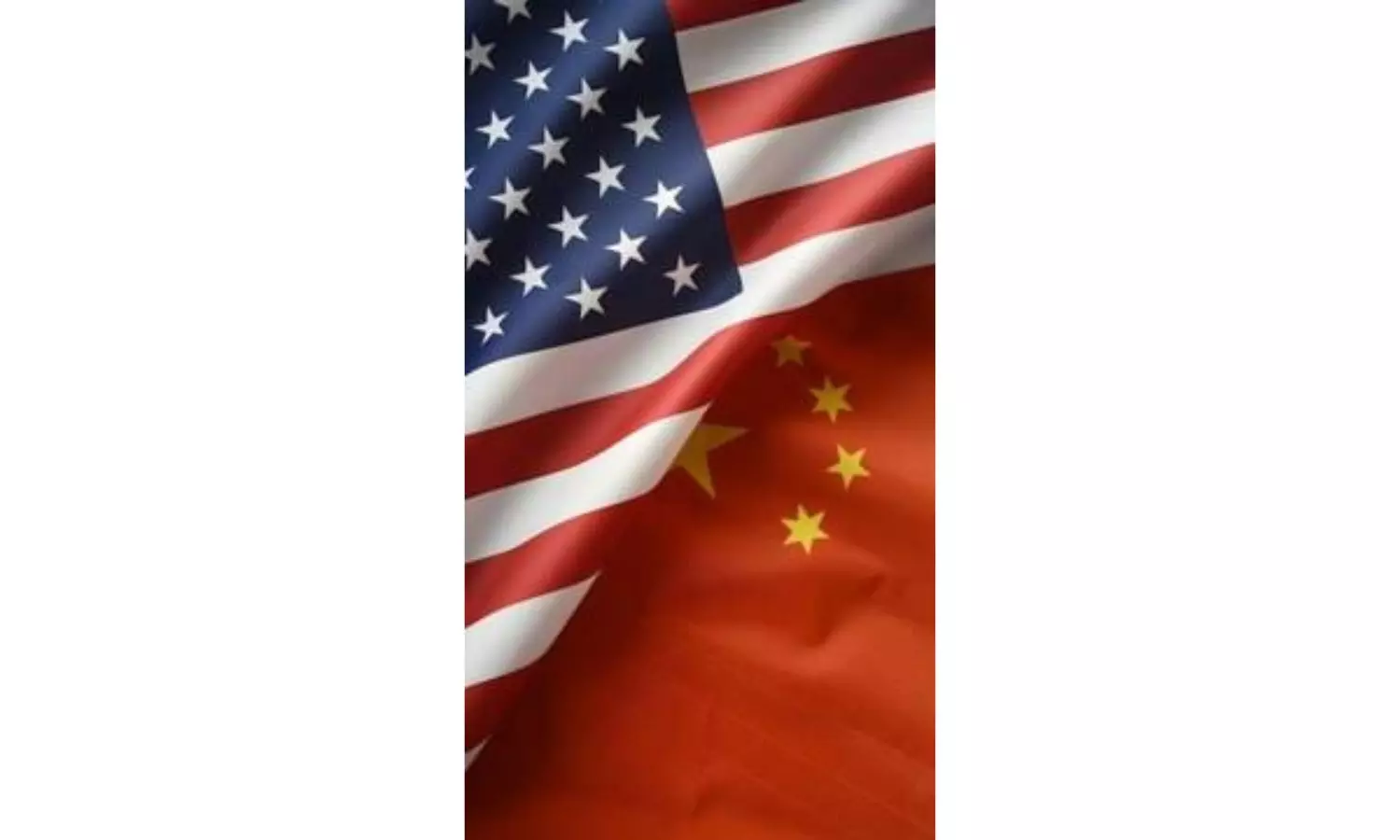
A broader reality check is however imperative. The rivalry between the prevailing hegemon, the United States, and its nearest competitor China is exacerbating across the spectrum especially in the field of military applications of fourth generation technologies. Xi Jingping recently characterised this struggle by spotlighting the fact as to whether the US and China can “overcome the ‘Thucydides trap’ and establish a new paradigm for relations between great powers”. A potential G-2 leveraging their huge lead in frontier technologies.
Middle powers are structurally dependent on the Great Power order that they critique but cannot mould. A liberal and internationalist order was willing to pay the middle powers some attention, proffer membership of coalitions and allow a degree of participation in norm-setting in exchange for military and diplomatic support. The current US administration today demonstrates disdain for such templates.
The Trump administration has demonstrated no restraint in conveying that in its estimation and scheme of things the middle powers remain dependent on the great powers — principally the US — for their prosperity and security, and it is only too happy to let that model perpetuate itself while berating the middle powers step up to the plate of burden sharing.
The Trump administration may be will to cut some slack to the middle powers and that too at the margins; however, it is unwilling to countenance middle power aspirations to attempt and shape the epicentre of the international system, particularly when the MAGA spectre is actively trying to redesign the hardware and software of the global order.
China under the Xi Jingping dispensation has also become more authoritarian, jingoistic and is now more than comfortable in flexing its new found strategic heft as underscored by the syndrome of wolf warrior diplomacy going back almost a decade.
These broader trends actually impel intensified middle power cooperation and technological synergies as they are actually a necessary subset of the overarching geo strategic matrix. For middle powers, this is extraordinarily important.
What efficacy is there in increasing your strategic autonomy in terms of hard and soft power when middle powers and lesser developed nations will remain dependent on the goodwill and myriad mercantile interests of private technology behemoths whose revenues are bigger than the GDP of most developing economies?
However, again the reality here is sobering. By way of example on artificial intelligence alone, China will spend $295 billion in the next five years to build data hubs. China spent $98 billion on AI in 2025 alone. China’s government spend was USD 56 billion dollars.
Five US based private companies Amazon, Google, Microsoft, Meta and oracle will collectively invest $700 billion in 2026. India’s AI mission by comparison between 2025-2030 would spend a measly $1.2 billion. What then was the purpose of holding an ostentatious the AI Summit when there is no appetite for putting your money where mouth is?
The middle powers, therefore, have to decide as to whether they want to train the global AI economy’s middle management, or build its c-suite. Till the time the middle powers do not have their own foundational model/ models they will always remain on the sidelines of the technology frontier as the horizons of deep and big tech keep evolving and expanding at an exponential pace. This can only happen with massive public investments or very intense public private partnerships as cutting edge 2026 frontier runs can cost upwards of $2 trillion to build and operate before they can be monetised.
AI is only one, there are innumerable other frontier technologies that are reshaping the very mores of human existence.
The middle powers can, if they so desire, leverage their collective strengths by pooling resources for research and development, hardware and software development, skilling of personal, deployment and rolling out technologies on scale and resilience and redundancy capacity building.
It is here Japan, South, Korea, Taiwan, Indonesia, Australia, India, UAE, Qatar, Saudi Arabia, Turkey, Germany, France, Canada, Brazil, Argentina and Chile, to name a few, are punching below their weight and not leveraging their intrinsic convergences. This is where the collective heft lies but even the intellectual construct, not to mention practical cooperation, remain in the realm of fuzziness.
The structural and political obstacles that have prevented middle power cooperation are self-evident. They are the reliance on the US of a bulk of the middle powers for their security and safety.
The US still remains the single outside balancer of power in every geographical region of the world though with diminishing heft, the manufacturing umbilical cord still stretches all the way to China now going back to the 1980s, the massive lead of both US and China have acquired in the foundational technologies of the Fourth Industrial Revolution and, of course, the propensity to ride on US and China led technological innovation rather than commit resources of their own on a macro scale.
It would require a revolution in mindsets, conviction of courage and the ability to withstand strategic and economic pain in the short and medium term to surmount these political and structural challenges but it is doable.
In adversity lies opportunity and given the fact that the liberal democratic post-Cold War order shaped by the victors of both World War-2 and the Cold War has been upended by its own creator, the middle powers must intensify regional defence cooperation and create global technology-based alliances in specific genres, especially in the field of offensive and defensive capabilities, given that there has been a revolution in military affairs in the past four odd years.
Nothing demonstrates it better than the successful asymmetric war waged by Ukraine against Russia since 2022 and for that matter the resistance currently being operationalised by Iran against the US and Israel.
If ever there was a moment for the middle powers it is here and now.
