In a report published on the website scientificamerican.com 11 days after the US-Israel attack, Jeffery Lewis, director of the James Martin Centre for Non-proliferation Studies and a professor at the Middlebury Institute of International Studies, was quoted as saying, “There was no evidence that Iran was close to a nuclear weapon.”
How close was Iran to a nuclear bomb when the US and Israel decided to bomb it in June 2025 and then again February 2026 onwards? Was it yet another red herring like myriad others before this over the course of the United States’ tortured and convoluted history in the Middle East and Israel’s forever wars in the region since 1948?
Alternatively, was it an attempt to nip in the bud, preemptively proscribe, a portentous situation that could have ominously manifested itself in the not-too-distant future?
In a report published on the website scientificamerican.com 11 days after the US-Israel attack, Jeffery Lewis, director of the James Martin Centre for Non-proliferation Studies and a professor at the Middlebury Institute of International Studies, was quoted as saying, “There was no evidence that Iran was close to a nuclear weapon.”
His observations were endorsed by other independent experts. These assessments are broadly in sync with the earlier determination of the International Atomic Energy Agency (IAEA) in June 2025. These assessments were also concurred by periodic estimates of US intelligence agencies too, according to open-source reporting on the Iranian Nuclear conundrum.
An IAEA estimate of June 2025 suggested that Iran possessed 441 kilograms of 60 per cent enriched uranium, where the percentage refers to the share of the isotope uranium 235 (U-235) found in the material. That material could be enough for ten nuclear weapons if it could be enriched further to full ninety percent weapons-grade concentrations.
Moreover, a 90% enrichment is easier said than done and even if achieved still does not constitute a “breakout situation” because Iran would have had to secure and enrich the gas to 90% in centrifuges, extract and chemically segregate it back to solid uranium, then cast it into spheres of uranium metal, and finally craft explosive devices around it.
That further enrichment could perhaps have happened in a “matter of weeks” provided Iran had a fully operational nuclear industrial complex which clearly was not the case even back in June 2025 courtesy the stiff sanctions imposed on Iran going all the way back to 1979.
To recap a bit of history, Iran has been pursuing a nuclear quest since 1957 thanks to the Atoms for Peace programme of US President Eisenhower. This was back in the day when Iran was an American ally during the reign of Shah Reza Mohmmad Pahlavi. The Shah was toppled in the 1979 Islamic Revolution and the following year on September 22, 1980, Saddam Hussein-ruled Iraq invaded Iran.
Over the next decade, an entire generation of Iranian strategic thinkers internalised a very vital strategic lesson as the West supplied weapons to Iraq and global organisations including the United Nations turned a Nelson’s eye as Saddam Hussein unleashed chemical and other sophisticated weapons on Iranian troops and civilians.
The learning was that as long as long as Iran lacked nuclear weapons, any dictator in the neighbourhood or a hegemon far away could transgress upon its sovereignty. Thus began Iran’s clandestine march for nuclear weapons to acquire that strategic autonomy and a credible deterrent .
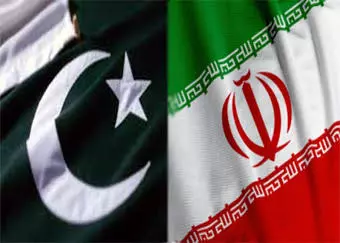
This is where the Pakistan connection came in. A.Q. Khan, who lorded it over the “Walmart of Nuclear Proliferation” started supplying nuclear material to Pakistan. This Pakistani-Iranian nuclear relationship had the consent and blessings of the then Pakistani military dictator, Gen. Zia-ul-Haq, and his military successors, a fact publicly confirmed by former Iranian President Akbar Hashemi Rafsanjani in 2015.
The Pakistani military, in turn, successfully kept successive civilian governments in the dark about this dynamic. Prime Minister Benazir Bhutto stumbled upon this by chance when Mr Rafsanjani asked her to confirm the agreement between the two countries on “special defence matters” during a visit to Tehran in 1989. By that time scores of Iranian scientists had already been trained in various institutes in Pakistan.
On August 14, 2002, National Council of Resistance of Iran, an umbrella organisation consisting of Iranian dissident groups, made public the location of two nuclear sites that Iran had ostensibly concealed from the IAEA, thereby triggering a perennial endeavour to cap Iranian nuclear capability. The current round is the latest episode in that saga.
However, it still does not provide an answer to the question posed earlier: Exactly how many screw turns and months or years away is/was Iran from a usable nuclear device capable of being delivered from a plane or mated to a missile delivery system?
This question becomes all the more germane because of another red herring that became the cause celebre for the 2003 American Invasion of Iraq. On September 12, 2002, the then US President George W. Bush told the United Nations General Assembly (UNGA) to cull Iraq’s decade of defiance to UN demands. On February 5, 2003, US secretary of state Colin Powell briefed the UNSC on what he held out was “evidence” that Iraq was pursuing a clandestine Weapons of Mass Destruction (WMD) programme.
Ultimately the alleged “evidence” turned out to be a dud, a fake, as no WMDs were found in Iraq. The country was, however, ravaged by war leading to humungous civilian casualties, vile human rights abuses and destruction of civilian infrastructure. What the US and the so called “coalition of the willing” achieved from this intervention the jury still remains out on but for Iran it became the raison d’etre of the Shia Crescent that expanded its tactical reach across the region over the next two decades.
Two years earlier on October 7, 2001, the US had invaded Afghanistan to punish Al Qaeda for the 9/11 terror outrage and Taliban for sheltering Osama bin Laden and his cohort.
It is noteworthy that out of the 19 9/11 terrorist hijackers, 15 were from Saudi Arabia, two from the UAE, one from Lebanon and the leader was from Egypt. There was none from Afghanistan or, for that matter, Iraq.
Saudi Arabia, UAE and Egypt continue to be among the staunchest allies of the US in the Middle East. Osama bin Laden was finally neutralised in Abbottabad but Pakistan that sheltered him is once again basking in the glow of new-found US affection. It is today the mediator between US-Israel and Iran. Ironically, the US also handed Afghanistan back to the same Taliban in 2021 whose militia it drove out of Afghanistan in 2001.
All this begs the obvious question: Was there some other surreptitious reason other than “nuclear weapons” for the US-Israeli attack on Iran?
