Maneka Gandhi | SC Stray Dogs Order Creating Chaos; Can’t Be Implemented

The most striking resistance came from India’s classrooms. In the first 24 hours, over 800 schools and colleges formally rejected the idea that their campus dogs should be taken away. Students protested, teachers objected and principals wrote with remarkable clarity that their dogs are sterilised, vaccinated, peaceful, and part of the campus family
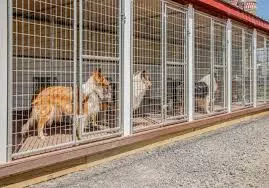
In the past weeks, India has been thrown into deep confusion because of the way in which recent Supreme Court directions are being executed. The apex court may have intended to find a solution to reduce the stray dog population and reduce dog bites. But what emerged is a direction so unscientific, irrational and practically unimplementable and so detached from reality that even the State machinery has no roadmap to follow.
The most striking resistance came from India’s classrooms. In the first 24 hours, over 800 schools and colleges formally rejected the idea that their campus dogs should be taken away. Students protested, teachers objected and principals wrote with remarkable clarity that their dogs are sterilised, vaccinated, peaceful, and part of the campus family. Since then, thousands of educational institutions have publicly declared that they reject the idea behind this order, don’t support the removal of their community dogs, and absolutely don’t agree to sending them to shelters that simply don’t exist.
You can’t uproot animals from a functioning environment and expect order after the disruption. To remove these animals is not only counterproductive, it is morally offensive to the values we claim to instil in our children. Cruelty can’t be disguised as administration, and disruption can’t be called safety.
Yet disruption is exactly what we are seeing.
In Hyderabad, dogs are being picked up without assessment, without identifying territories, and without basic adherence to the ABC Rules. These mandate use of butterfly nets, humane equipment meant to prevent injury. Instead, municipal workers are using rods, which are expressly prohibited. Hyderabad is simply catching any dog, sterilised or not, and has stuffed over 500 into cages in five sterilisation centres, throwing the entire sterilisation process into disarray.
The apex court had clearly said that dogs may be removed only from identified areas. Not a single state in India has identified even one such area. There is no mapping, no notified list, no designated premises. In the absence of this foundational step, every removal taking place today is in violation of the court’s own condition. This is not implementation; it is administrative panic.
The scale of the directive itself has been entirely overlooked. India has 14.72 lakh government schools, an even larger private school sector, 53,000 colleges, 9,274 railway stations, 70,000 hospitals, tens of thousands of bus stops and thousands of other public institutions. For lawful compliance, each district would have to prepare an exhaustive inventory of every such location. Only after this list is completed could engineers begin to assess whether walls or barriers can be constructed, obtain clearances, sanction budgets, float tenders, and execute civil works. This is not one project but tens of thousands of simultaneous construction projects across 780 districts, running into hundreds, perhaps thousands, of crores. To imagine this can be achieved overnight is not just unrealistic; it is indifferent to how governance actually functions.
Even after this enormous expenditure, there is a core question: Where are the shelters to house the dogs?
India has none.
No state has earmarked land. No municipality has designed or approved permanent holding complexes.
Most districts do not possess even a single functional ABC centre, and those that do exist are surgical units, not shelters, and are required by law to release the dogs back into their territories. Converting these into permanent holding facilities is unlawful, unworkable and cruel.
A shelter capable of lifelong housing requires land, kennels, drainage, veterinary wards, quarantine areas, trained staff, water, electricity, sanitation, transport and a continuous budget. Today, community dogs survive only because ordinary citizens, students, teachers, caregivers and residents provide food and care from their own resources. The State bears almost none of this responsibility. Transferring the burden of lakhs of animals to the State authorities without land, manpower or budget allocation is impossible.
Which state has created a budget for lifelong care?
Which district has the land?
Which municipality has the manpower?
Which shelter exists?
The answer, everywhere, is the same: none.
Beyond the administrative impossibility, the direction is also scientifically unsound. The “vacuum effect” is recognised globally: when dogs are removed from their territories, new, unsterilised and unvaccinated dogs enter immediately. This increases conflict and increases risk. Stable, sterilised vaccinated dog populations are the only proven method of reducing numbers and preventing rabies.
“Removal without release” is, in practice, a form of killing when shelters do not exist.
If the intention were genuinely to reduce dog populations and enhance public safety, the directive would have been to expand the Animal Birth Control -- Capture Neuter Vaccinate Release programme, increase vaccination coverage, train NGOs and fund a national sterilisation network. Countries that attempted killing or confinement have universally failed. The World Health Organisation and the World Organisation for Animal Health endorse CNVR as the global standard. Bhutan implemented it nationwide and achieved full coverage in 2023. Where sterilisation is implemented correctly, dog populations fall sharply within two years.
The present direction does not achieve safety. It has instead created fear, confusion, conflict and unlawful practices. It destabilises peaceful neighbourhoods, threatens animals, and exposes the lack of administrative capacity to execute what has been ordered. It risks creating a law-and-order problem involving municipalities, police, caregivers and citizens.
Thousands of educational institutions have already shown what India has always practised: compassion and coexistence. These are not obstacles to safety; they are its foundation.
India does not require removals. India requires lawful, scientific, humane management through a strengthened, nationwide ABC and CNVR programme. Until such a system is implemented, the attempt to remove community animals from stable environments will lead only to one outcome: chaos resulting from an order that cannot be implemented. India's state governments cannot obey the impossible and call it compliance. The Supreme Court has simply created chaos without solving any problems.
Maneka Gandhi is a former Union minister and the founder-chairperson of People for Animals