Krishna Shastri Devulapalli | My Continuing Struggles With Literature Festivals

Was it my interactions with my fellow panellists or my friendship with our 'handlers' that made all the difference?
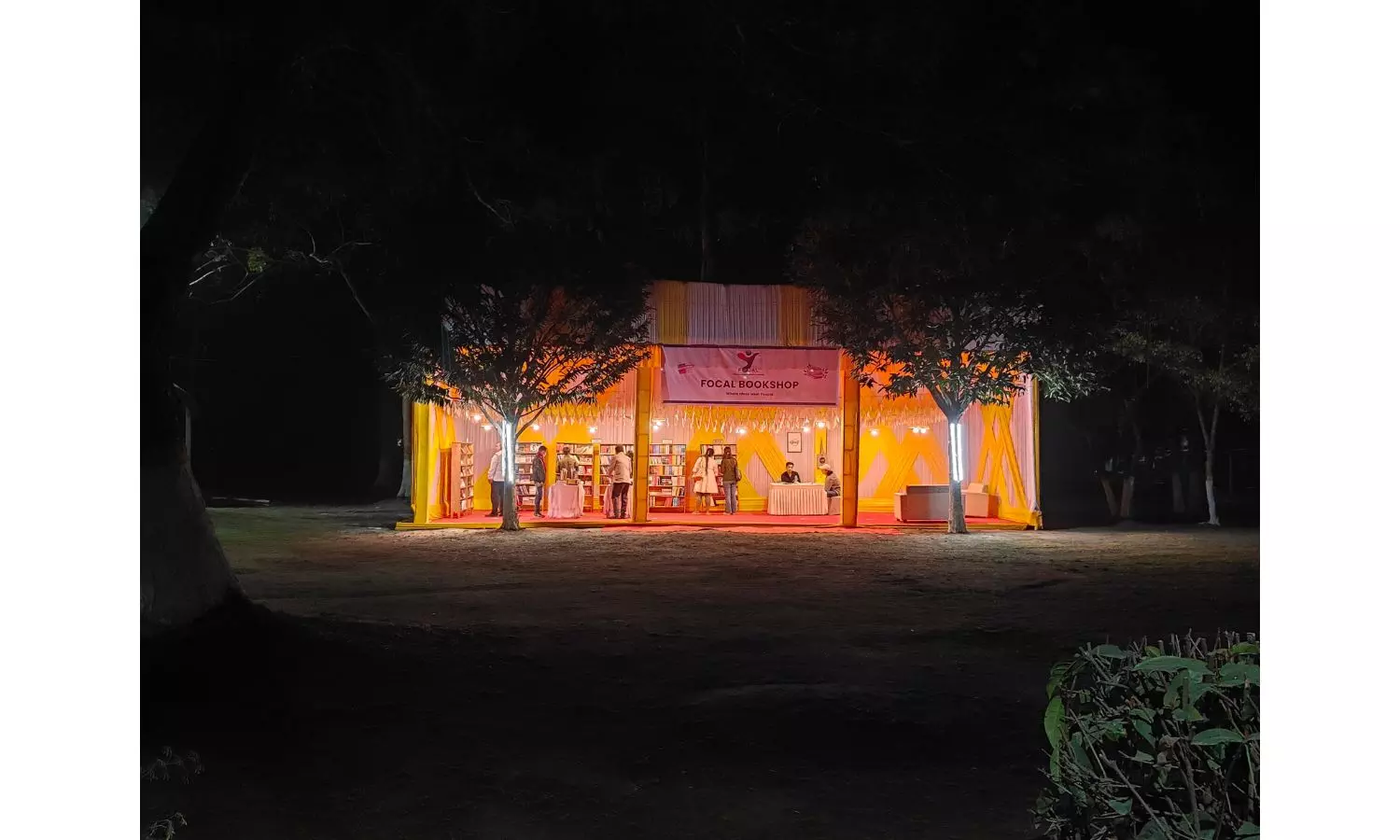
Exactly a year ago, I wrote a piece here called “The best literature festival I didn’t go to”. From the title, it could have been a piece about any lit fest in India. Because, as my writing over a decade and a half will testify, I’m no fan of lit fests. Indeed, I have worked tirelessly for as long to have lit fest curators give me top billing, in indelible ink, on their blacklist.
But fate, as they say, is like a two-wheeler helmed by a Chennaivasi coming the wrong way down a one-way street. Just when I thought I’d safely crossed over to the other end — got myself a lifetime reprieve from lit fests, that is — with a last-minute swerve I didn’t see coming, Rahul Jain, intrepid curator of the Dibrugarh University International Festival of Literature (DUILF), hit me with a most gracious (if baffling) invite for their 2026 edition. Who invites a guy who didn’t turn up the last time? And invites his writer wife as well this time? Either a sucker for punishment or someone who knew something I didn’t.
Throwing caution to the winds (and quietly doubling my medication), I decided it had to be the latter, and we made our way to Dibrugarh.
This time, they had me on two panels, on screenwriting, and on cities and writers. At the outset, I confessed to the audience at both panels — like I had in my acceptance letter to the organisers — that I was an impostor. In the first case because I hadn’t sold a single screenplay despite having written a few. (And had no one to blame for this but myself for backing out at the last minute, refusing to sign agreements with unfair terms for writers.) And on the second panel because Chennai figured as the default location of all my books not because I loved it, was proud of it, and it coursed through my veins but because, being a coward, I hadn’t ventured to live anywhere else all my life, making it the only place I knew. Needless to say, I got the laughs I was looking for. Whether the audience was laughing at me or with me is up for debate.
Anyway, this piece isn’t a chronicle of my struggles on stage, remembering why I was there or making sure there was a loo within charging distance, but about how I returned to Chennai without regrets and, dare I say, a fuzzy feeling.
Did it have to do with my interactions, both onstage and off, with Shantanu Ray Chaudhuri, Abdullah Khan, Mai Khaled, Murzban Shroff, Koral Dasgupta, Ghazala Wahab, Tashi Chopel, Mihir Chitre and the Jahnu Barua, among others? Partly. Look them up, readers.
Did it have to do with the rousing speech by Talmiz Ahmad, former Indian ambassador to Saudi Arabia, who spoke passionately about India, her past and future, of how recent global events could impact it? Most definitely. As missiles are lighting up the skies not too far away from us, and snuffing out innocent lives, I can’t help but think how timely his speech was.
Or was it because, unlike the average lit fest, where you see the same old jaded faces at every venue desperately plugging their latest book, and the Bollywood types who’ve been coaxed to attend with hefty fees, DUILF’s focus was on — most tellingly — in retrospect — the Middle East and North Africa (MENA), featuring over 150 writers from 25 countries? I’m sure that had something to do with it as well.
Or maybe it had to do with who the audience consisted of. Instead of the only slightly less-needy-than-the-writer, self-promoting Bookstagrammers who infest festivals merely to be seen, the auditoriums were filled with students. Students from not just the university, but from the areas surrounding it, not just urban, but rural, with several hundred being brought in every day, hosted, and allowed to partake of the vibrant festival atmosphere. From Curator Jain, part of FOCAL (Foundation for Culture, Arts and Literature), the NGO that collaborates with Dibrugarh University, we learnt that the decision to hold the literature festival at Dibrugarh, rather than Guwahati, at a public university with a stellar record that serves the area around it, including neighbouring states, was deliberate. It was to allow students who would not normally have a chance to attend a literature festival to actively participate in it, and, in several cases, most joyfully, year after year. To make the participation genuinely meaningful, the students were informed well ahead of time of the festival’s theme each year, as well as the writers who would be there, so they had a chance to do their research, read up on the writers, and identify their own interests.
Of it all, what touched me most, though, was the time we spent with Tanaz, Debojeet, Kangkana, Shahzad and Priya, the students who were given the task of being our “handlers”. The warmth and affection they showered on us from the moment we arrived to the moment we left, the eagerness with which they took us from venue to venue, the openness with which they shared their lives with us those four days, this we can never forget.