Following Donald Trump’s tariff onslaught, India has modified that stand and accepted the Chinese argument to not let bilateral disputes affect bilateral relations involving trade, investment, people to people contacts, et cetera
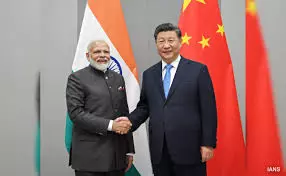
The two-day Tianjin summit of the Shanghai Cooperation Organisation (SCO) was held on August 31 and September 1. Prime Minister Narendra Modi visited China for the first time in seven years. It followed strained India-US relations, due to America’s punitive tariffs on India for buying Russian oil.
The organisation was founded in 2001. India got observer status in 2005 and full membership in 2017. Interestingly, Pakistan was inducted alongside India, reflecting Chinese and Russian preponderance. Iran and Belarus joined in 2023 and 2024 respectively, as the hostilities raged in Gaza and Ukraine. While Iran was then the principal supporter of Hamas in Gaza and Hezbollah in Lebanon, Belarus sits on the northern frontier of Ukraine and is a close Russian ally.
The SCO membership enabled India to register its views and safeguard its interests in an organisation bridging South and Central Asia. Prime Minister Narendra Modi’s presence at Tianjin has multiple dimensions, especially his meeting with Chinese President Xi Jinping. Five years after the Galwan Sino-Indian military encounter, at the Line of Actual Control (LAC), which triggered a wider confrontation, the relationship has been gradually normalising. It began with the Modi-Xi meeting in October 2024 in Russia, on the Brics summit’s sidelines. Since January 2025, President Donald Trump’s tariff onslaught is compelling a strategic recalibration globally. For India and China, as principal US targets, the need is immediate. Ironically, since 2001, the containment of China and counter-terrorism motivated the US-India engagement. Now countering the United States is inspiring the fresh outreach to China. China will treat it as a tactical readjustment and not a permanent flip. The Modi-Xi meeting, short of a full summit as it lasted under an hour, was held against this background.
Chinese foreign minister Wang Yi’s India trip on August 18-19 basically prepared the way for it, although he came for the 24th round of the special representatives’ dialogue on the border issue. He also met India’s external affairs minister S. Jaishankar to discuss bilateral, regional and global developments. India so far sought complete de-escalation at the border as a precondition to normalcy in bilateral relations.
Following Donald Trump’s tariff onslaught, India has modified that stand and accepted the Chinese argument to not let bilateral disputes affect bilateral relations involving trade, investment, people to people contacts, et cetera.
However, Prime Minister Modi reiterated the Indian stand that “peace and tranquility in border areas is important for continued development of bilateral ties”. He also noted the uncertainty in the world economic situation.
The border dispute, he suggested, can be resolved only by a fair, reasonable and mutually acceptable solution. President Xi, in turn, proposed that the two nations adopt a strategic and long-term perspective. He also re-stated the well-known Chinese stand on enhanced multilateralism, a multipolar world and greater democracy in international decision-making. Deepening mutual trust, he felt, could make India and China “partners, rather than rivals”. Besides expanding cooperation, he proposed making the five principles of “Panchsheel” central again. He rhetorically framed it as the two Asian giants, as the Dragon and the Elephant, dancing together. This could ensure peace and stability in Asia and the world. Both leaders emphasised strategic autonomy, without third country interference, to ensure the 21st century becoming the “Asian century”.
The meeting appears successful as both leaders stuck to broad principles, proposing constructive engagement and peaceful dispute resolution. US President Donald Trump’s shadow, however, lingered over the summit and bilateral meetings. While India is normalising relations with China without settling the border issue, China also realises that in the current uncertain environment, India is a useful partner. But neither country is yet likely to abandon basic strategies. China wants to be a dominant global power rivalling the US.
In Asia it wants no equal, least of all India, which is a potential long-term rival. For instance, China, despite seeking strengthened multilateralism, would not support India’s permanent membership in a reformed UN Security Council. Similarly, it would also be unwilling to constrict its South Asian intrusion and strategic relations with India’s neighbours like Pakistan, Bangladesh, Nepal, Myanmar, etc. Likewise, India is unlikely to abandon its outreach to the Western countries, especially the US, including the Quad. The two countries are for now insulating themselves against disruption already caused by Trumpian rule or likely during his remaining term till 2028. In the best-case scenario, the Republicans may lose control over at least one House of the US Congress in the November 2026 mid-term elections.
The Tianjin Declaration defines the new play. India joins the condemnation of attacks by Israel and the US on Iran, which it avoided in the past. On the Palestinian issue too, it goes along with a stronger announcement of support. In return, it gets a condemnation of the terror attack at Pahalgam. Pakistan too extracted condemnation of a terrorist attack on the Jaffer Express in Balochistan. China also proposed a Development Bank for SCO, like the one BRICS has. This is China trying to constrain US and Western exploitation of their handle over multilateral institutions like the IMF and the World Bank.
The American reaction is awaited. President Trump may realise that he has pushed India beyond the limits of friendly persuasion. The forthcoming India-hosted Quad summit will show whether the US still supports its Indo-Pacific strategy to contain China.
If so, it must start rolling back the tariffs on India and finalise a trade deal, after mutual compromise -- such as on protection for India’s agriculture and dairy sectors. On the other hand, he may well be provoked by India’s defiance, reflected in India signing the Tianjin Declaration. The US may then target other sectors like services or products like iPhones or pharmaceuticals, etc.
The Sino-Indian engagement also faces practical challenges. The trade gap, the widest with any country, is over $100 billion. Indian exports have lingered between $11.9 billion in 2014-15, to a high of under $20 billion and then $14.2 billion in 2024-25. The imports have gone up in the same period from $60.4 billion to $113.457 billion. This can hardly be ameliorated quickly, especially as India lacks the production capacity to replace cheap Chinese imports, especially raw materials or manufactured components.
Lacking any tangible leverage with regard to China or the US, India is hoping that its gamble works. The coming months will reveal its success or failure.