India has proposed a progressive agenda for the upcoming Brics summit, which seeks “Building for Resilience, Innovation, Cooperation and Sustainability”. Resilience implies the ability to navigate global uncertainties, climate risk and supply-chain disruptions
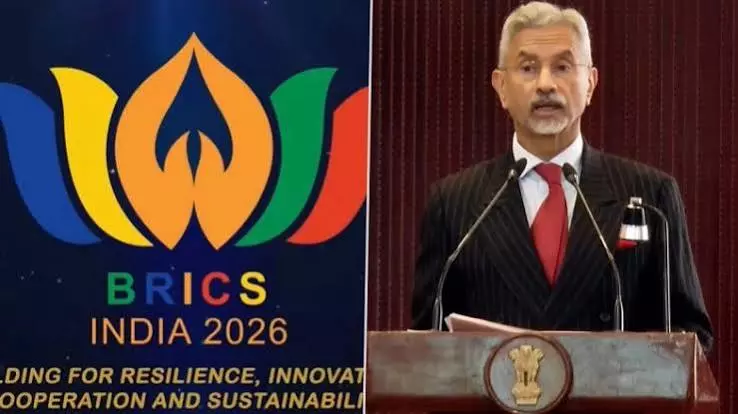
India is hosting the 18th summit of the 10-member Brics on September 12-13, 2026. Their finance ministers met a month earlier, but issued no joint statement, indicating intra-group differences.
Goldman Sachs in 2001 envisioned a group of promising emerging economies consisting of Brazil, Russia, India and China. They had an opening summit in 2009. South Africa joined a year later. Iran, Egypt, Ethiopia and the United Arab Emirates attended their first summit as member states in 2024 in Russia. Indonesia officially joined in 2025, being the first South East Asian member. Saudi Arabia and Argentina were invited, but neither joined.
Prime Minister Narendra Modi attended the Shanghai Cooperation Organisation (SCO) summit on August 31-September 1 at Bishkek, Kyrgyzstan. On exactly the same dates, the G-20 finance ministers met in the US, where South Africa was not invited. The G-20 summit is due on December 14-15 in Florida, US. Thus, the period August-December will see multiple competing narratives at play.
The Bishkek Declaration, on SCO’s 25th anniversary, correctly argues that “global politics are undergoing profound evolution, with profound changes in economic, social and technological developments”. It adds that the international situation has been rendered “complex” by ongoing conflicts, challenges in energy and food security, global market volatility and severe climate change conditions. The same scenario confronts the Brics summit.
Interestingly, India, China, Russia and Iran are members of both the SCO and Brics. However, while China made Indian membership of SCO contingent on Pakistan’s admission, in BRICS India allowed Iran’s inclusion but alongside that of the UAE. But the geopolitical scenario has evolved since then in the Gulf and West Asia. The UAE, having signed the Abraham Accords in 2020 is now seen by Iran as part of the US-Israel axis in the ongoing Gulf conflict. India too betrayed a similar tilt following the airstrikes by US-Israel on Iran on February 28. However, with the US holding back its trade deal with India, besides Pakistan exploiting the strategic vacuum and playing peacemaker by its mediation between Iran and the US, India is recalibrating its policy. Thus, it endorsed the Bishkek Declaration which condemns the military strikes on Iran but also maintains that no durable peace is possible in West Asia without “comprehensively and justly” resolving the Palestinian issue. At the United Nations India of late had weakened its stand on Palestine.
Both groups insist that they are not against any other nation or group. However, in a world undergoing a political and economic power shift, besides the Iran and Ukraine wars, partisanship is unavoidable. China wants to dominate the agenda of both groups to bolster its support among the Global South, selectively defend useful elements in the existing global order like the World Trade Organisation, accelerate de-dollarisation and seek calibrated reform of the existing multilateral financial and political order.
India agrees with some elements of the Chinese reformist agenda but would resist both organisations becoming anti-West, especially anti-US. India historically played the same moderating-role once the Non-Aligned Movement (NAM) became mammoth and susceptible to anti-West rhetoric.
India has proposed a progressive agenda for the upcoming Brics summit, which seeks “Building for Resilience, Innovation, Cooperation and Sustainability”. Resilience implies the ability to navigate global uncertainties, climate risk and supply-chain disruptions. This covers the global economic disruption caused by the two wars and the arbitrary tariffs imposed by US President Donald Trump. Global trade is already bypassing these obstacles and connecting new markets. Brics members have not adequately adjusted to this reality. Despite their GDP being two-thirds that of Global South, the intra-Brics trade is merely 20 per cent of the South-South trade. This is reflected in India’s $100 billion trade deficit with China.
The second listed theme is innovation. This covers digital public infrastructure, an area that India excels at, financial technology and Artificial Intelligence (AI). China leads other Brics members at AI, especially dominating the rare earths’ supply. It sees the US as its principal rival and is unlikely to encourage another nation to excel.
The third theme is cooperation, covering multilateral policy coordination and global institutional governance reform. Brazil, India, Germany and Japan, have had a G-4 group since the early 21st century to seek UN Security Council reform and expansion of permanent membership. China, and less openly Russia, have never supported this process. All members only agree on reforming the World Bank and International Monetary Fund. The New Development Bank, created by Brics and based in Shanghai, is under-capitalised with $100 billion deposits. China has been running parallel infrastructure funding under its Belt and Road Initiative (BRI). In fact, in the Bishkek Declaration India has avoided endorsing Chinese BRI.
The final issue is climate change and environmental concerns. Green finance and energy transitions are noted for discussion. The energy crisis caused by the ongoing Iran war underscores the need to plan for a post-carbon world. Brics energy ministers met on June 25-26.
External affairs minister S. Jaishankar has called Brics a “constructive platform” for dialogue, complimenting the broader multilateral system. Russian President Vladimir Putin had earlier called the SCO as “one of the independent and influential centres of the emerging multipolar world”. The same description also befits Brics. The expansion of membership of both platforms will require consensus.
Chinese ambassador in Delhi, Xu Feihong, wrote an oped on “Harnessing Brics ‘Power’”. He argued that the future will be defined by deepening multipolarity, economic globalisation and Global South’s rise. Brics, he added, with half the world’s population, 30% of global economic output and one-fifth of global trade could be the “engine” of future global growth.
The problem is the persisting Sino-Indian border tension and China perceiving itself, encouraged by President Trump terming his summit with his Chinese counterpart as a G-2 encounter, as the dominant Asian power. President Xi Jinping visits India after seven years. His last visit was followed by the 2020 Chinese cross-border intrusions in eastern Ladakh. Even though direct flights and border trade have now resumed, as rising powers and neighbours, reestablishing trust would take time.
The New Delhi Declaration would reveal whether India could successfully lead Brics through a destabilised world and divided membership. More significantly, the US and Israeli people can usher, by their votes in coming weeks, a new order or let the toxic status quo persist.
