A strategic push across West Asia and Africa amid trade disruption and geopolitical flux
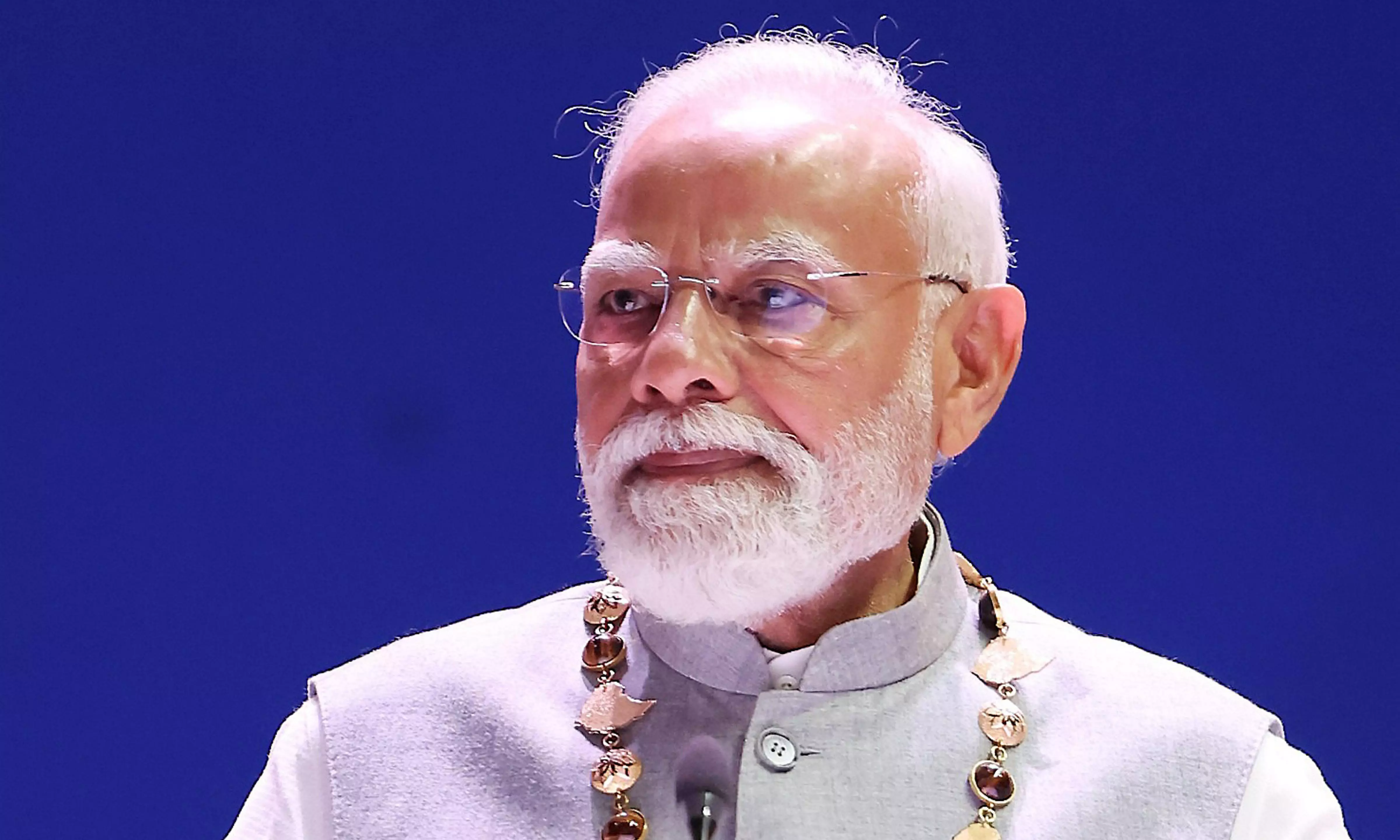
Prime Minister Narendra Modi made a three-nation whistle-stop tour of Jordan, Ethiopia and Oman last week, from December 15 to 18. His diplomatic engagement across West Asia, Africa and the Gulf underscored India’s closer reengagement with these regions, in a world facing trade and strategic uncertainty. The Opposition in India criticised the trip, as Parliament’s Winter Session was still on at that time. Conventionally, most Indian leaders usually avoid foreign travel during parliamentary sessions.
Some justification is available as 2025 marks the 75th anniversary of diplomatic ties with Jordan, besides the 70th anniversary of formal relations with Oman. The three-nation tour spells out some common, and yet other distinct, areas of cooperation. Oman and Ethiopia have had trading links with India going back many millennia. With the former, they date back to the Indus Valley Civilisation, making it India’s oldest regional strategic partner. Sultan Taimur bin Faisal, who ruled Oman during 1913-32, died in Mumbai in 1965 and is buried there. During the colonial period and until some GCC nations emerged in 1971 and began acquiring oil wealth, India was their main destination, for vacation and medical treatment. Thus, the Prime Minister’s recent sojourn was to redraw those ancient links strongly, with contemporary colouring.
India falls amongst Jordan’s four top trading partners, with the 2023-24 numbers touching $2.87 billion. India exports cereals, machinery, petroleum products and animal fodder. The bulk of India’s imports are phosphates, potash and fertilisers. With the Palestinians providing a buffer between Israel and Jordan, security becomes a crucial issue. The ruling Hashemite kingdom has therefore played a balancing game between Israel and the United States, on the one side, and the Arab and the Islamic world on the other. Prime Minister Narendra Modi proposed diversification of bilateral relations by offering an economically challenged Jordan partnership in renewable energy, digital public infrastructure and sustainable agriculture. He also offered membership of India-led India Solar Alliance (ISA), the Coalition for Disaster Resilient Infrastructure and the Global Biofuels Alliance.
India’s dependence on imported fertilisers has always made Jordan a vital and reliable supply source. The India-visit of late King Hussein in 1986, including him gifting luxury vehicles to Prime Minister Rajiv Gandhi, created a controversy but also underscored trustworthiness of Indo-Jordanian ties.
Ethiopia, as headquarters of the African Union (AU) and a vital component of East African security, has unique importance. Agriculture constitutes 46 per cent of its GDP, besides providing 85 per cent of total employment. For two millennia it, besides Oman, provided the export route for Indian silks and spices. The India-Africa Forum Summit, which commenced in 2008, provides a crucial platform for Indian outreach to 54 African countries. It was a belated attempt to emulate China’s expanding presence and influence in Africa. The last and third summit was in India in 2015. The fourth one, to be hosted by Ethiopia, is long overdue. With Africa getting low priority from the Trump administration and USAID dismantled, the space for India boosting links with Africa has expanded. India inviting the AU for the G-20 summit it hosted in 2023 reflected this approach. Bilateral trade is below $3 billion, but Ethiopia is the biggest recipient of Indian Letters of Credit, topping $1 billion. India is also the second largest investor in Ethiopia, with 650 Indian companies. As a recent member of Brics, alongside Egypt and Iran, Ethiopia is seeking to compensate for the US withdrawal of its duty-free access in 2022. It thus becomes for India a vital component of its wooing of the Global South. India has always been a desired destination for Ethiopian students and an avid user of India’s Indian Technical and Economic Cooperation programme (ITEC). If India’s Africa outreach in the 1950s and 1960s was to help post-colonial African nations stabilise, then the new Indian policy is to befriend a US-dumped and China-wooed continent.
Oman has special significance for India amongst the six GCC members. Besides its age-old links to South Asia, including ownership of Gwadar until its purchase by Pakistan in 1958, it has geo-strategic importance for India. It abuts the vital Strait of Hormuz from the south. It borders Yemen and has a long Indian Ocean coast. It has energy resources, albeit more limited than those of most GCC members.
Diplomatically, Oman has often played the mediator in the region. It hosted the US-Iran talks, besides arbitration on the Yemen crisis involving the Iran-supported Houthis. It has collaborated to enhance maritime security in the Indian Ocean region. It conducts joint military exercises with India, including Naseem-al-Bahr. It has maintained clandestine links with Israel, although following the recent Israeli military operation in Gaza it has ratcheted up its public condemnation. India joins Oman to clearly support a Palestinian state.
The joint statement, after the Indo-Oman summit on December 18, covers engagement across multiple sectors. These include trade, investment, defence, security, technical cooperation, education, energy, space, agriculture, culture and people-to- people ties. The relationship is described as “multifaceted strategic partnership”. Economic diversification and sustainable development are seen as the tools for creating synergy between the development visions of the two nations — Oman 2040 and India’s Viksit Bharat.
At present, 70 per cent of Indian imports from Oman consist of petroleum and urea. The Indian diaspora is 20 per cent of Oman’s 2.3 million population. But the Omani women’s dress, multi-faith tolerance and old links to India make the ethos the most India-friendly amongst GCC countries. The signing of the Comprehensive Economic Partnership Agreement opens the doors for more joint ventures, especially in Oman. It is currently the third largest export destination for India amongst the six GCC members. The Joint Vision Document on Maritime Security reflects the possibility of expanded cooperation.
However, the Omani desire for more air services routes and India suggesting more trade in local currencies may not immediately happen. With a small population, Oman’s market is limited though its location and accessibility offers opportunities for Indian manufacturers shifting some export-oriented businesses to Oman, to bypass US tariffs. Unlike in other GCC nations, the local wages may be low enough to allow some labour-intensive Indian manufacturing to relocate.
With global trade disrupted by US tariffs and US-China rivalry, bipolar competition or even friction has exacerbated. India has no option but to revert to the past, nonaligned era engagement with Third World nations, now rechristened the Global South.
The writer is a former secretary in the external affairs ministry. He tweets at @ambkcsingh.
Prime Minister Narendra Modi made a three-nation whistle-stop tour of Jordan, Ethiopia and Oman last week, from December 15 to 18. His diplomatic engagement across West Asia, Africa and the Gulf underscored India’s closer reengagement with these regions, in a world facing trade and strategic uncertainty. The Opposition in India criticised the trip, as Parliament’s Winter Session was still on at that time. Conventionally, most Indian leaders usually avoid foreign travel during parliamentary sessions.
Some justification is available as 2025 marks the 75th anniversary of diplomatic ties with Jordan, besides the 70th anniversary of formal relations with Oman. The three-nation tour spells out some common, and yet other distinct, areas of cooperation. Oman and Ethiopia have had trading links with India going back many millennia. With the former, they date back to the Indus Valley Civilisation, making it India’s oldest regional strategic partner. Sultan Taimur bin Faisal, who ruled Oman during 1913-32, died in Mumbai in 1965 and is buried there. During the colonial period and until some GCC nations emerged in 1971 and began acquiring oil wealth, India was their main destination, for vacation and medical treatment. Thus, the Prime Minister’s recent sojourn was to redraw those ancient links strongly, with contemporary colouring.
India falls amongst Jordan’s four top trading partners, with the 2023-24 numbers touching $2.87 billion. India exports cereals, machinery, petroleum products and animal fodder. The bulk of India’s imports are phosphates, potash and fertilisers. With the Palestinians providing a buffer between Israel and Jordan, security becomes a crucial issue. The ruling Hashemite kingdom has therefore played a balancing game between Israel and the United States, on the one side, and the Arab and the Islamic world on the other. Prime Minister Narendra Modi proposed diversification of bilateral relations by offering an economically challenged Jordan partnership in renewable energy, digital public infrastructure and sustainable agriculture. He also offered membership of India-led India Solar Alliance (ISA), the Coalition for Disaster Resilient Infrastructure and the Global Biofuels Alliance.
India’s dependence on imported fertilisers has always made Jordan a vital and reliable supply source. The India-visit of late King Hussein in 1986, including him gifting luxury vehicles to Prime Minister Rajiv Gandhi, created a controversy but also underscored trustworthiness of Indo-Jordanian ties.
Ethiopia, as headquarters of the African Union (AU) and a vital component of East African security, has unique importance. Agriculture constitutes 46 per cent of its GDP, besides providing 85 per cent of total employment. For two millennia it, besides Oman, provided the export route for Indian silks and spices. The India-Africa Forum Summit, which commenced in 2008, provides a crucial platform for Indian outreach to 54 African countries. It was a belated attempt to emulate China’s expanding presence and influence in Africa. The last and third summit was in India in 2015. The fourth one, to be hosted by Ethiopia, is long overdue. With Africa getting low priority from the Trump administration and USAID dismantled, the space for India boosting links with Africa has expanded. India inviting the AU for the G-20 summit it hosted in 2023 reflected this approach. Bilateral trade is below $3 billion, but Ethiopia is the biggest recipient of Indian Letters of Credit, topping $1 billion. India is also the second largest investor in Ethiopia, with 650 Indian companies. As a recent member of Brics, alongside Egypt and Iran, Ethiopia is seeking to compensate for the US withdrawal of its duty-free access in 2022. It thus becomes for India a vital component of its wooing of the Global South. India has always been a desired destination for Ethiopian students and an avid user of India’s Indian Technical and Economic Cooperation programme (ITEC). If India’s Africa outreach in the 1950s and 1960s was to help post-colonial African nations stabilise, then the new Indian policy is to befriend a US-dumped and China-wooed continent.
Oman has special significance for India amongst the six GCC members. Besides its age-old links to South Asia, including ownership of Gwadar until its purchase by Pakistan in 1958, it has geo-strategic importance for India. It abuts the vital Strait of Hormuz from the south. It borders Yemen and has a long Indian Ocean coast. It has energy resources, albeit more limited than those of most GCC members.
Diplomatically, Oman has often played the mediator in the region. It hosted the US-Iran talks, besides arbitration on the Yemen crisis involving the Iran-supported Houthis. It has collaborated to enhance maritime security in the Indian Ocean region. It conducts joint military exercises with India, including Naseem-al-Bahr. It has maintained clandestine links with Israel, although following the recent Israeli military operation in Gaza it has ratcheted up its public condemnation. India joins Oman to clearly support a Palestinian state.
The joint statement, after the Indo-Oman summit on December 18, covers engagement across multiple sectors. These include trade, investment, defence, security, technical cooperation, education, energy, space, agriculture, culture and people-to-people ties. The relationship is described as “multifaceted strategic partnership”. Economic diversification and sustainable development are seen as the tools for creating synergy between the development visions of the two nations — Oman 2040 and India’s Viksit Bharat.
At present, 70 per cent of Indian imports from Oman consist of petroleum and urea. The Indian diaspora is 20 per cent of Oman’s 2.3 million population. But the Omani women’s dress, multi-faith tolerance and old links to India make the ethos the most India-friendly amongst GCC countries. The signing of the Comprehensive Economic Partnership Agreement opens the doors for more joint ventures, especially in Oman. It is currently the third largest export destination for India amongst the six GCC members. The Joint Vision Document on Maritime Security reflects the possibility of expanded cooperation.
However, the Omani desire for more air services routes and India suggesting more trade in local currencies may not immediately happen. With a small population, Oman’s market is limited though its location and accessibility offers opportunities for Indian manufacturers shifting some export-oriented businesses to Oman, to bypass US tariffs. Unlike in other GCC nations, the local wages may be low enough to allow some labour-intensive Indian manufacturing to relocate.
With global trade disrupted by US tariffs and US-China rivalry, bipolar competition or even friction has exacerbated. India has no option but to revert to the past, non-aligned era engagement with Third World nations, now rechristened the Global South.
The writer is a former secretary in the external affairs ministry. He tweets at @ambkcsingh.