Kamal Davar | Fault Lines Begin to Multiply in Pakistan: Khyber Not a Safe Haven

Military unrest, insurgency and Afghan clashes push India to rethink its strategy and build new ties
Neighbouring Pakistan consistently displays a propensity for being in the news for all the wrong reasons. That this is due to multiple fault lines is also an undeniable fact. However, for the last two months, unexpected regional geopolitical churnings shaped by Pakistan’s one-time mentor, the United States, have emerged, with the US mollycoddling Pakistan. Mercurial US President Donald Trump, who in his first term had dubbed Pakistan as a “hub of global terror”, has thrice met Field Marshal Asim Munir, Pakistan’s Army chief, at the White House, and Prime Minister Shehbaz Sharif twice, which has raised many eyebrows. It is evident that Pakistan sees itself back in the regional geopolitical reckoning with Mr Trump’s blessings, especially after signing a defence agreement with Saudi Arabia and with Mr Sharif getting feted by the US President at the Sharm el-Sheikh peace conference on Gaza.
Islamabad, however, conveniently forgets its many traditional fault lines multiplying with internal uprisings emerging. Its mindless obsession, ever since 1947, with India’s Jammu and Kashmir leads itself to duplicitous policies. When it talks of self-determination for the people of J&K, it conveniently forgets the application of this principle in Pakistan-occupied Kashmir. While rampant unrest has been a constant feature in PoK for decades owing to Pakistan’s many human rights violations, along with the step-motherly treatment of PoK’s residents, in the past few months the unrest there has assumed very serious proportions. Pakistan’s brutal response to PoK’s populace has led to dozens of deaths, including some police and security personnel.
What is little known is the fact that the Lashkar-e-Tayyaba and the Jaish-e-Mohammed are also relocating their terror hideouts from PoK to Pakistan’s remote Khyber Pakhtunkhwa (KP) province, on the Afghan border, particularly in the aftermath of Operation Sindoor, in which the Indian armed forces had destroyed nine terror hubs.
The terrorist groups appear to have lost faith in the Pakistan Army’s ability to protect them in PoK, hence the decision to relocate their camps. The protests that have been simmering in PoK are related to the local population’s social, political and economic interests. In addition, Pakistan’s exploitation of PoK’s natural resources and the non-availability of an international airport at Mirpur are other major grievances. In Pakistan, all decisions for PoK are made by the administrative council, which is headed by the Pakistan PM but has no representative from PoK. The current local protests have been more intense, with the participation of women and students also touching all important towns of PoK.
Elsewhere, the overall situation in Balochistan has assumed dangerous proportions for Pakistan’s political integrity, with the Baloch Liberation Army (BLA) mounting near daily attacks on trains, buses and Pakistan Army convoys, posts and other military infrastructure, causing significant damage. The Baloch insurgency is touching newer peaks, with the BLA employing fresh tactics involving sophisticated weapons and the induction of female suicide bombers. Pakistan has been consistently indulging in genocide against the Baloch population. According to reliable media reports and intelligence sources, Pakistan has also taken the extreme step of forming an alliance between the Lashkar-e-Tayyaba and global terror outfit ISKP, which is being handled by the Inter-Services Intelligence.
In Balochistan, meanwhile, the locals are vehemently against any work on the China-Pakistan Economic Corridor and the development of Gwadar port as they feel their resources and land is being exploited by Islamabad and they are getting nothing in return. To deter foreigners, especially the Chinese engineers working on the CPEC, the BLA has been targeting them. The quest for Baloch independence has been inexorably growing and it may be a matter of time before Pakistan loses its largest province.
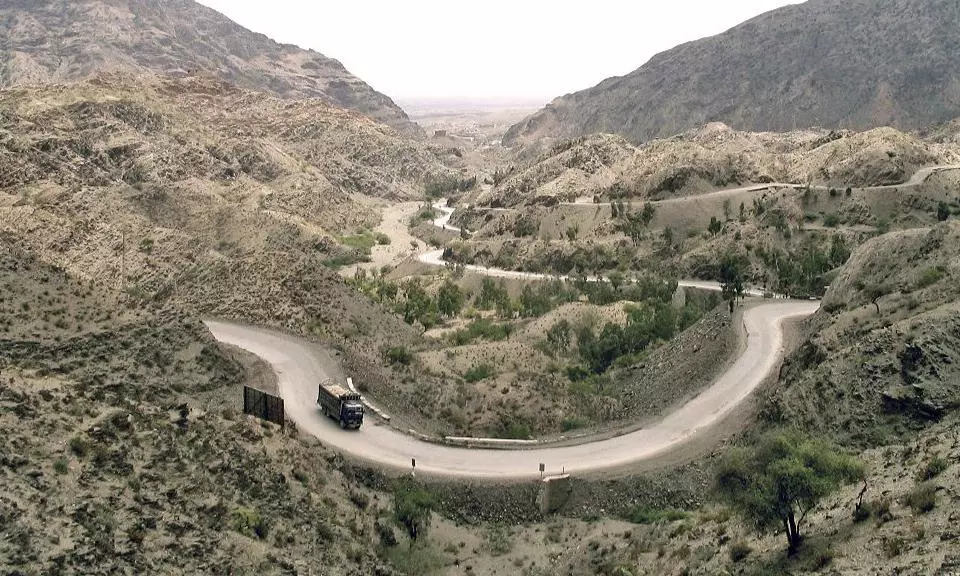
In the volatile Khyber Pakhtunkhwa province in the north, violence is the order of the day for years. The Afghan-based terror outfit Tehreek-e-Taliban Pakistan (TTP), along with some smaller outfits, has been regularly targeting the Pakistan Army and other government assets. Only recently, the Army’s Peshawar corps commander gave out alarming figures of terror activities in KP, saying in this year alone, till September 15, 917 terrorists, 303 soldiers, 73 policemen and 132 civilians had been killed.
Pakistan’s eternal quest for “strategic depth” in Afghanistan has, meanwhile, been squashed by Kabul. India’s recent move to warm up to Afghanistan and its dispatch of much-needed humanitarian aid has infuriated Pakistan no end. The recent visit of the Taliban’s foreign minister to New Delhi and signing of some agreements on the diplomatic and trade front has Pakistan extremely worried. The unprecedented attack by the Pakistan Air Force on alleged terror hubs inside Kabul has angered the Taliban government no end, and it too launched retaliatory attacks on Pakistani posts. Scores of Afghans and Pakistani soldiers have been killed in these clashes along the Durand Line, with Islamabad using heavy artillery and the PAF against the Afghans. However, on a request by Saudi Arabia and Qatar, the Afghans ceased operations against Pakistan, but the hostilities have restarted. It will be prudent for Pakistan to realise that while Afghanistan may not have conventional forces to match its troops, the Afghans possess the ability to carry out suicide missions or employ guerilla tactics in the need arises.
As Pakistan continues on its path towards implosion, India needs to recalibrate its Afghan strategy, especially after Operation Sindoor and the revival of fraternal ties between the two nations. India must expand its diplomatic and economic footprint in Afghanistan, endeavour for convergence on strategic and security matters, especially combating terrorism together while enhancing the speedy development of Chabahar port. In addition, India should also try to establish regional cooperation in diverse issues with Russia, Iran and the Central Asian republics. It would also help if India could try to shape a mutually beneficial South Asian architecture in place of the current regional churnings.
The writer, a retired lieutenant-general, was the first head of India’s Defence Intelligence Agency, and is a strategic analyst