Indranil Banerjie | The Dalai Lama’s Final Call: China Faces Tibet Challenge

Ruled by an ancient theological order of Buddhist monks, Tibet had no army worth its name and was quickly overrun. China’s Communist commissars initially assured Tibetans that their autonomy would be honoured, but soon reneged on their commitment, ultimately forcing the 14th Dalai Lama to flee in 1959 to India, where he has resided ever since
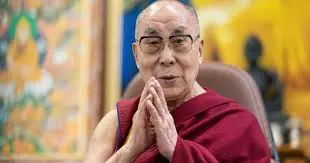
The People’s Republic of China, forged in the crucible of war and in the aftermath of Mao Zedong’s Long March, emerged in 1949 as a powerful military state bent upon establishing its authority over all territory it considered its own. The irridentist agenda of China’s new rulers led to the invasion of sparsely populated Tibet by battle-hardened Chinese troops in 1950.
Ruled by an ancient theological order of Buddhist monks, Tibet had no army worth its name and was quickly overrun. China’s Communist commissars initially assured Tibetans that their autonomy would be honoured, but soon reneged on their commitment, ultimately forcing the 14th Dalai Lama to flee in 1959 to India, where he has resided ever since.
That was 66 years ago, but the consequences of that flight resonate to this day. The years have not diminished the determination of China’s intractable leaders to completely annex Tibet and obliterate every trace of its traditional theological and temporal authority. The Dalai Lama, who had fled with a small group of loyal monks and yak loads of sacred manuscripts, has been relentlessly harassed, harangued and reviled by China’s commissars and every attempt had been made to annihilate the institution he represents. Over the decades, thousands of Tibetans who have risen in revolt from time to time have been killed by Chinese soldiers, ancient monasteries burnt to the ground and buildings full of ancient manuscripts burnt. The Dalai Lama, despite being exiled to a remote Himalayan settlement in India, has refused to cow down to Beijing.
Last week, Tibet’s exiled leader dropped another bombshell by announcing that even his passing would not end the institution of the Dalai Lama, which continues to embody the real authority and sovereignty of Tibet. According to Tibetan traditions, the Dalai Lama is Tibet’s only true head and is believed to reincarnate after death, thus ensuring an uninterrupted lineage.
During his 90th birthday celebrations held at McLeodganj, near Dharamshala, where his modest headquarters in situated, the Dalai Lama declared that he would reincarnate as the next Dalai Lama. In a video message circulated all over the world, he declared: “I am affirming that the institution of the Dalai Lama will continue”.
He announced the setting up of a non-profit trust called the Gaden Phodrang Trust, which would be the sole authority to decide on a future Dalai Lama after his death. “They should accordingly carry out the procedures of search and recognition in accordance with past tradition ... no one else has any such authority to interfere in this matter,” he clarified. In other words, the present Dalai Lama has completely repudiated Beijing’s official view that the next Dalai Lama could only be chosen by the explicit nod from PRC’s Marxist functionaries. His supporters add that the Dalai Lama has also stated that his reincarnation would be in a free country and not China, which he says is not free.
Thus, the present Dalai Lama, who is the fourteenth in a line that stretches back to the 15th century, has ensured that the tradition he represents will continue, no matter how hard Beijing tries to extirpate it. He has never accepted Beijing’s view that Tibet’s traditions are an anachronism that ought to be consigned to history’s dustbin. Over the years, the present Dalai Lama has attained great honours and is now regarded as one of the world’s most influential religious figures. He was awarded the Nobel Peace Prize in 1989. To the Chinese, however, he is a hated figure, termed a “splittist” or separatist. He has been reviled by the Communist leadership as a “wolf in monk’s clothes”, a puppet of foreign anti-China forces, and so on.
His latest statement unsurprisingly has further incensed the Chinese leadership, which reiterated Beijing’s authority over any decision to appoint a Dalai Lama. A Chinese foreign ministry spokesperson insisted that the correct way to select any future Dalai Lama could only be through a Beijing- approved process: “The child reincarnation of a major Living Buddha such as the Dalai Lama and the Panchen Lama needs to be identified through lot-drawing from a golden urn and approval by the central government.” This of course has been rubbished by the Tibetans.
While China’s militaristic state can do little against the Dalai Lama, who enjoys global support, it continues to target India for harbouring him and allowing his unfettered activities. India in the 1950s had accepted the PRC’s invasion of Tibet but later had provided sanctuary to the Dalai Lama and thousands of his fellow Tibetans fleeing Chinese brutality. This was one major reason for the permanent souring of relations between Beijing and New Delhi.
The 1962 India-China war was a warning to India not to persist with its colonial-era geopolitical views on Tibet and its borders. The Indian government has been circumspect on the Tibetan issue and has tried not to provoke Beijing despite its constant objections to the Dalai Lama’s activities, including his travels to parts of India which the Chinese claim ownership over.
This time around too the official Indian reaction to the Dalai Lama’s historic declaration was diplomatic even as Kiren Rijiju, India’s minister of parliamentary and minority affairs, who is an ardent Buddhist and a follower of the Dalai Lama, declared: “No one has the right to interfere or decide who the successor of His Holiness the Dalai Lama will be… Only he or his institution has the authority to make that decision. His followers believe that deeply. It’s important for disciples across the world that he decides his succession.”
This remark was instantly contested by Beijing, which sternly pointed out: “We hope the Indian side will fully understand the highly sensitive nature of Tibet-related issues, recognise the anti-China separatist nature of the 14th Dalai Lama.” India’s external affairs ministry responded by saying that India does not take any position or speak on matters concerning beliefs and practices of faith and religion. “The Government of India has always upheld freedom of religion for all in India and will continue to do so,” a foreign ministry statement added.
This effectively side-stepped the issue avoiding any possible confrontation. However, in the bigger picture, the Dalai Lama remains a contentious issue in India-China relations and his latest pronouncements will ensure its continuation in the foreseeable future. The Dharma, for all its fragility, has stood up to China’s powerful state with remarkable fortitude and success. This fight seems destined to pass on to the next era.