Gurjit Singh I Russia’s Africa Summit Is A Win, But No Breakthrough

Moscow’s objective was to consolidate the political goodwill it enjoys in parts of the continent and convert it into more durable diplomatic, military and economic partnerships.
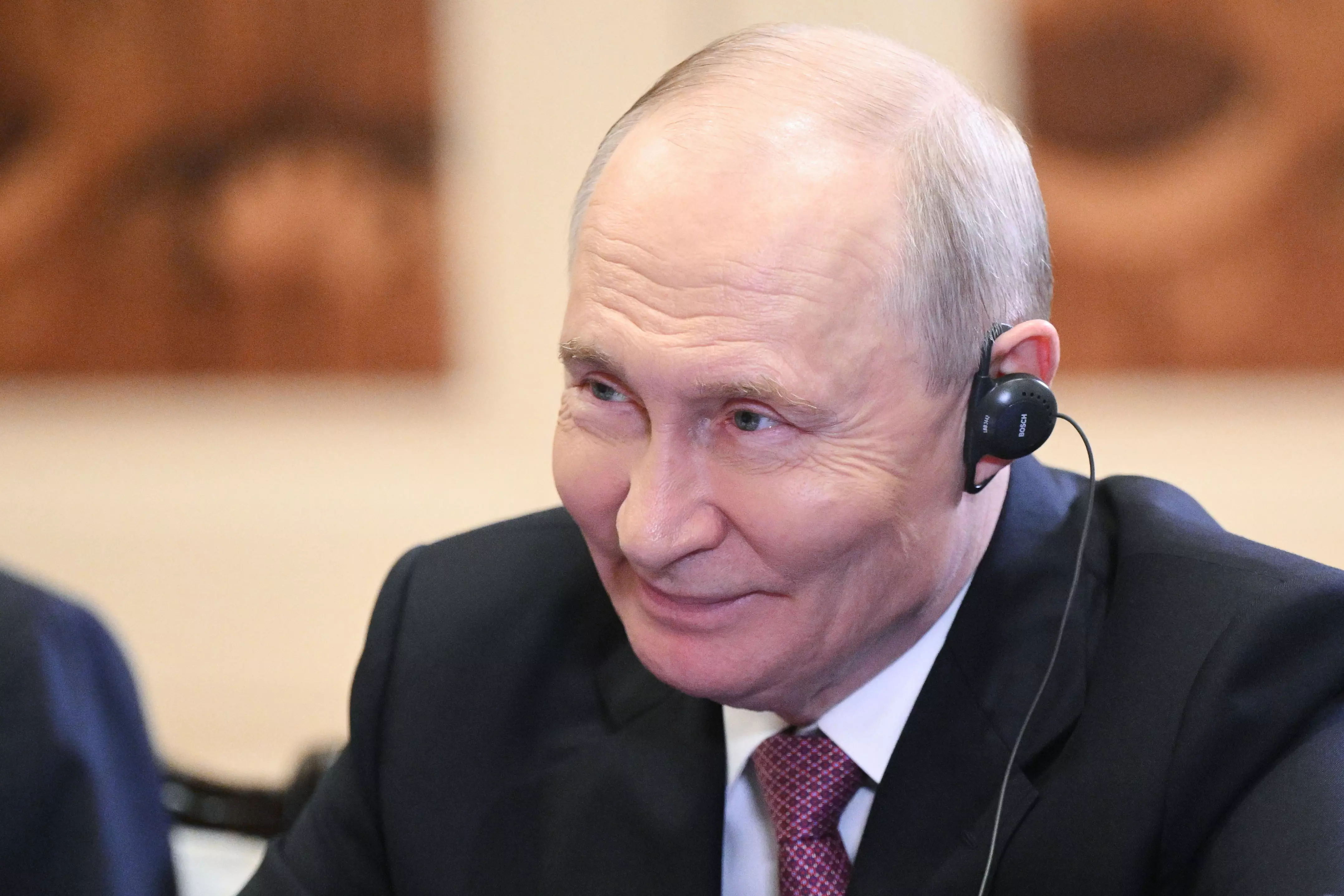
The third Russia-Africa Summit in Moscow on October 28-29, 2026, was as much about Russia’s global standing as it was about its relationship with Africa. President Vladimir Putin wanted to demonstrate that Western sanctions and efforts to isolate Russia had failed to diminish its relevance, particularly in the Global South. Africa, with its growing diplomatic weight, remains central to this ambition. Moscow’s objective was to consolidate the political goodwill it enjoys in parts of the continent and convert it into more durable diplomatic, military and economic partnerships.
The attendance gave Mr Putin considerable grounds for satisfaction. Forty-eight of Africa’s 54 countries participated, with 22 represented by heads of state, compared with 17 at the previous summit in 2023. Mr Putin co-chaired the meeting with the African Union’s current chairperson, Burundi’s President Évariste Ndayishimiye. This visibly showed that Western pressure over Ukraine had not persuaded African governments to distance themselves from Moscow.
Attendance should not be mistaken for political alignment, however. African countries are pursuing strategic diversification, engaging Russia alongside China, the United States, India, Europe, the Gulf countries and others. Their participation reflected a desire to widen their options and extract benefits from competing partnerships, rather than endorse Moscow’s positions. The summit's central paradox was that Russia’s diplomatic reach in Africa remains substantial, even as its economic capacity to match that reach is limited.
Mr Putin built on this distinction by presenting Russia and Africa as natural partners in creating a multipolar international order free from Western domination. Recalling the Soviet Union’s support for African liberation movements, he portrayed contemporary Russia as the inheritor of an anti-colonial tradition, contrasting its approach with the exploitation associated with former colonial powers, particularly through debt and control over natural resources. This narrative provides Moscow with political resonance. Whether it can translate that resonance into trade, investment and development partnerships is a rather different question.
Russia cannot match China, the US or EU in trade, investment or development cooperation. Its appeal lies in political support, military ties and engagement with governments shunned by the West. Moscow seeks African backing on Ukraine, resistance to Western sanctions and support in international forums. Continued engagement without joining sanctions is itself an important diplomatic gain for Russia.
Economic cooperation, however, remains Russia’s weakness in Africa. Despite repeated promises to expand trade, progress has been limited. A target of $40 billion was set in 2019, but trade reached only about $27 billion in 2025. This is considerably lower than China-Africa trade of approximately $348 billion, EU-Africa trade of around $395 billion and India-Africa trade of about $100 billion.
Russian trade with Africa is concentrated in agricultural commodities, fertilisers, energy and defence equipment. Moscow wants to move beyond this narrow base through investments in infrastructure, industrial zones, mining, logistics and technology. These were among the principal points emphasised by Mr Putin, who offered to support local production and employment generation. The summit also discussed alternative payment mechanisms and systems less dependent on Western currencies. For Russia, these are particularly important in reducing the impact of sanctions.
Several specific developments were announced. The 49th Russian embassy will open in Liberia. Russia signed an MoU with Ghana for a joint venture in bauxite extraction and processing. Rosatom initiated a partnership with Togo through a working group on nuclear energy. Russia also announced a cooperation plan with SADC covering agriculture, trade, energy and mining. These are useful steps, but they are not yet backed by the financing required to implement the projects.
Agriculture gives Russia a clear advantage in Africa. Its wheat and fertiliser exports provide an important commercial opening. Mr Putin said grain deliveries exceeded 18 million tonnes in 2025 and 13 million by September 2026. Russian fertilisers reach over 40 African countries. This strengthens Moscow’s position on food security and builds political goodwill. However, the Ukraine war has disrupted Black Sea exports and global grain markets. Russia’s credibility will ultimately depend on its ability to remain a reliable supplier.
The most important dimension of Russia’s partnership with Africa remains security. Through its relationships with Mali, Burkina Faso, Niger and the Central African Republic, Russia has established a presence that goes beyond conventional diplomatic engagement. As French and other Western forces withdrew from parts of the Sahel, Moscow filled the gap, initially through the Wagner Group and subsequently through the Africa Corps. For several African governments, Russia offers military cooperation and direct security assistance, providing an alternative to their longstanding relationships with France.
At the summit, Moscow sought to extend this cooperation to other parts of Africa. Counterterrorism, maritime security, intelligence and military training featured prominently. The final declaration proposed a permanent high-level Russia-Africa dialogue on counterterrorism and related issues. Mr Putin also offered to mediate between Ethiopia and Eritrea, whose leaders were both present. Beyond supplying security equipment, Moscow may want to be seen as a mediator, thereby enhancing its role in the Horn of Africa.
So far, Russian-backed groups such as Wagner have had limited success. African resentment has also grown over the recruitment of nearly 4,000 Africans, sometimes through misleading means, into the Russian army to fight in Ukraine. This has cast a shadow over the otherwise straightforward partnership Moscow offers Africa.
Russia endorsed African demands for UN Security Council reform and greater representation in Bretton Woods institutions. Yet doubts over the Ezulwini Consensus persist, while Moscow’s support for African aspirations has not always been consistent.
What, then, did Russia actually achieve? The summit produced three important documents: a joint declaration, a declaration on civilian AI cooperation and an action plan for the Russia-Africa Partnership Forum for 2027–2029. These provide a framework for developing the partnership and take it beyond political statements.
Russia’s economic engagement remains modest, with investment commitments largely unfulfilled. An end to the Ukraine crisis could free resources for a larger economic role in the continent.
The Moscow summit can therefore be viewed as a diplomatic success for Mr Putin, but not an economic or strategic breakthrough for Russia. Moscow showed it was not diplomatically isolated, reinforced relationships with governments seeking alternatives to Western security partnerships, and established a new framework for cooperation until 2029.
For African countries, Russia offers another avenue for strategic diversification. They do not wish to choose Russia over the West, China or other partners. But if Moscow can meet some of their requirements, they are willing to use the additional room for manoeuvre it provides.
Whether Russia can offer more than security cooperation and emerge as a significant development partner for Africa remains to be seen.