The MEA strongly rejected Pakistan’s remarks, accusing Islamabad of misusing a multilateral platform to spread falsehoods and divert attention from its record of cross-border terrorism. India reiterated that Jammu and Kashmir is an integral part of the country and that the Indus Waters Treaty will remain in abeyance until Pakistan stops supporting cross-border terrorism
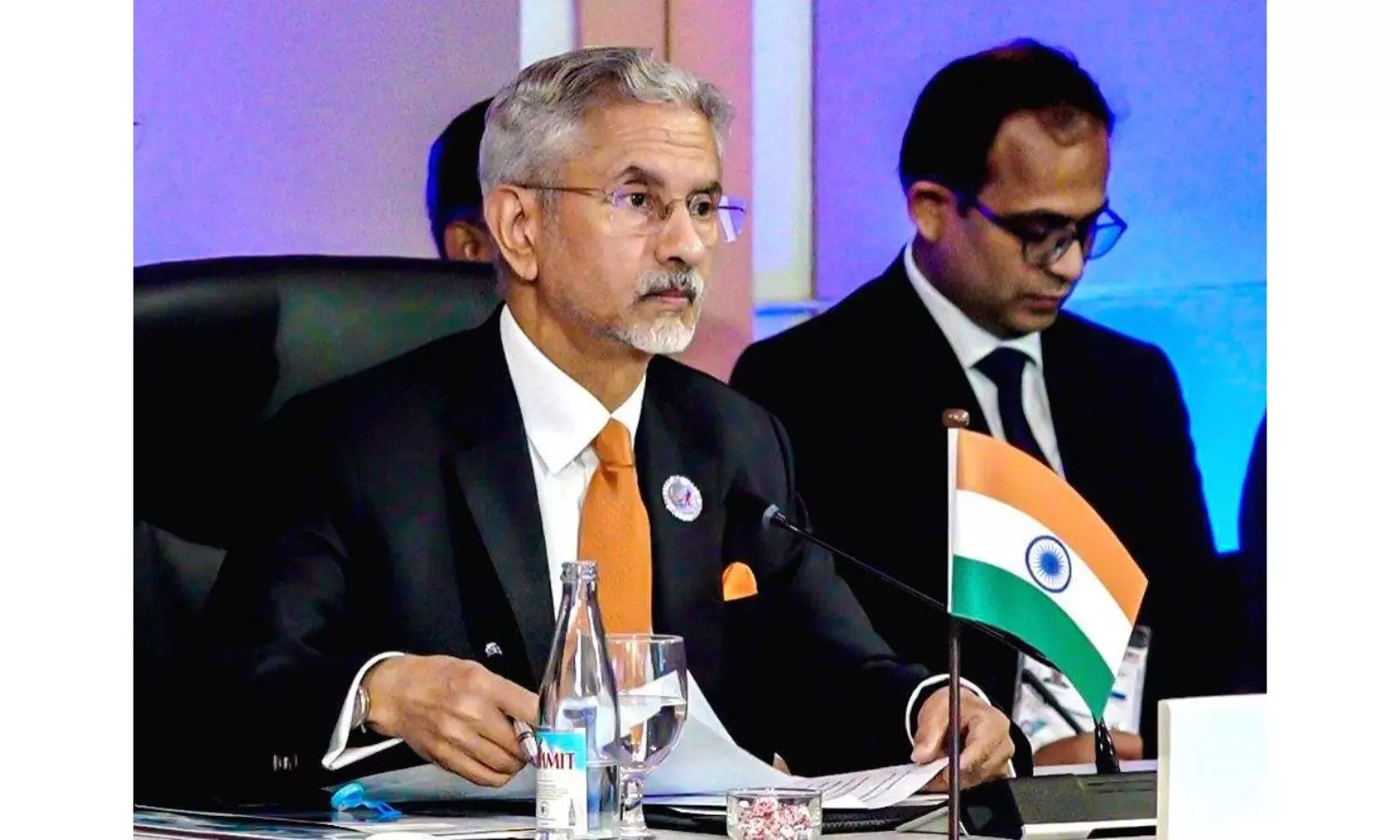
External affairs minister S. Jaishankar has returned from a hectic schedule at the Asean post-ministerial and related conferences in Manila in late July. The formal meetings included the Asean-India post-ministerial conference, the East Asia Summit foreign ministers’ meeting, and the Asean Regional Forum. On the sidelines was the Quad foreign ministers’ meeting and nearly a score of bilateral meetings with fellow ministers.
These engagements show that, despite concerns about the centrality of Asean, Asean-led institutions are still important as diplomatic platforms where regional powers and partners convene annually. The foreign ministers’ meetings will be followed by the Leaders’ Summit in October.
It is evident that India no longer treats the Asean-Plus meetings merely as engagement with a regional organisation. India is using these meetings as the diplomatic fulcrum of its Indo-Pacific engagement, pursuing multilateral, plurilateral and bilateral diplomacy with equal vigour. Several discernible trends emerged from the meetings.
The first is India’s continued recognition of Asean’s centrality while using Asean-led mechanisms to broaden the Indo-Pacific agenda. In his interventions, Mr Jaishankar emphasised the key role of Asean as the centrepiece of a free, open, inclusive and rules-based Indo-Pacific. Even as strategic rivalries intensify, India avoids portraying the Indo-Pacific exclusively as a security construct. Instead, it links the concept with maritime security, connectivity, resilient supply chains and economic security. The designation of 2026 as the Asean-India Year of Maritime Cooperation reflects India’s effort to align its Indo-Pacific vision with the Asean Outlook on the Indo-Pacific.
A second important trend is India’s growing emphasis on economic security rather than conventional trade diplomacy. The external affairs minister consistently referred to disruptions in supply chains and the challenges posed to food, energy and health security as defining issues. This terminology reflects India’s belief that security, economics and technology are inseparable. Trusted supply chains, resilient manufacturing, critical technologies, maritime connectivity and economic security are increasingly replacing traditional discussions on tariff liberalisation. This approach is already visible in India’s recent joint statements with Japan, Australia, the EU and the Quad, and is now extended to Asean as India seeks broader economic partnerships while balancing the effects of the US-China strategic rivalry.
A third visible trend was the prominence accorded to maritime security. At the Asean, ARF and EAS meetings, India reiterated its longstanding support for freedom of navigation, secure sea lanes and the protection of commercial shipping. While these have traditionally been associated with the South China Sea, the sharper tone of the minister’s interventions reflected recent attacks on civilian shipping, seafarers and maritime routes in the Red Sea. Maritime security is therefore no longer viewed solely through the prism of naval cooperation, but as an essential requirement for global trade, economic stability and uninterrupted energy flows. This broader conception resonated with Asean’s own approach, reflected in its statements on the crisis in West Asia.
A fourth trend was India’s continuing emphasis on counter-terrorism as an integral component of regional security. At the ARF, which focuses principally on security issues, the EAM called for stronger international action to disrupt the financing of extremist and terrorist networks. India has consistently sought to broaden Asean’s security agenda beyond maritime disputes in the South China Sea to include terrorism, cybercrime and other transnational threats. The minister’s emphasis on curtailing financial flows to terrorism showed India’s effort to bring its domestic counter-terrorism priorities into evolving regional norms. This approach also links financial integrity, cross-border law enforcement, technology governance and intelligence cooperation into a more comprehensive security framework.
Pakistan, an Asean sectoral dialogue partner since 1992, participates only in the Asean Regional Forum (ARF). At the 33rd ARF, deputy PM and foreign minister Ishaq Dar described the unresolved Jammu and Kashmir issue as the principal source of instability in South Asia and called for its resolution under UN Security Council resolutions. Referring to the Indus Waters Treaty, he maintained that it remains legally valid and urged dialogue over unilateral actions. He also advocated stronger preventive diplomacy and regional cooperation in the “Asia-Pacific”, reflecting Chinese terminology.
The MEA strongly rejected Pakistan’s remarks, accusing Islamabad of misusing a multilateral platform to spread falsehoods and divert attention from its record of cross-border terrorism. India reiterated that Jammu and Kashmir is an integral part of the country and that the Indus Waters Treaty will remain in abeyance until Pakistan stops supporting cross-border terrorism. Pakistan has become more consistent in raising bilateral issues at ARF over the last two ARF meetings.
The fifth trend was India’s continuing practice of strategic multi-alignment, reflected in the extensive bilateral meetings held. The Manila meetings coincided with the fiftieth anniversary of the Treaty of Amity and Cooperation, bringing together a wide range of Asean dialogue partners and observers. This enabled the EAM to meet his counterparts from the Quad countries, China, Russia, the EU, Britain, the Netherlands, New Zealand, Oman and several Asean member states.
The diversity of these meetings once again illustrated India’s comfort in participating in a Quad foreign ministers’ meeting while simultaneously maintaining dialogue with both Russia and China. Discussions with Western partners focused largely on technology, economic resilience and the Indo-Pacific. The conversations with Russia and China reflected continuity of diplomatic engagement despite acknowledged strategic differences. They are both expected at the Brics summit in India. The Asean-led meetings thus provided valuable diplomatic space where India, like many other Asean partners, could simultaneously manage cooperation and competition with a wide spectrum of countries.
Overall, the Manila meetings reflected India’s evolution from being viewed primarily as a balancing power to becoming a country capable of contributing to regional agenda-setting through an independent perspective. Earlier Indian participation often centred primarily on articulating national priorities. The EAM’s interventions increasingly projected India as a contributor to regional public goods through maritime cooperation, resilient supply chains, humanitarian assistance and disaster relief (HADR), digital connectivity, health security, energy security and counter-terrorism.
There was little effort to frame India’s diplomacy merely as a response to either China or the United States, or to define its engagement through their rivalry.
Instead, the emphasis was on contributing to practical regional cooperation capable of strengthening the Indo-Pacific as a whole. The diplomatic confidence that India has displayed since its G-20 presidency in 2023, together with its expanding network of Indo-Pacific partnerships, was clearly evident throughout these meetings.
The common thread running through the external affairs minister’s statements was the recognition that security, economics, technology and maritime cooperation are now deeply interlinked. The Manila meetings demonstrated how both the Philippines, in particular, and Asean, more generally, continue to occupy an important place in India’s Act East Policy while contributing to the further refinement of India’s Indo-Pacific strategy and its practical implementation.
Gurjit Singh is a retired diplomat, who has served as India’s ambassador to Indonesia and Germany, and is the author of The Durian Flavour
