From Quantity to Quality: Reimagining India’s Development Through Japan’s Experience

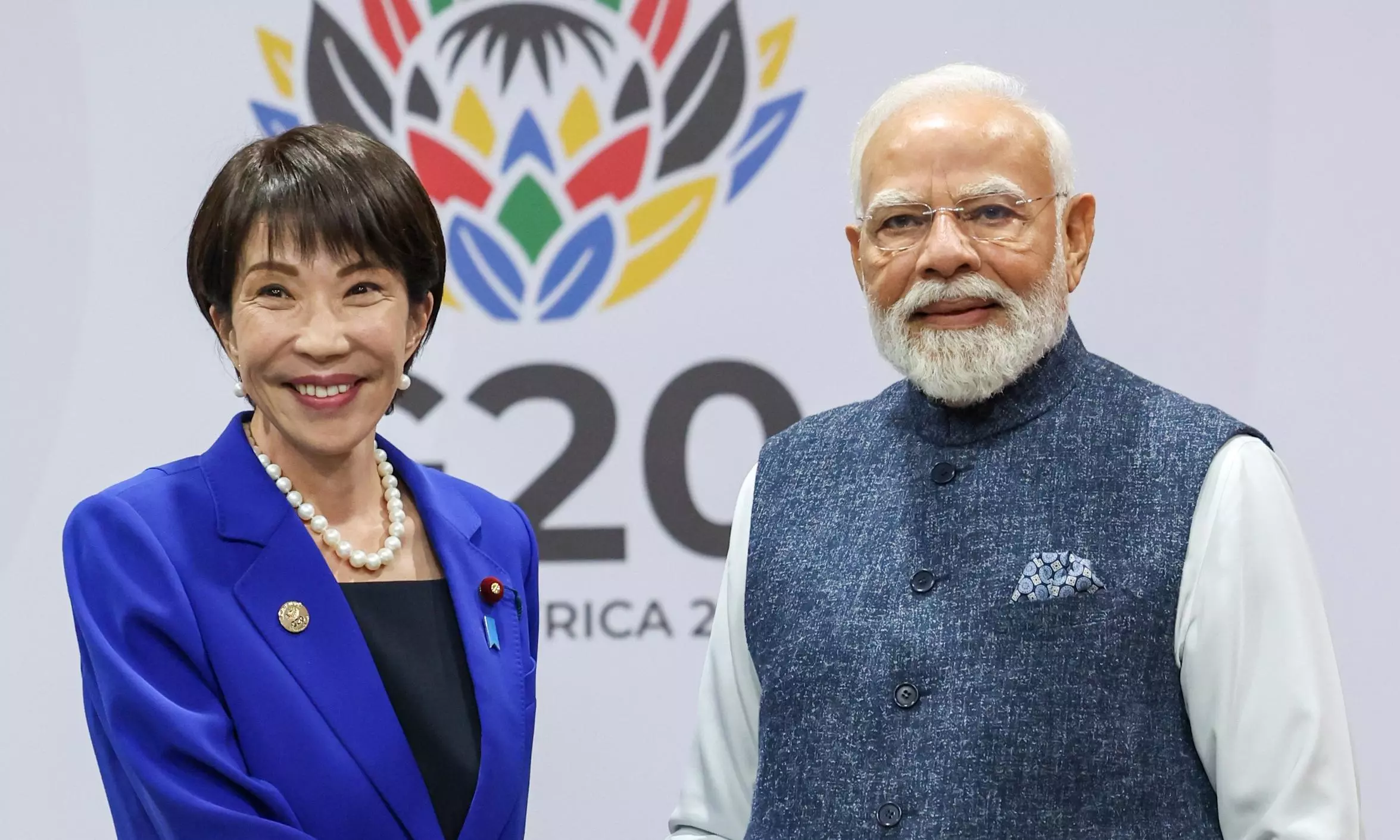
On the occasion of the visit of the Prime Minister of Japan, Ms Sanae Takaichi, which is expected to take place in the next few weeks, there will be discussions that will focus on technology transfer, supply chains, semiconductors, trade and investment, and strategic cooperation in the context of geopolitical engagement. However, if there is a critical lesson that India can learn from Japan, it is the recognition of quality as the central pursuit of excellence and the development of a national mission.
India’s Development Challenge: Why Quality Matters
India’s persistent quality challenge cuts across every sector, from institutional governance and public services to manufacturing, infrastructure development, education, health care development, urban planning, architectural design, and the overall development of India. We have consistently celebrated speed of execution over standards of quality, emphasized quantity over quality, and expansion over excellence.
This is not unexpected, especially in a large country where the aspirations of more than a billion-plus people need to be fulfilled.
The state of education in India, including universities, is a good example of expansion versus excellence. We have been able to expand our schools, colleges, and university education system, but we continue to struggle with learning outcomes, employability, research quality, faculty standards, and benchmarks to assess excellence, including our presence in international rankings.
How Japan Made Quality a National Mission
Quality was not always the strength of Japan. In the aftermath of the Second World War, the products of Japan were assessed at a global level as cheap, unreliable, and of poor quality. Despite this bad reputation, within a few decades, the brand “Made in Japan” became identical with quality, integrity, predictability, reliability, and excellence.
Japanese firms dominate international markets spread across electronics, automobiles, large-scale equipment, high-tech machinery, and advanced manufacturing. Toyota, Suzuki, Nissan, Nintendo, Hitachi, Lexus, Sony, Panasonic, Canon, Honda, and many other companies of Japanese origin have become global symbols of quality and excellence.
This transformation of Japan and its global reputation from mediocrity to excellence occurred within a relatively short span of time, but it was far from accidental. Since the early 1950s, policymakers, industrial tycoons, scientists, educators, policy leaders, managers, and others in every sector committed themselves to quality improvement as a national mission.
Renowned and influential thinkers such as W. Edwards Deming and Joseph Juran led the introduction of statistical quality control, governance systems, management practices, and institutional initiatives that were implemented across Japanese firms.
The establishment of the Deming Prize by Japan in 1951 became one of the world’s most respected quality awards.
Kaizen and Monozukuri: The Cultural Foundations of Japanese Excellence
Japan did not only focus on the inclusion of quality control mechanisms but also integrated these practices into the organizational culture. It created a change in mindset that resulted in the holistic integration of the pursuit of excellence as part of both national culture and lived experience.
The Japanese commitment to Kaizen, the principle of relentless and continuous improvement, motivated and inspired every worker, manager, staff member, leader, within every institution to recognize the importance of incremental improvements in everyday work culture.
Another remarkable aspect was that the quality control dimension was not limited to the focus of inspectors, managers, or auditors. It became the responsibility of everyone in the organization. The concept of Monozukuri, the pursuit of craftsmanship and individual and institutional pride in creating things with the highest standards of excellence, became part of Japanese culture.
Incredibly, the concept of excellence was recognized not as an economic and trade objective but as a moral and ethical obligation. By 1970s and 1980s, the manufacturing sector in Japan established global benchmarks for quality, productivity, reliability, and excellence.
The Toyota Production System, total quality management, and continuous improvement practices were management principles that became part of business school case studies, management consultants’ reports, policy-level practices around the world, and philosophical underpinnings of organizational transformation.
Quality in Digital and Data Infrastructure
India has made remarkable strides with its digital public infrastructure --UPI, Aadhaar, and vast data networks -- which have become global models for inclusion and scale.
However, as India deepens its digital transformation, the imperatives of reliability, security, data integrity, and system resilience become paramount. Japan’s experience in precision engineering, fault-intolerant systems, and meticulous standards in electronics and information technology offers a valuable blueprint. Without a quality-first approach to data governance, cybersecurity, and digital service delivery, India’s digital leap could become a source of vulnerability rather than strength.
Quality Beyond Manufacturing: A Way of Life
While the world has looked at Japan as a technological superpower, the real story of Japan is its cultural supremacy in its commitment to quality. The vision of quality and standards has been integrated into schools, colleges, universities, factories, offices, laboratories, public institutions, private-sector firms, financial institutions, and everyday life. A prime example of this vision of quality is the punctuality of bullet trains. Most people believe that they arrive on time because of the extraordinary technology of the Shinkansen, but in reality, its punctuality is driven by the Japanese cultural expectation that people need to be on time.
An India–Japan Partnership for Building a Culture of Excellence
The challenge that we face in India is not very different from the challenge that Japan faced several decades ago. We have outstanding individuals who have enormous capabilities to pursue ideas, innovation, technology, and entrepreneurship, but we lack a deep and institutional commitment to excellence.
A developed India, Viksit Bharat, will not be established without a new and renewed commitment to excellence. Larger investments and big development programmes will not be able to achieve our vision. India and Japan should therefore build a new partnership centred around quality and excellence, focusing on five important pillars.
First, a National Quality Movement for creating a culture of excellence. India and Japan should work towards establishing a bilateral quality and excellence initiative that fosters standards of quality across public and private sectors. Taking inspiration from Japan’s resurgence after the Second World War, India should adopt a quality movement for the next century.
Second, quality in manufacturing. The success of Maruti Suzuki has shown how the Japanese commitment to quality systems helped India transform its manufacturing capabilities, albeit largely within the automobile sector. The next chapter of Indo-Japan relations should focus on the inclusion of Japanese quality standards across every aspect of collaboration.
Third, quality in public services and institutional governance. The extraordinary attention given in Japan to process efficiency and citizen-enabled service delivery mechanisms provides valuable lessons for India.
Fourth, quality in education and skills. India should place greater emphasis on the development of community colleges and vocational education institutions by drawing inspiration from Japan and jointly develop skills-development centres that pay attention not only to employability but also to excellence and craftsmanship.
Fifth, innovation, reliability, and execution. The agenda of innovation and the practice of entrepreneurship have made India an international destination. However, Japan has excelled in reliability and execution with precision. The future will be built around how Indian innovation and Japanese quality come together.
We need to be inspired by contemporary Japanese history and build a culture that values quality and excellence in everything. I believe that India is ready to make quality a national mission of its own, and we need Japan as our trusted partner. Quality should become India’s culture.