Dilip Cherian | Shastri Bhavan Gets Yet Another Puzzling Reprieve

The case practically made itself. Whenever the government needed to demonstrate why Delhi's administrative core required a dramatic makeover, the ageing office complex was readily produced as evidence
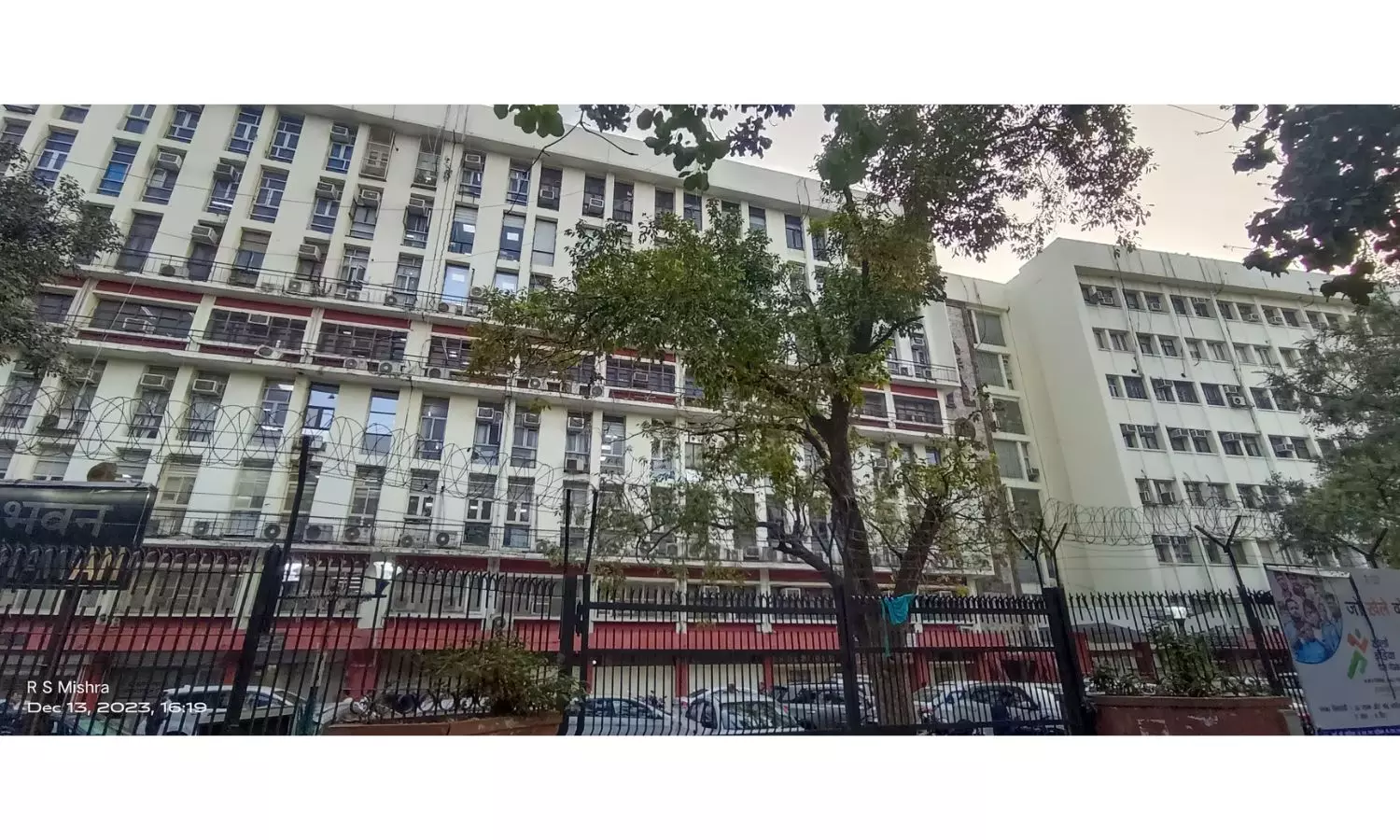
For years, Shastri Bhavan was the poster child of government neglect. It was held up as proof that Delhi’s babu infrastructure had outlived its usefulness.
The case practically made itself. Whenever the government needed to demonstrate why Delhi's administrative core required a dramatic makeover, the ageing office complex was readily produced as evidence. The building seemed to tick every box: crumbling infrastructure, leaking walls, dangling cables, dim corridors and facilities stretched well beyond capacity. It was less an office complex and more an argument in concrete.
But the very building that became synonymous with decay is not going anywhere just yet. Its evacuation and demolition have quietly been pushed back by another year. Meanwhile, several newer and sturdier structures have already been vacated and knocked down in the march towards a new Central Vista. That leaves Shastri Bhavan in an unusual position.
For something long described as unfit for the future, Shastri Bhavan is displaying remarkable staying power. Central Vista may be reshaping the skyline, but its most frequently cited symbol of decay refuses to exit the stage.
Sometimes, the strongest challenge to an official narrative comes not from critics, courts or activists, but from a building that simply refuses to fall.
Even after retirement, Khemka wins another round
Retired Haryana-cadre IAS officer Ashok Khemka has secured a significant legal victory, with the Punjab and Haryana High Court ruling that the Centre subjected him to discriminatory treatment by denying him empanelment at the level of additional secretary/secretary while extending the same benefit to other similarly placed officers.
In a sharp rebuke to the Union government, a division bench comprising Justice Harsimran Singh Sethi and Justice Deepak Manchanda questioned why Mr Khemka was denied relaxation of eligibility norms when such relaxations had routinely been granted to others. The problem, the court noted, was not merely the decision itself but the absence of any explanation for treating Mr Khemka differently.
The verdict offers a measure of vindication to one of India's most well-known whistleblower-babus, whose career became almost as famous for its frequent transfers as for its controversies. Mr Khemka had challenged three orders of the Central Administrative Tribunal (CAT), which had rejected his claim that he ought to have been considered empanelled before retirement.
At the heart of the dispute was the requirement of three years of central deputation for empanelment. The court pointed out that while the rule exists, the government also has the authority to relax it. More importantly, it has done so in the past. The bench cited the case of a 1992-batch Tamil Nadu cadre IAS officer who received empanelment in 2022 after the eligibility condition was relaxed. Mr Khemka’s request, however, had been turned down a year earlier.
The court unequivocally stated that once the government chooses to relax a rule for one set of officers, denying the same consideration to another similarly placed officer without justification amounts to discrimination.
While Mr Khemka cannot now reap the service-related benefits of empanelment because he has already retired, the court directed that he be treated as an empanelled additional secretary/secretary for future purposes.
After a career spent challenging the system, Mr Khemka has finally persuaded the system to acknowledge that it treated him differently.
Can mentorship fix what training cannot?
The government knows how to train officers. It has been far less successful at helping them learn from those who have already walked the path. Now, acting on a suggestion made by Prime Minister Narendra Modi at last year’s national conference of chief secretaries, the department of personnel and training (DoPT) is organising a mentorship meet for IAS officers at the Statue of Unity on October 31. States and Union Territories have been asked to nominate participants, and the initiative may become an annual exercise.
The idea deserves attention. The IAS has no shortage of training programmes. Officers spend weeks in academies, workshops and review meetings. But the toughest lessons in governance are usually learned on the job. No handbook can fully prepare an officer for the realities of balancing politics, policy, public expectations and administrative constraints. That knowledge is rarely transferred systematically.
A young babu in a district can learn more from an honest conversation with a seasoned administrator than from another PowerPoint presentation on governance. Procedures can be taught, but judgment is harder to impart.
The choice of venue is symbolic. The Statue of Unity honours Sardar Vallabhbhai Patel, widely credited with creating India's administrative steel frame. Holding the event on his birth anniversary is a reminder that institutions endure only when experience is passed from one generation to the next.
Of course, the real test will lie in execution. If the event becomes another ceremonial gathering filled with speeches and photographs, little will change. But if it encourages candid conversations and enduring professional relationships, it could address a long-standing gap in the bureaucracy.