It can be argued that Punjab isn’t alone. Several states have flirted with acting chiefs rather than regular appointments. But that doesn’t absolve any of them, particularly when the Supreme Court has signalled that this shouldn’t be normal administrative practice
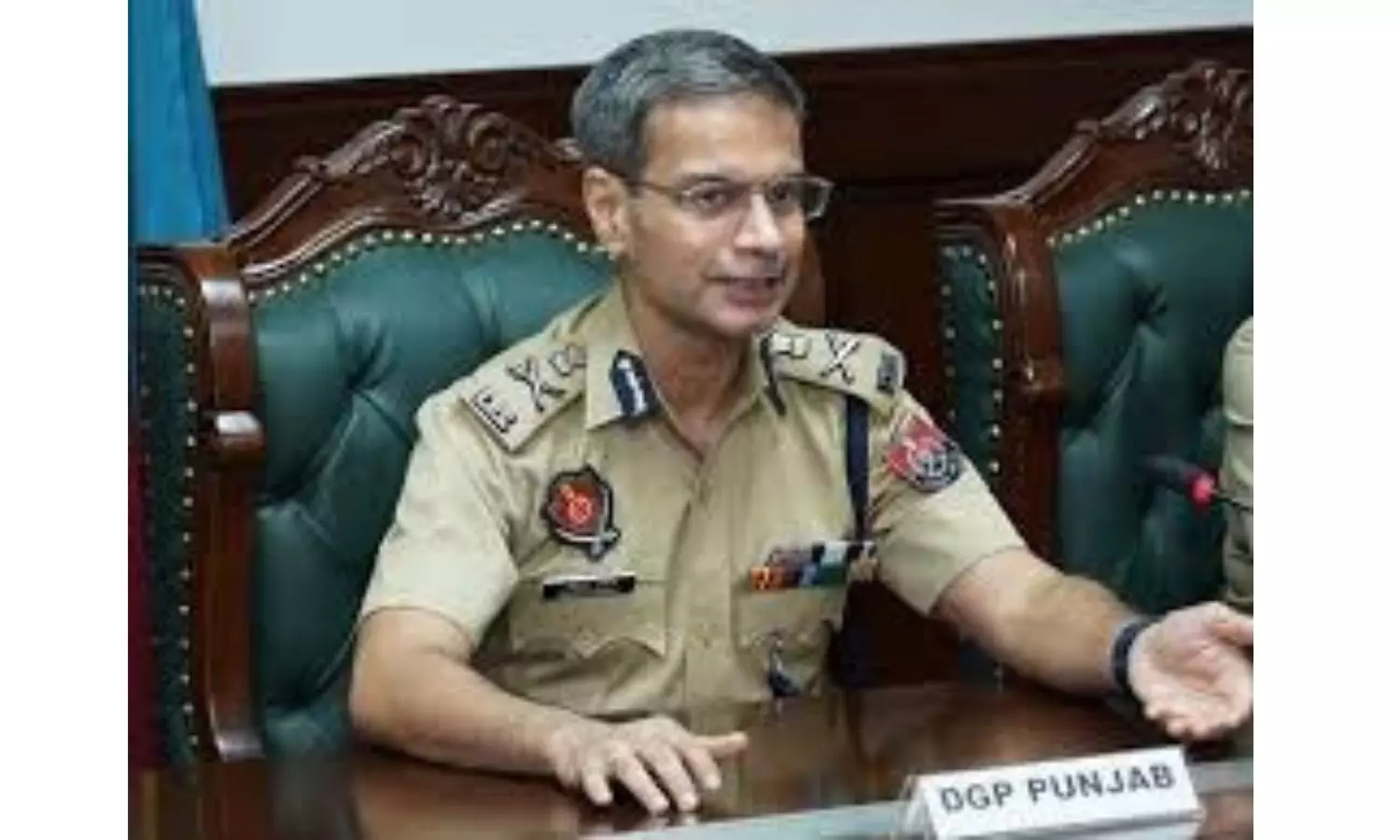
It’s telling that Punjab is still kicking the can down the road on appointing a regular director general of police, even after the Supreme Court flagged the “acting DGP” culture as a serious institutional flaw.
For over three years now, Gaurav Yadav, technically an “acting” DGP, has been calling the shots in Punjab Police. That’s longer than most bureaucrats stay at a single desk in New Delhi. And yes, that very arrangement drew the apex court’s ire, precisely because it goes against the spirit (if not the letter) of the Prakash Singh judgment, which sought to insulate police leadership from political expediency.
The state government’s official line seems to be that it’s waiting on the UPSC to communicate next steps, an argument that feels more like a stall tactic than a strategy. After all, the court’s directive clearly empowers the UPSC to push for compliance, not to act as a go-between.
What’s striking is how this delay feeds into a deeper problem — the public perception, and sometimes reality, that police leadership can be held in suspended animation for years, with all the institutional uncertainty that it invites. Police forces thrive on stable command, continuity of strategy, and clarity of authority. The longer a state dithers on “acting” arrangements, the more it undermines that very foundation.
It can be argued that Punjab isn’t alone. Several states have flirted with acting chiefs rather than regular appointments. But that doesn’t absolve any of them, particularly when the Supreme Court has signalled that this shouldn’t be normal administrative practice.
If Punjab wants to credibly claim it takes rule-based governance seriously, it should walk the talk: Forward a proper panel of candidates, let the UPSC do its job, and install a full-time DGP. Anything less is just bureaucratic inertia dressed up as prudence.
63 lateral entries and 3,000 empty chairs
For years now, we’ve been told that India’s bureaucracy is being “reimagined.” More agile. More specialised. More fit for a complex, 21st-century economy.
The numbers tell a different story.
As informed in the Rajya Sabha, nearly 3,000 posts across the IAS, IPS and IFS are vacant. The IAS alone is short by over 1,300 officers. The IFS, the face of India abroad, is functioning with a deficit that would make any corporate HR head break into a cold sweat. This isn’t a minor staffing glitch. It’s structural.
Now enter lateral entry. This reform was supposed to disrupt the cosy generalist club. Since its launch in 2018, just 63 appointments have been made across ministries. Seven years, 63 people. That’s not disruption; that’s a rounding error. Which raises a fair question: was lateral entry meant to fix a talent deficit or merely signal reform?
Because if the goal was to infuse domain expertise into policymaking, the scale simply doesn’t match the rhetoric. If the goal was to compensate for a shrinking intake through the UPSC pipeline, it clearly hasn’t.
Meanwhile, governance doesn’t pause for recruitment bottlenecks. Trade negotiations, climate diplomacy, cyber security, and financial regulation don’t wait for files to be filled. An understaffed babudom doesn’t just stretch officers thin; it stretches institutional capacity.
The larger worry isn’t vacancies per se. Governments can and do recalibrate cadre strength. The concern is drift, a gap between ambition and execution.
A small circular, a big signal
Delhi’s babu grapevine has delivered a small but delicious irony.
The Centre has apparently told senior officials to “promptly dispose” of letters from Members of Parliament. So far, so routine. But here’s the kicker: they are to do so without leaning on that sacred relic, known as the pre-printed, copy-paste reply. Yes, that one where the template begins with “I am directed to refer to your letter…” and ends with something so non-committal it could run for office!
A fresh note now solemnly reminds officials that elected representatives “occupy a very important place in our democratic set-up.” One imagines this line was typed with the straightest of faces. After all, MPs are not exactly pen pals looking for polite acknowledgements; they are supposed to represent millions of citizens. Their letters are not spam. Or at least, not all of them.
What triggered this bureaucratic awakening? No one is saying. But it doesn’t take Sherlock Holmes to suspect that some MPs may have grown tired of receiving replies that felt… recyclable. Change the name, tweak a line, press send. Governance, by template.
To be fair, standardisation has its uses. It keeps files moving and language uniform. But when every response reads as a mildly bored algorithm assembled it, it signals something deeper: disengagement. A mechanical state talking back to a human mandate.
The real test, of course, is not whether the templates disappear. It’s whether the replies begin to show signs of thought, specificity, accountability, or even a timeline.
