Dilip Cherian | How Justice Cannot Keep Looking Away From The Case Of Sanjiv Chaturvedi

Over the years, judge after judge has recused from matters involving Mr Chaturvedi. The numbers are startling enough to raise a simple question: At what point does recusal stop being a safeguard and start becoming a problem?
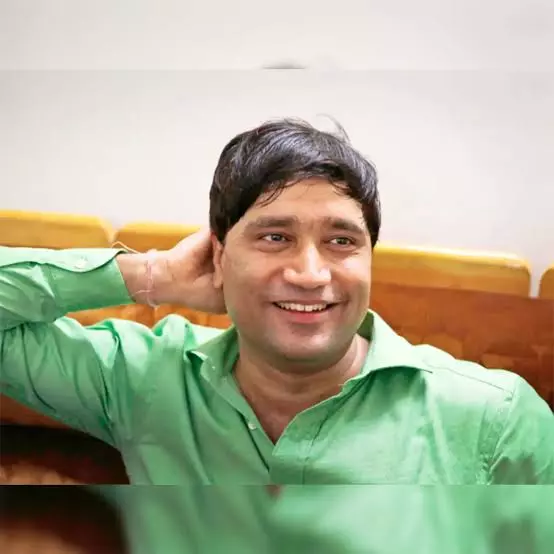
The Uttarakhand government’s decision to clear whistleblower forest officer Sanjiv Chaturvedi for a possible deputation to the Lokpal is noteworthy. But an even bigger story lies elsewhere: the extraordinary reluctance of courts to hear his cases.
Over the years, judge after judge has recused from matters involving Mr Chaturvedi. The numbers are startling enough to raise a simple question: At what point does recusal stop being a safeguard and start becoming a problem?
Last week, the Supreme Court appeared to recognise exactly that. After four judges of the Punjab and Haryana high court recused themselves from hearing a case involving Mr Chaturvedi, the apex court directed that a bench be constituted where there was no scope for further recusals. That should never have required a reminder from the Supreme Court.
Recusal is important when there is a genuine conflict of interest. Nobody wants judges hearing matters in which they have a personal stake. But recusal cannot become the judicial equivalent of passing the file to someone else's desk. Every recusal pushes the case further down the road, increases delays and leaves litigants trapped in a maze with no exit.
Whether one agrees with Mr Chaturvedi or not is beside the point. Some see him as a courageous whistleblower. Others view him as a combative officer who has spent years fighting institutions. Neither perception changes the core issue. Every citizen is entitled to have a court hear and decide a case within a reasonable time.
Courts earn public trust by deciding difficult matters, not by avoiding them. Justice cannot be allowed to disappear into an endless chain of recusals.
The missing piece in lateral entry
The Modi Sarkar’s lateral entry experiment has always generated more heat than light. Now, Union minister Jitendra Singh has acknowledged what many critics have been saying for years: there is still no workable model for providing reservation in lateral-entry appointments. The admission has exposed the central contradiction in the debate.
Few would disagree that the government needs specialised talent. Running a modern state is no longer just about file work and administrative experience. Policymakers today grapple with artificial intelligence, cybersecurity, climate change, financial regulation and energy transitions. It is only logical to bring domain experts into government when required. In fact, lateral entry is hardly a revolutionary idea. Governments across the world routinely tap outside talent for specialised roles.
The trouble begins when expertise appears to come at the cost of representation.
Reservation in public employment was designed to ensure that historically disadvantaged communities have a seat at the table. Unsurprisingly, any recruitment mechanism that seems to bypass that framework is bound to attract scrutiny.
The government argues that implementing reservations in a small number of highly specialised posts is easier said than done. But after years of experimentation, “it’s complicated” is beginning to sound less like an explanation and more like an excuse.
The real question is not whether India needs lateral entry but whether the government can design a system that combines expertise with inclusiveness. After all, diversity and competence are not mutually exclusive goals.
The politics surrounding lateral entry will not disappear anytime soon. Every new recruitment exercise will revive the same controversy until the government addresses the reservation question head-on.
India’s first FATF leadership role
India’s election to the vice-presidency of the Financial Action Task Force (FATF) signals how far the country has come in shaping the global conversation on financial integrity, money laundering and terror financing. For years, New Delhi has argued that terrorism cannot be fought effectively unless its financial lifelines are dismantled. It has pushed for tougher scrutiny of terror-financing networks, greater accountability from states that shelter them, and stronger international cooperation against illicit money flows. With senior IAS officer Vivek Aggarwal set to become FATF vice-president, India now has a greater opportunity to shape that conversation from within.
FATF is the world’s most influential anti-money laundering and counter-terror financing body. Its assessments can affect a country's access to global capital, investor confidence and financial credibility. In an era where financial crime moves faster than regulators and terror networks exploit increasingly sophisticated channels, FATF’s role has only become more consequential.
The appointment also reflects India’s growing stature in global governance. Whether at the G20, climate negotiations or multilateral institutions, India is increasingly being viewed not just as a participant but as a stakeholder whose views carry weight. Securing a leadership position in FATF for the first time is part of that broader trajectory.
There is also a larger message here. For a country that has repeatedly borne the costs of cross-border terrorism, influence within FATF is not simply about prestige. It is about ensuring that concerns India has raised for decades remain central to the international agenda.
Of course, one appointment will not transform the global fight against illicit finance. But leadership positions matter because they help shape priorities, build coalitions and keep difficult issues on the table. The challenge now is to use this position effectively.