Dilip Cherian | Exam Reforms: Centre Goes For Systems Fix For A Systems Failure

The government has been battered by recurring exam paper leaks and allegations that have chipped away at public confidence. It could have chosen another committee of retired administrators. Instead, it turned to a team led by the man who helped build Aadhaar and shape India's digital public infrastructure. The message Prime Minister Narendra Modi wants to send out is that this is a systems problem
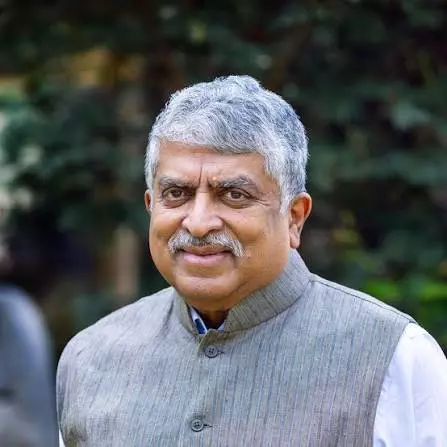
Governments, especially those with strong political instincts, usually respond to crises with tougher laws, tighter enforcement and louder messaging. Technology rarely becomes the headline act. That is why the decision to hand India’s examination reforms to Nandan Nilekani is more significant than it first appears.
The government has been battered by recurring exam paper leaks and allegations that have chipped away at public confidence. It could have chosen another committee of retired administrators. Instead, it turned to a team led by the man who helped build Aadhaar and shape India's digital public infrastructure. The message Prime Minister Narendra Modi wants to send out is that this is a systems problem.
Mr Nilekani brings something that few people in India can claim. He has run a global corporation, worked inside government and learnt how bureaucracy functions. Those are very different skill sets, yet he has demonstrated an unusual ability to combine them. Corporate efficiency without bureaucratic patience rarely survives in government. Bureaucratic instinct without execution rarely changes anything. Mr Nilekani has shown he understands both.
The Modi Sarkar has often preferred political solutions to institutional ones. This appointment suggests that, when cornered, it is willing to reach for technocratic expertise instead of doubling down on familiar responses. That is a healthy instinct.
Technology, of course, will not eliminate cheating by itself. Human ingenuity can outwit software just as it can exploit weak institutions. But technology can make fraud harder, improve accountability and create audit trails that were previously impossible.
If this exercise succeeds, the real achievement will not be another digital platform. It will be restoring trust in one of the few institutions on which millions of young Indians stake their future.
Continuity matters too
Much is being written about the churn unfolding in the higher bureaucracy, with the Centre reshaping key positions as it prepares for the next phase of governance post the Cockroach Andolan. Against this backdrop, the decision to entrust Defence secretary Rajesh Kumar Singh with the additional charge of secretary, department of ex-servicemen welfare, may appear routine but is anything but.
The move reflects something this NDA government led by Mr Modi has consistently valued: Continuity. Rather than disrupt the system, it has chosen to keep a closely linked portfolio in experienced hands while the incumbent, Sukriti Likhi, is on leave. It is a small administrative decision, but one that points to a larger governing philosophy.
The defence ministry and the department of ex-servicemen welfare are not disconnected silos. Policies concerning veterans, pensions, rehabilitation and welfare work best when there is seamless coordination with the broader defence establishment. Having one senior officer oversee both departments, even briefly, can help maintain that alignment and prevent files from slowing down.
Rajesh Kumar Singh brings years of administrative experience and already has his hands on the ministry's most critical issues. Giving him temporary charge avoids unnecessary transition costs and ensures that decision-making remains uninterrupted.
Governments are often judged by headline appointments and dramatic reshuffles. Yet effective administration is just as much about getting quieter decisions right.
In a season of bureaucratic realignment, this appointment is a reminder that stability has its own value.
Rank cannot be a refuge
The higher the rank, the higher the standard. That is the principle every police force claims to uphold. In practice, however, senior officers often seem to enjoy a degree of insulation unavailable to their juniors. That is why Kerala's decision to suspend senior IPS officer M.R. Ajith Kumar deserves attention beyond the immediate controversy.
The suspension is not a finding of guilt. It is recognition that allegations of misconduct against a serving police chief cannot be examined credibly while the officer remains in office.
For years, India's policing system has suffered from an uncomfortable imbalance. Constables and inspectors are routinely suspended pending investigation. At the top, disciplinary action is far rarer, with transfers and prolonged enquiries often replacing decisive institutional responses. The result is a perception that the chain of command also doubles as a shield.
Kerala has, at least for now, chosen a different course. Acting before Ajith Kumar could assume higher office sends a message that promotion cannot become an escape route from scrutiny. Whether the inquiry eventually exonerates him or establishes wrongdoing is a matter for due process. What matters today is that due process has been allowed to begin without the shadow of official authority hanging over it.