Devi Kar | Can We Enhance Human Qualities As Machines Get ‘Smart’ In AI Era?

It is ironical that when parents come to admit their kids, they maintain that their first priority is that their children should grow up to be “good human beings”. Though curious, I refrain from asking for their definition of “good”. However, as time passes, I see that parents become extremely competitive and performance-conscious
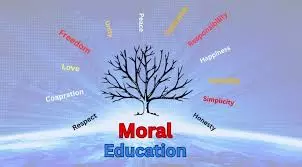
In order to remain in control, as machines get smarter, we need to enhance our human qualities as these are the only features that will establish our dominance in the age of AI.
But irrespective of the practical need of keeping Artificial Intelligence in check, the time has come for humans to do something together to combat the dismal and deteriorating state of world affairs today. It can be seen that nation states, like individuals, take great pride in being self-centred and are out to dominate others. Powerful world leaders are incredibly smug about being able to get away with anything and everything, while other leaders do not care to observe the niceties of public communication or to build mutually beneficial international relations.
Education, in general, does not deal with practical ethics and schools have all but forgotten the important task of character-building. They are far too busy preparing their students to get good examination results and this appears to be -- other than a good grounding for a secure and bright career -- the only thing that parents want for their children.
It is ironical that when parents come to admit their kids, they maintain that their first priority is that their children should grow up to be “good human beings”. Though curious, I refrain from asking for their definition of “good”. However, as time passes, I see that parents become extremely competitive and performance-conscious. All that they are enthusiastic about is how their respective offspring were faring in school vis a vis their peers. Very few parents demonstrate interest in their children’s behaviour, personality or character. It is only by default, that is, if the child has been flouting rules, or has been found bullying or cheating, that a serious conversation takes place between school teachers and parents about attitudes and behaviour.
Most schools do not have a character-building mechanism in place. Earlier, there would be regular assemblies, moral science and value education classes and an unwritten code of reward and punishment governing behaviour. Today, academic demands have encroached upon the time assigned to moral education. Further, the daily morning assembly, if held at all, is largely religious in nature comprising singing of hymns, reciting of prayers, chanting of shlokas or singing of bhajans. Talk about ethics, values and morals is quite rare, and reputed speakers are usually invited to speak on their areas of expertise or on burning topical issues. Sometimes, priests and “holy men” are called upon to deliver sermons. I doubt that these can suffice to develop strong value systems in young people.
Another dangerous trend is that both schools and parents are reluctant to address the issue of character in a structured and meaningful manner. Most schools seem to consciously attempt to develop leadership, organisational skills and discipline in their students. However, the human qualities of kindness, empathy, generosity and ethical behaviour also need to be nurtured. The question is -- How?
One common practice of encouraging children to be “good” is to reward them at the end of the academic year for their consistent good behaviour. Usually, a single student in each class is chosen to be the recipient of such a prize, usually known as the “good conduct” prize. This practice must be critically reviewed as it cannot be that only one person in a given class has demonstrated good behaviour. Nor can we really have an accurate scale to select the most deserving student along the spectrum of “goodness”. In any case, as mentioned earlier, there is no widely acknowledged consensus on the definition of “good”.
Perhaps the best way in which we can keep the task of character-building at the heart of our educational programme is to demonstrate to the school community, and if possible, to society at large, that the institution values human qualities as much as (if not more than) talent or academic excellence. This may sound impractical as conformity is important to most and it will have been observed that rewards and awards are almost always given for talent in the arts, sports, scientific or technological achievements and for academic achievement.
Except for outstanding courage or feats of bravery, traditionally recognised on Republic Day, other human qualities are generally not talked about or accorded public appreciation except at funerals and memorials.
We must now make it a point to deliberately teach our students to think of others, to give generously of themselves, express gratitude and not hold grudges for long. They must be encouraged to express their feelings. Children should be lauded and honoured for being kind and helpful. The current approach to school education is making children far too self-centred -- they are conditioned to out-perform others and to feed their own or their parents’ ambitions. Teachers and administrators have to lead by example. Most importantly, they must believe that enhancing human qualities will not only keep AI in check but also create a better world.
In conclusion, the issue of heredity has to be touched upon. Whether character traits are inherent or learned from the environment is a topic that has been debated through the years. Will certain traits appear anyway, irrespective of external intervention? There is no definite answer yet.
However, as educators we have to believe that just as we are able to develop our students’ knowledge, abilities and skills, it is also possible for us to strengthen their human qualities.
Learning takes place in many ways -- by following role models, by emulating parents and teachers, through lessons and books; through living examples and lived experiences.
Many thinkers from Aristotle, Plato and Confucius to Dewey and Pestalozzi held that character formation is an integral part of education. A good education, said Rabindranath Tagore, produces individuals who are humane, cooperative, and socially responsible.
The writer is a veteran school educator based in Kolkata