Claude Arpi | Today’s China Caught In Fix As Sacred & Profane Clash

According to Beijing’s Marxist logic, the search, discovery and anointment of a Dalai Lama should be classified into “superstitious activities”, and therefore banned by a secular state, but it is not the case with the present regime in Beijing. Religion, termed a “poison” by Mao Zedong, is good when it is “in the national interest”
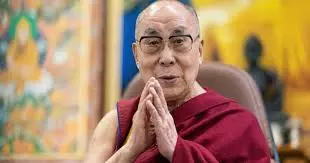
Modern China is facing a dichotomy. The Communist regime claims that the central government in Beijing is the sole authority to recognise the Dalai Lama and all other “Living Buddhas”. On July 2, when the Dalai Lama reaffirmed in a statement that the institution of the Dalai Lama would remain and that he would be reborn in the free world (meaning outside China), Beijing was quick to react. The Global Times asserted: “The (Dalai Lama’s) intention remains the same -- to deny the traditional religious rituals and historical conventions that have governed the Dalai Lama reincarnation system for centuries, and to manipulate the reincarnation process for his own purposes.”
It's strange that an atheist state believes in “religious rituals” and suddenly becomes knowledgeable in esoteric issues such as soul migration.
Even the Buddhist Association of China, working under the Communist Party of China, responded to the Dalai Lama’s announcement: “The central government has the right to make the final decision on the reincarnation, which is by no means subject to the 14th Dalai Lama’s individual discretion.”
According to Beijing’s Marxist logic, the search, discovery and anointment of a Dalai Lama should be classified into “superstitious activities”, and therefore banned by a secular state, but it is not the case with the present regime in Beijing. Religion, termed a “poison” by Mao Zedong, is good when it is “in the national interest”.
The further irony is that the same state recently razed hundreds of Buddhist stupas and a statue of Padmasambhava at Karze in eastern Tibet. According to a release by the Tibet Advocacy Section of the department of information and international relations in Dharamsala: “In a grave assault on Tibetan religious heritage, Chinese authorities have demolished over 300 Buddhist stupas and a revered Guru statue in the Drakgo County, Karze Tibetan Autonomous Prefecture, in the traditional Tibetan province of Kham some months ago, sources from Tibet report amid heightened restrictions in the region.”
The release mentions that the destruction took place in May and June 2025 near Janggang Monastery: “In a brazen act of cultural vandalism, the authorities also destroyed a newly constructed statue of Khenpo Jigme Phuntsok, the late founder abbot of Serthar Buddhist Institute, and a sacred statue of Guru Padmasambhava, generally referred to as Guru Rinpoche (meaning ‘precious master’ in Tibetan).”
It further added: “The Chinese authorities have imposed an iron curtain of silence over the region. Anyone attempting to share information and even talk about the destruction with the outside world faces immediate detention on charges of ‘leaking state secrets’. The entire area surrounding the demolition site has been sealed off, and no one is permitted entry or exit.”
There are many other examples of Beijing’s double-sided policies. On July 22, 2025, China’s top anti-corruption body announced that a former senior official has been removed from office over different crimes, including taking bribes and engaging in “superstitious activities”. Che Dalha, who served as the governor of the Tibetan Autonomous Region between January 2017 and October 2021, is a Tibetan national originally
from Yunnan province; he served as the party secretary of the Tibetan capital Lhasa between 2012 and 2017 and was a member of the Central Committee of the Communist Party of China since 2017.
The Central Commission for Discipline Inspection and National Supervisory Commission said Che Dalha forgot his original mission by accepting bribes and engaging in “superstitious activities” over a long period.
What does it mean? That he was a Buddhist? Or that he contacted some of his countrymen in Dharamsala?
An article by the AFP news agency explains: “Members of the ruling Communist Party of China are banned from participating in ‘superstitious activities’ -- including some religious practices that ‘erode’ a cadre’s loyalties. Religion is tightly controlled in Tibet.”
Another example showing that the Chinese State is not really interested in spiritual and sacred matters is the construction of five hydropower plants in the Great Bend of the Yarlung Tsangpo, which has received a lot of coverage in the world press.
The Metok county in Southern Tibet, also known as Pemakoe, is the place where the five hydropower plants will be constructed; but for the Tibetans it is first and foremost the home of the Goddess Dorjee Pagmo, one of Tibet’s Protecting Deities, one of the most pristine areas on the Tibetan plateau.
Many believe that Pemakoe is the realm often referred to in their scriptures: the last hidden Shangri-La. It is also said that the great Indian tantric master Padmasambhava visited the place during the eighth century and tamed the local spirits to conceal spiritual scriptures for future generations.
The hydropower plant will not only be responsible for the destruction of one of the last sacred places of this planet, but will also have serious environmental, strategic and military implications. It might be a dream realised for China, but it will be a nightmare for the Tibetans … and for India.
Ian Baker, a Himalayan and Buddhist scholar and author of The Heart of the World, on the hidden land of Pemako, has written extensively on Guru Padmasambhava, “the king of all hidden lands”, visiting the area. Baker explained: “The very eastern end of the Himalayan range is where the (Yarlung) Tsangpo Brahmaputra river makes this great bend, a hairpin bend, around the peak of Namcha Barwa, at the very terminus of the Himalayan range. (It) provides liberation, by hearing about the great and blissful land of Pemakoe in words attributed to Padmasambhava.”
Baker visited Pemakoe several times: “I tried to follow what is called the sequence of the outer and inner circle into Pemakoe, leading into a kind of a paradisical round at the very heart of the circumambulation.”
Baker observed: “Shambhala was represented as the mandala, with different ways leading into it from the peripheries… As one enters the mandala, it is a transforming as well as a transformed space and condition. In Pemakoe, people describe the body of Dorjee Phagmo, a particular tantric Buddhist goddess called Vajravarahi in Sanskrit.”
What will happen to this paradise on earth after the tunnel-digging machines arrive? The Chinese propaganda machine nevertheless speaks of creating a beautiful place by the preservation of “ecology and (providing) liveability, health, charm, and happiness”.
Is this compatible with a hydropower project three times the size of the Three Gorges Dam? Where will the goddess take refuge?
The project is obviously attractive for the dam-building lobbies in China; but sadly, the atheist State has not taken into account the sacredness of the place.
Claude Arpi is Distinguished Fellow at the Centre of Excellence for Himalayan Studies, Shiv Nadar Instittion of Eminence (Delhi), and writes on India, China, Tibet and Indo-French relations