Bhopinder Singh | US, West Should be Alert for Pak Misuse of Rare Metals; And Other Dodgy Tactics

Islamabad now bets on rare earths to stay geopolitically useful
Pakistan has long traded its relevance in the dodgy realms of geopolitical necessities, as opposed to dabbling in conventional means of manufacture or services. In the early years, President Ayub Khan had “sold” Pakistan to the West as a “frontline state”, given its strategic geographic positioning during the Cold War, as a bulwark against Soviet expansionism. From joining alliances like Seato (Southeast Asia Treaty Organisation) and Cento (Central Treaty Organisation), to allowing a secret American airbase in Peshawar, all was traded for economic and military aid. The amoral sovereign bearings extended to counter-intuitively investing in close relations with China simultaneously. It wasn’t a wasted investment as Ayub’s successor as both military dictator and President, Yahya Khan, was to play the shady but pivotal intermediary in the rapprochement between the US and China in the early 1970s, spearheaded by Henry Kissinger and his boss Richard Nixon.
Zulfiqar Ali Bhutto’s infamous quote, “we (Pakistan) will eat grass, even go hungry, but we will get one of our own (atom bomb)”, seeded yet another Pakistani tradeable, that is nuclear recklessness. The Pakistani nuclear programme soon morphed into the so-called “Islamic Bomb”, beseeching the Ummah (Islamic countries) to actively fund the project, spearheaded by the notorious A.Q. Khan.
In particular, the Pakistani nuclear programme got a reputation for being disreputable over a spate of proliferation scandals, such as those involving North Korea, Libya and Iran. The Soviet Union’s invasion of Afghanistan in 1979 offered Pakistan yet another opportunity to flex its muscle and make bargains by using its geographical utility. The 1980s saw heavy funding, training and shipment of weaponry and toxic religiosity into the region through Pakistan. Islamabad’s utility as a contiguous state for landlocked Afghanistan, besides religious-cultural commonality on both sides of the Durand Line, saw the birth of weaponised pan-Islamism as jihadists from all over the world (including a certain Osama bin Laden) were to take part in the mujahideen campaign funded and supported by the CIA, ISI and several Arab sheikhdoms.
This period saw heavy investments in religious madrasas which then birthed the phenomenon of the Taliban. Using the same terror infrastructure (meant for the Afghan war) against India was amongst the collateral benefits for Pakistan.
Irony was to die many deaths as Pakistan, which birthed the Taliban, later joined the US-led “War on Terror” in 2001. Yet again, Pakistan milked much US aid as it made hay. Pakistan saw no contradiction is taking on its own creation, the Taliban, as it played its patently duplicitous game with both the US and factions within the Taliban.
The Trump administration, in its initial days, levelled the most humiliating barbs at Pakistan, and yet had no qualms in developing selective amnesia later. When President Trump began his second term earlier this year, the Pakistanis were all too ready to bury the wounded past and made obsequious gestures towards Washington DC and to Mr Trump personally. It seemed to make good commercial and diplomatic sense to a cash-strapped Islamabad to renege on its own words and its sovereign pride.
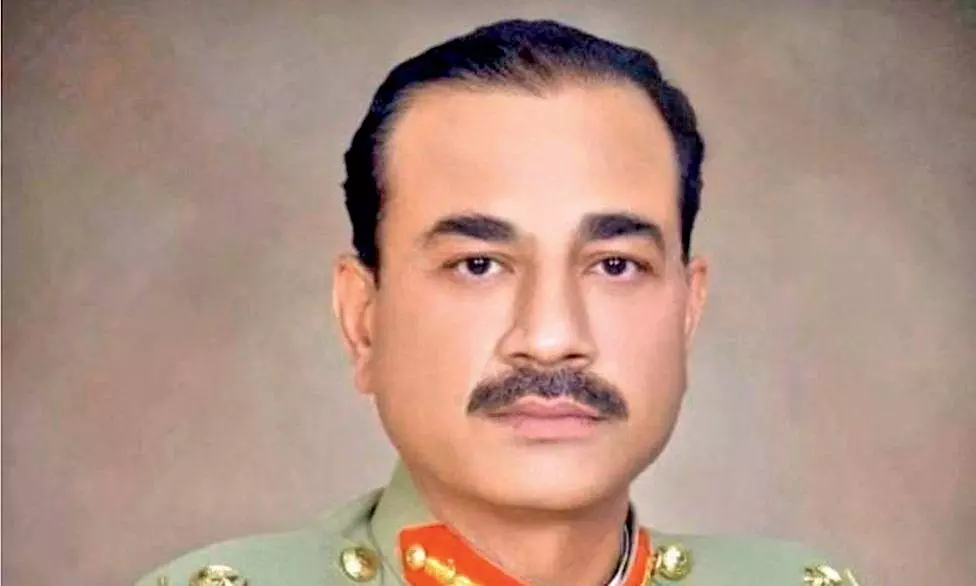
Shocking images of a professional soldier (self-appointed Field Marshal Munir Khan) and his sidekick Prime Minister Shehbaz Sharif with a open suitcase, peddling rare metals in the Oval Office, symbolises the extent of the unprofessional low that the Pakistani leadership has fallen into in order to peddle its latest wares, such as rare earth elements (RREs) like neodymium, cerium, lanthanum, thorium, uranium, lithium, cobalt, etc, from regions like Balochistan, Kohistan, Dir and Swat. The picture captured the mercantile desperation of a nation willing to sell its soul to someone who had once used vile accusations against the Pakistani State. But Pakistan couldn’t care less.
Today, as a belligerent China tries to weaponise its global dominance with the processing and inventory of rare metals, Pakistan smells blood again. Its providential opportunity is not just in the conventional supplier-buyer arrangement with the US desperate for rare metals, but with a possible geostrategic angularity harking back to the role of midwifing with China. In addition, Pakistan’s finance minister Muhammad Aurangzeb acknowledged the “transformational opportunity” which could allay Pakistan’s debt-servicing challenges with possible export-led growth (by trading the invaluable rare metals). But he also tellingly alluded to a greater possibility. “Pakistan today stands at a constructive intersection of global relationships -- renewed momentum in Pakistan-US ties, time-tested relations with China and forward-looking strategic cooperation with the Kingdom of Saudi Arabia”. This is consistent with the shady role Pakistan had played in the 1970s and 1980s as it conflated simple economics with a lot more happening in the background.
As Pakistan warms up to the new Trump administration, the extension of its equational wiring to Beijing (with whom Islamabad shares an “iron-clad brotherhood”) is only to be expected. Pakistanis clearly do not want the more linear, laborious and sustainable developmental model of investing in progressive policies, infrastructure and in its people, as instead the shortcut route like that offered by rare metals is so much more gratifying and instantaneous. This route, however, is quite unsustainable and counterproductive as it does precious little towards healing the tinderbox that Pakistani society has regressed into. The rare time when US President Donald Trump spoke the truth about Pakistan many years ago, that it had given “nothing but lies and deceit”, will come back to haunt Pakistan as it peddles its latest wares.
The writer is a retired lieutenant-general and a former lieutenant-governor of the Andaman and Nicobar Islands and Puducherry