Bhopinder Singh | The ‘Somaliland’ Curveball Which Can Stir the Pot of Global Politics

Netanyahu’s move redraws Horn of Africa stakes and raises questions over intent
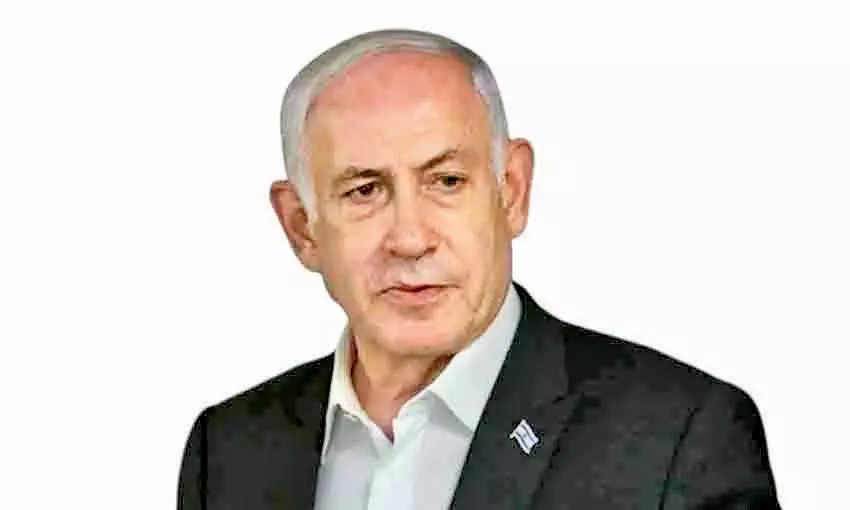
Altogether 153 of the 193 member states of the United Nations formally recognise the State of Palestine. Obviously, the world’s most sanctioned nation (by the UN), Israel, does not recognise Palestine, yet many more are lining up to recognise Palestine. But the proverbial agent provocateur of global politics, Israel, has recently recognised one country that no other United Nations member state formally recognises -- Somaliland.
The State of Israel has invoked the “spirit of the Abraham Accords” to justify this recognition, except that the principal architect of the Abraham Accords -- US President Donald Trump, has maintained an divergent “no” to any such recognition, and then added incredulously: “Does anyone know what Somaliland is, really?” But, as always, the incorrigibly fickle Donald Trump’s “no” was soon followed by an acknowledgement that the recognition was being reviewed, with a pompous statement: “I study a lot of things and always make great decisions, and they turn out to be correct”. So, will the ever-indulgent and accommodative policies of the United States of America towards Israel (especially under Donald Trump) extend to the unilateral decision of Israel to recognise Somaliland? If yes, then it could lead to a lot of creative and strategic (possibly amoral) geopolitical possibilities, that reshapes the regional and global dynamics.
So, why would Israeli Prime Minister Benjamin Netanyahu poke the hornet’s nest and earn global wrath and condemnation for making the “recognition” of Somaliland official? There are four plausible reasons. First, the very sensitive and strategic location at the Horn of Africa affords a vantage point through which one-third of global trade passes, and locational proximity to Yemen (across the Gulf of Aden), where the rebel Houthis are routinely targeted by the Israeli Defence Forces. Second, encircling the Middle East theatre of conflict with a friendly nation or even a plausible Israeli military base (United Arab Emirates already has a base) in a cash-strapped Somaliland that could readily accept financial and military wherewithal from the Israelis, in exchange. Third, such a recognition could drive yet another calibrated wedge within the Ummah (Islamic world), with Israel making tactical inroads with its own alliances to weaken the opposition. Already, the Abraham
Accords have driven a sharp (if still unsaid) spoke between the predominantly Sunni Arab sheikdoms and the Shia/Iran-led bloc of Iran-Iraq and sectarian militias like the Hezbollah and Houthis. The Abraham Accords have taken the “normalisation” of Israel within the Ummah beyond Egypt and Jordan, and now the signatories include the United Arab Emirates, Morocco, Bahrain and Sudan -- while “talks” with Saudi Arabia are the region’s worst kept secret.
But perhaps the most controversial and outlandish reason could be the possible identification of a land where the displaced Palestinians from the Gaza Strip could be resettled. Given the relative proximity of Somaliland to the Gaza Strip, co-religiosity (co-sectarianism also) and a modicum of co-culturalism -- it could be the nearest real estate that could accommodate such a thought. The sheer land mass to existing population ratio between Somaliland and Gaza Strip supports such a thought, with the Gaza Strip being only 365 square metres, in contrast to 176,000 square metres for Somaliland (making it 480 times bigger). Also, the narrow Gaza Strip has a population of 2.3 million (6,000 people per sq km), whereas Somaliland has a population of about 5-6 million (only 30-35 people per sq km). Therefore, enough land bank to create a dedicated and protected Palestinian enclave, if required, with the underlying assumption that if a “deal” is wholesome enough for a cash-strapped and perennially-in-danger Somaliland from its larger entity of the neighbouring, but lawless, Somalia.
Those who question the practicality of redrawing borders only need to study the recent history of the West African nations, where neighbouring Ethiopia had split into two nations -- Eritrea and Ethiopia. Sudan has split into two, South Sudan and Sudan.
While the erstwhile Somalia is a mishmash of interchanging territories with rival clans; but the general area of Somaliland has had relatively independent existence with its own currency, police force, passport, and even a semblance of a functional government that is democratically elected. If anything, if has had to face rebel movements in its outlying areas of Sool, Sanaag and Cayn regions, hence a robust “deal” with Israel could come handy in more ways than one.
Historically, Somaliland could claim a semblance of legitimacy, with its past as the Isaaq Sultanate, which later came under British rule. It was granted formal independence as the State of Somaliland by the British on June 26, 1960, as a successor to its colonial past as the Somaliland Protectorate. That it soon thereafter united with the neighbouring Italian Protectorate to create the Somali Republic is another experiment in unity, that remained fraught with tensions and bloody independence wars. A fierce 10-year Ogaden War led to the creation of Somaliland’s self-declared independence in 1991, and it has handled its affairs relatively better than that of the larger comity of contested Somalia. With many credible reasons, practicalities and justifications to seek its own formal status as an independent nation (from the essentially lawless Somalia), the only reason that is advanced for not formally recognising Somaliland is that it could embolden other regional secessionist movements like Morocco’s Western Sahara or Nigeria’s Biafra.
But that notwithstanding, Israel has chanced upon yet another nugget on the regional chessboard to make its own bold move. Somaliland’s recognition by Israel could well stir the pot of geopolitical possibilities.
The writer is a retired lieutenant-general and a former lieutenant-governor of the Andaman and Nicobar Islands and Puducherry