Social media has turbocharged this process.
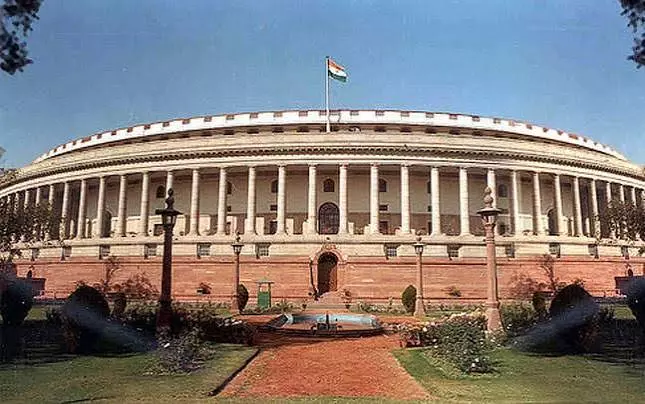
The recent optics of the Leader of the Opposition mocking the Prime Minister, with a few avoidable insinuations and inelegances thrown in for effect, were hardly edifying. What followed was equally revealing: a predictable eruption of ‘manufactured outrage’ from the ruling establishment and its ecosystem, complete with solemn pronouncements on dignity and democratic norms, as though political memory began only with the latest offending remark. The point is not to excuse the Opposition's lapse; some things are simply better left unsaid. It is to note the extraordinary selectivity with which indignation is deployed. The long record of tasteless and personally disparaging remarks from the ruling side is conveniently forgotten, while the latest indiscretion by the other camp becomes a moral emergency. The outrage is less about standards than about ownership of the moral high ground.
Indian politics was always given to drama, noise and decibels. It was never, however, so comically given to self-righteousness. What has intensified in recent years is the theatrical, condescending and patronising showmanship accompanying political disagreement. Minor remarks, obscure social-media posts, and isolated incidents are routinely inflated into national crises, with politicians, television anchors and partisan influencers competing to establish who is most offended.
Social media has turbocharged this process. A few carefully selected words are lifted from a speech, stripped of context and amplified until they become the story. The same selective memory governs partisan outrage — an equally foolish or offensive remark by one’s own side is rationalised or forgotten while the opponent’s latest utterance is dissected with theatrical indignation. Soon the substance disappears, replaced by the hapless spectacle of people performing personal offence. Context is always demanded for one’s own camp, and always denied to the other.
The media, rather than restoring proportion, has too often become the amplifier of this silly pathos. A press ecosystem that is partisan, timid, or beholden, has little incentive to puncture the performance as it profits from sustaining it. Every grievance becomes ‘Breaking News’, every stray remark a television panel, every manufactured sleight another round of indignation. The distinction between reporting outrage and manufacturing it has become increasingly blurred.
The contrast with an earlier generation is striking. Leaders who had participated in the freedom struggle and the arduous business of nation-building, from Nehru and C. Rajagopalachari to Piloo Mody and Atal Behari Vajpayee, operated under very different ideologies and were hardly free of flaws. Yet there was a certain largeness of spirit — an ability to accommodate, engage with and sometimes even celebrate the “other”. Fierce disagreement did not automatically become an affront to patriotism or personal dignity. Even parliamentary adversaries such as Vajpayee, Indira Gandhi, Somnath Chatterjee and Sushma Swaraj could combine ideological combat with wit, civility and an appreciation of the opponent’s stature. That quality seems in short supply today.
The citizenry, too, has been conditioned to expect theatricality, particularly on “nationalism”, which increasingly shades into jingoism. Anything short of chest-thumping affirmation risks being treated as suspect. Nuance becomes equivocation, criticism disloyalty and scepticism “anti-national”. Patriotism, which should be capacious enough to accommodate dissent and self-criticism, is reduced to a performance in which volume counts for more than thought.
The result is what might be called soap-opera politics — declarations are exaggerated, grievances personalised and political language calibrated for applause rather than persuasion. A politician attempting to make a mark through reason, restraint and prudence risks sounding almost out of place. The prevailing mood seems to beseech ‘manufactured offence’, i.e., to find something, anything, that can be turned into an affront requiring collective indignation. And if all else fails, there is always Pakistan. Invoke the enemy and, remarkably often, the machinery of patriotic outrage starts working again.
This has consequences beyond political decorum. The earlier governments of P.V. Narasimha Rao, I.K. Gujral, Vajpayee and Manmohan Singh, despite their considerable differences and imperfections, drew more visibly on economists, administrators, technocrats and domain specialists. Rao had Manmohan Singh; Vajpayee had Jaswant Singh, Yashwant Sinha and Arun Shourie; Manmohan Singh’s Cabinets included P. Chidambaram, Pranab Mukherjee and Montek Singh Ahluwalia in influential roles. These were not interchangeable men, nor were they always right, but they brought intellectual heft, administrative experience and, crucially, a degree of independent political personality to government. Expertise never displaced politics, but competence and independent ministerial talent had a discernible premium. Increasingly, across the partisan divide, that space appears narrower. In its place one often finds obsequiousness, non-threatening competence and tokenism. Expertise is welcome so long as it remains politically harmless, and independence surely becomes a liability.
That may be the deepest cost of ‘manufactured outrage’. When outrage becomes the currency, prudence looks weak, moderation evasive, complexity suspicious and intellectual honesty politically expensive. The Opposition supplies the provocation; the ruling establishment supplies the outrage; the media amplifies both. The ecosystem feeds itself.
Indian politics may always have been noisy, dramatic and fiercely partisan. But it once seemed more conscious that the argument was larger than the ego. The loss of that largeness of spirit is perhaps the most conspicuous feature of today's political theatre in the Republic of Manufactured Outrage.
