Bhopinder Singh | Belfast: The Walls Still Remain, Only The ‘Other’ Has Got Transformed

Decades later, parts of Belfast still perceive deprivation of most people, appeasement of some, and uneven development, which contributes to a sense that many have been left behind, creating fertile ground for frustrations and division
Historically, Belfast, the capital of Northern Ireland, held the notoriety of being amongst the most “divided” communities in the whole of Ireland. The “divide” was as much about national identity, political power and constitutional status, as it was about religion. Protestant-Unionists (Loyalists) were pitted against Catholic-Nationalists (Republican) and were represented by their respective militias – such as the Ulster Volunteer Force and the Irish Republican Army (IRA). In its most violent era, called “The Troubles” (1960s-90s), over 3,500 people were killed. The seemingly irreconcilable sectarian tensions had led to “peace walls” that were built to physically segregate communities. The so-called “Good Friday Agreement” in 1998 had led to a thawing of the situation but a lingering sense of inequities, grievances and divisive politics, persisted.
Decades later, parts of Belfast still perceive deprivation of most people, appeasement of some, and uneven development, which contributes to a sense that many have been left behind, creating fertile ground for frustrations and division. Today, the same areas that once saw loyalist-nationalist violence are witnessing fresh societal tensions, albeit, for a new manifestation of the proverbial “other” -- that is, immigrants.
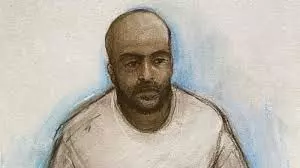
This was triggered by reports of a Sudanese man, identified as Hadi Alodid, who is charged with attempted murder after a serious knife attack that left the victim with severe injuries. Videos of the attack went viral, people got provoked, and soon a free-for-all erupted, targeting the homes, vehicles and various businesses associated with immigrants. Clearly an individual crime, it soon regressed into a collective blame as the entire immigrant community got targeted, rather than just the perpetrator.
Ironically, for centuries, the Irish people have faced a lot of discrimination, particularly under British rule. In the 19th century, Irish migrants in Britain and the United States were often stereotyped as inferior, violent or uncivilised. But the late 20th century and early 21st century saw a rapid influx of immigrants into Ireland itself, especially from African and Asian countries that tested Ireland’s lessons of imagined discrimination.
Finiteness of resources and opportunities (extremely stressed in recent times) and economic changes, growing concerns about jobs, housing, public services and cultural changes, further fuelled anti-immigrant sentiment.
But, racism is not a single lens but a series of filters through which societies judge other people -- by the colour of their skin, the faith they practise, the language they speak, or the heritage they carry. As George Orwell had noted in Animal Farm: “All animals are equal, but some animals are more equal than others.” In this specific case in Belfast, the racism against the Sudanese person is obvious given the intersection of colour (Black), African (region), religion (Islamophobia) and an over-arching anti-immigrant status.
Those from the Indian subcontinent realise that racism is not universally and democratically applied, but often selectively. The term “Paki” has a long history as a racial slur across the United Kingdom, that seeks to lump all Pakistanis, Indians and Bangladeshis pejoratively. It was the ready-term of exclusion, a word shouted from passing cars, scrawled on walls and all too often accompanied by violence. Though over time, the
subcontinental diaspora has become much more economically successful, and highly visible in professions, politics, and culture -- yet subliminal racism abounds. However, the same intensity of racism and exclusivism is not afforded on similarly socio-economically struggling immigrants from Western nations such as Ukraine.
The recent influx of Ukrainians has witnessed strong public sympathy, accommodation and support from government schemes, triggering a question about double standards over racism. While the Ukrainaian immigrants can easily be categorised as “refugees from war”, the same generosity of spirit may not be extended to immigrants from, say Sudan, who too are fleeing from wars. This despite the fact that unlike Ukraine, which had very little imprint of the British colonial excesses -- the horrific reality of colonialism and associated plunder on places like the Indian sub-continent or African countries ruled by the British empire ought to prick the conscience of modern-day Britain.
Sadly, when compassion, opportunity, or justice is applied unevenly, equality becomes conditional, and some inevitably become “more equal” than others. When a crime becomes associated with an entire community, it is reasonable to ask whether the same collective blame would be applied if the perpetrator came from a different background. It is worth pondering if the reaction to the incident in Belfast would have been equally violent and all-encompassing if the act had been done, by say a Ukrainian, as opposed to a Sudanese? Would the entirety of the Ukrainian immigrant community and their residential and business interests have been targeted? While there is no way to conclusively answer a hypothetical query – the hard reality is that racism has filters and therefore Ukrainians can be generously imagined as neighbours, and the Sudanese and “Pakis” as outsiders! The question isn’t just immigration, it’s who gets the benefit of belonging?
As the infamous NBC correspondent, Kelly Cobiella, had incredulously framed the support for Ukrainian immigrants: “These are not refugees from Syria, these are refugees from Ukraine. They’re Christian, they’re white”! It highlighted the attempt at contrasting immigrant identities on racial, colour, religious and national levels. A fair society distinguishes between individual culpability and collective identity. All kinds of perpetrators must face the full consequences of their actions, but no community should be condemned for the crimes of one of its members. Regrettably, even the most mature, advanced and progressive societies of the West get this wrong. Belfast is a case in point.
The writer is a retired lieutenant-general and a former lieutenant-governor of the Andaman and Nicobar Islands and Puducherry