Karl Marx in The Eighteenth Brumaire of Louis Bonaparte observed that man makes history not “out of the whole cloth” but of “such as he finds at hand”
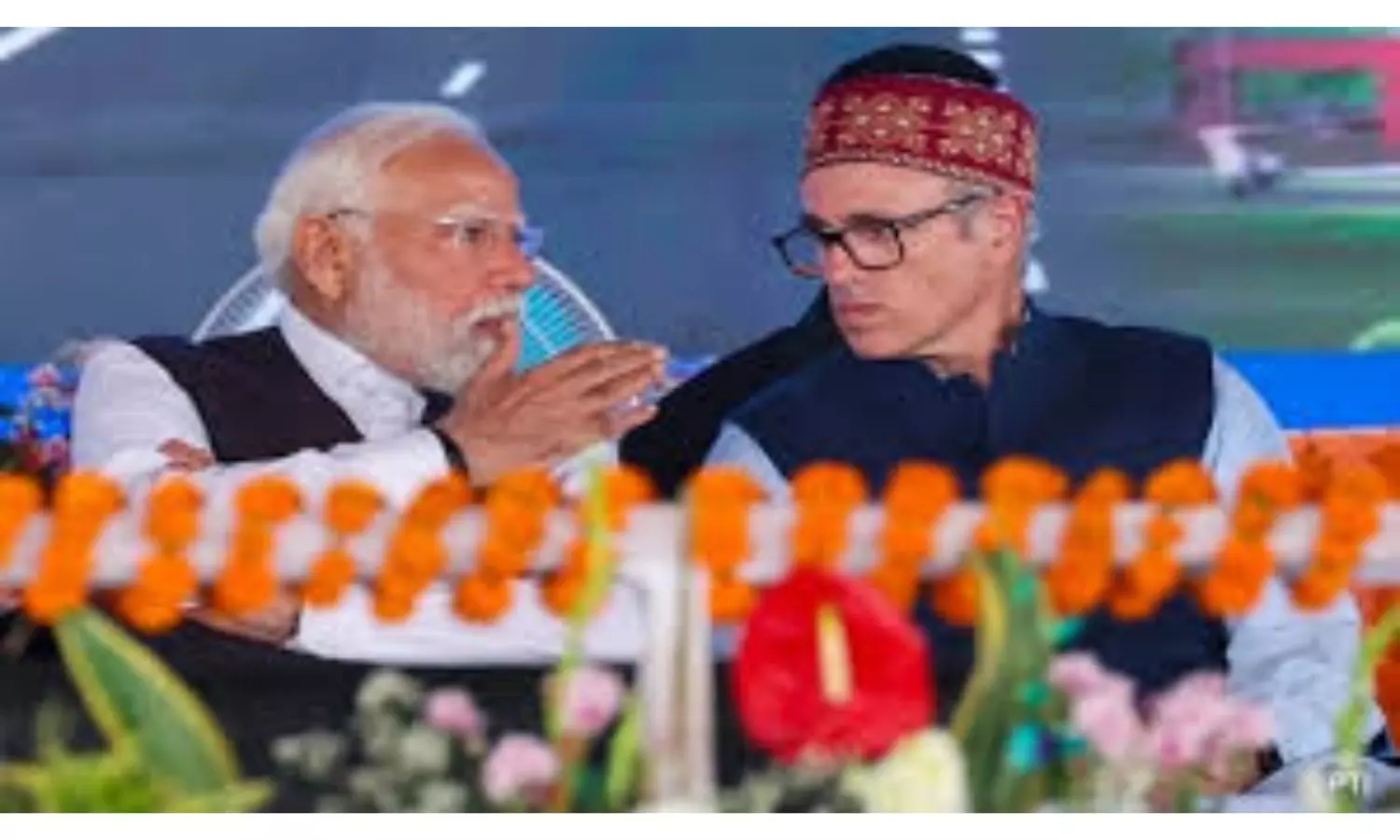
Speaking at the 150th birth anniversary of Sardar Vallabhbhai Patel, Prime Minister Narendra Modi claimed to have fulfilled Sardar Patel’s wishes by abrogating Article 370 of the Constitution, thereby “integrating” Jammu and Kashmir with the rest of India. Lest there be any doubt, his trusted lieutenant, Union home minister Amit Shah, drove the point home that while Sardar Patel had united the nation, Narendra Modi had completed his “unfinished task”.
Karl Marx in The Eighteenth Brumaire of Louis Bonaparte observed that man makes history not “out of the whole cloth” but of “such as he finds at hand”. And in doing so “they anxiously conjure up into their service the spirits of the past, assume their names, their battle cries, their costumes to enact a new historic scene”, in time-honoured disguise and borrowed language.
Selective pickings from Sardar Patel’s actions are being used to build the image of Mr Modi as the “Great Unifier”.
The ground reality in Jammu and Kashmir doesn’t fit this template quite tidily.
Stripping the region of its special status under Article 370 was framed as a step towards equality, development and national unity. Under the façade of this rhetoric, followed electoral delimitation that tried to shift the political balance away from the local Muslim population. Yet despite this engineering, the elections showed the Muslim population of the Kashmir Valley completely rejected the BJP’s narrative, bringing 10 years of its machinations to nought.
The Narendra Modi government had laid out a three-stage plan for the restoration of statehood — delimitation of constituencies, followed by elections and then restoration of statehood.
However, the statehood promised to the Union territory of J&K following the Assembly elections remains a distant prospect. It has been a year since an elected chief minister is in place but the Centre still has greater faith in an unelected lieutenant-governor. Chief minister Omar Abdullah’s National Conference has to function under a dyarchy with the L-G running the show under the guidance of the Union home ministry.
Having lost the Lok Sabha election by 1.25 lakh votes in May 2024, barely six months later, Mr Abdullah was elected with a massive mandate to the J&K Assembly because of an emotive surge against the BJP and the hope that statehood would be restored under his leadership. The electorate believed it was voting for someone who would fight to regain their rights and protections.
The elected chief minister, however, appears to be in a double bind now. His inability to deliver on statehood and protection of rights has increased the trust deficit between the elected government and the people. Meanwhile, the Centre controlled by the BJP is not allowing him to govern properly.
The people, once taken up by his hopeful statements, can see him getting increasingly frustrated. The delay in restoring statehood is eroding public trust and making governance harder. The chief minister was probably under the impression that if he maintained good ties with the Centre, statehood would eventually be restored in J&K out of the goodwill underlying the relationship. That was a costly misreading.
That he is even considering either joining a civil society petition or filing an independent petition for restoration of statehood before the Supreme Court only reflects this frustration. The downside of such a petition would be that if it were rejected by the apex court, that would be the end of the political demand reflecting the will of the people. As long as it remains a political demand, he can hope to retain the control of the narrative. For this he will have to ginger up his party organisation to protest against the Centre’s betrayal. Once the political option is gone, he has nothing left. There are already voices of dissent within the National Conference accusing him of not respecting the party’s mandate.
Granting statehood was never going to be the solution to the woes of the Kashmiri people. But it would have been a step forward towards regaining some protections that they have lost, such as land ownership rights. The public sentiment would have been satiated to some extent.
Meanwhile, the lieutenant-governor continues to act as the cat’s paw of the Centre. He has accused the National Conference government of using the statehood issue as an excuse for its poor performance. However, as Mr Abdullah pointed out, the Pahalgam terrorist attack happened under the lieutenant-governor’s watch. There are signs of unrest within the National Conference and the chief minister’s position is becoming increasingly tenuous. No wonder then that conspiracies abound in Srinagar that the BJP may once again topple the government in J&K.
The recent elections to the four seats in the state for the Rajya Sabha is being described by some as a trailer of future developments. Three seats were always in the bag for the NC (41 seats) and Independents (4) in the government supported by allies Congress (6) and CPM (1). The BJP was able to get the fourth seat, with four extra votes got through cross-voting, gathering 32 votes to win.
The Rajya Sabha election has shown the political machinations that the BJP is capable of.
This, the conspiracy theorists claim, puts the strength of the NC (41) potentially on a par with the BJP’s strength — 28 BJP MLAs plus four cross-voters plus three (deliberately) spoiled votes in the Rajya Sabha election plus Sajjad Lone of Peoples’ Conference plus five yet to be nominated members. That comes to 41. It would, therefore, be easy for the BJP to destabilise the government by attracting half a dozen or more MLAs from other parties. Whether this happens or not or how realistic such a scenario is remains uncertain as of now.
Now, a Prime Minister who likens himself to Sardar Patel and has photo-ops under his statue must ask himself whether after “fully integrating” J&K with India, Patel would have kept it destabilised. After ordering the famous police action in the Nizam’s Hyderabad, did Patel not allow accountable democratic processes to take root? Did he hand it over to the police?
Just as Omar Abullah cannot be half-a-chief-minister, the BJP leaders harking back to Sardar Patel cannot be half-followers of the great man whose legacy they want to appropriate.
The writer is a senior journalist based in New Delhi, and was in Srinagar recently