Mr Modi’s image of not bowing to pressure had already developed cracks after the year-long farmers’ agitation of 2020-2021. It was finally shattered by a swarm of teenagers calling themselves “cockroaches”, turning an insult into a badge of resilience and satire
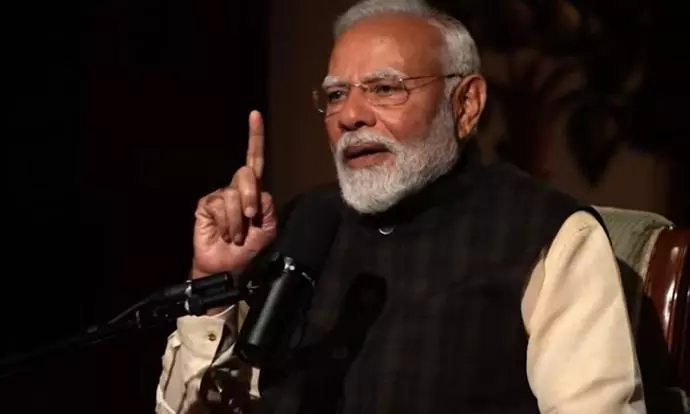
Prime Minister Narendra Modi has suffered the worst defeat of his 12 years in office as the youth protests, led by the Cockroach Janata Party (CJP), forced him to capitulate and accept all their demands. The 36-day protest of youngsters barely out of school and college shifted political optics in the country.
Mr Modi’s image of not bowing to pressure had already developed cracks after the year-long farmers’ agitation of 2020-2021. It was finally shattered by a swarm of teenagers calling themselves “cockroaches”, turning an insult into a badge of resilience and satire. The “Modi does not bend” and “Modi is pressure-proof” narratives that shaped his image have cracked and unravelled with irreverent slogans, memes and repartee that will become a permanent marker of youth victory in social media archives.
The protesting youngsters have set a precedent that will embolden the political Opposition in the country. The vulnerability of the Modi government they have laid bare could inspire and encourage future mass protests that demand systemic changes.
Why did Prime Minister Modi bend before the youngsters? The outgoing education minister, Dharmendra Pradhan, had described the protestors as “the B-Team of terrorists”, reflecting the initial confrontational mood in the government before its 180-degree turn. The Modi-aligned media talked-up the ubiquitous “foreign hand” and the government’s sympathisers posted messages on social media about a sinister “conspiracy” afoot to remove the Modi government.
Neither the offer of cosmetic changes nor confrontation, involving the deliberate savagery by the police, using pellet guns and tasers, worked. Ordinary people were aghast that the State could use such brutality against unarmed, young peaceful protesters, most in their teens. This effectively expanded the support for the protests.
Worse, in the eyes of the government, an avowedly apolitical movement looked in danger of falling into the hands of the Opposition. Congress leader Rahul Gandhi and other Opposition leaders were amplifying the protests both in the street and in Parliament, demanding accountability and apology from the Prime Minister, not just from the education minister. If youth anger was not cooled, the Modi government calculated that the Opposition would get an opening for the state elections of 2027 and the sentiment might even impact the general election of 2029.
The demographic details of the protests must also have mattered to the Modi government. Many of the protestors came from middle class families that had catapulted the BJP to power. It was evident from social media that these families were also feeling the loss of opportunities by an educational testing system that had been subverted and gamed. While Mr Modi could depend on alliances and poaching of MPs in Parliament, he could not risk a big slice of his traditional voter base turning hostile.
The BJP faced the prospect of losing its critical youth voter base. It was clear to the students that a Prime Minister who held forth on “Pariksha pe Charcha” (Dialogue on exams), could not assure their integrity. Mr Modi’s capitulation may have aimed to retain young voters for the 2029 election.
Once Mr Modi understood that traditional methods of confrontation and quashing dissent were not working, he reversed gears surprisingly quickly. Multiple ministerial-level talks with the leaders of the protest signalled that the Modi government would henceforth treat a two-month-old satirical “party” as a negotiating counterpart rather than as a fringe nuisance that could be quashed.
That a 76-year-old Prime Minister made a midnight Instagram reel, addressing a youth audience, was also an unprecedented reversal of stance from a leader who for more than two decades has not held a press conference or taken any questions from journalists. The informal and reactive style was evident in the fact that he chose to address youngsters his grandchildren’s age, as “friends”, departing from his usual register of communication and trying to adjust to the style, social media platform and language of his young critics. This strategic adaptation was layered over the loss of composure of someone who sees himself as above public accountability, and prefers one-way communication and teleprompter-based messaging.
The resignation of the education minister has clearly removed an acute trigger, replacing the bitter anger with the sweetness of victory. However, whether the memory of the repression before the victory gets calcified in the youngsters’ minds depends on what happens in the coming months.
The youth demands went beyond those immediately conceded. They have demanded structural changes in the educational testing system.
This system is centred on over-centralisation of educational testing, neglect of school education, unequal access, and allowing coaching centres to proliferate to prepare students for the immense and ever-increasing competitive pressure for limited but highly sought after professional education and government jobs. It is taken as par for the course that parents will sell their property to send their children to these coaching hubs. How the government will address these issues of systemic change in the coming days will matter more than the resignation of one minister. It is those promised reforms that will be the test of the Modi government’s credibility.
The CJP has said that this was just the beginning, and that there was “still more to be done”. The government has also promised to discuss the five-point reform agenda submitted to it. In effect, the dialogue with the government is not yet finished. If these follow-through meetings are stalled or the reform plan gets diluted, then the narrative of youth victory can dissipate fairly quickly.
The government’s attempt now would be to somehow make these youth protests look like a one-off event. It has to make visible deliveries on the promises made and put structural changes in place before the next exam cycle comes around. It must also understand that exams were merely a spark -- the real issue is of social and economic inequities, joblessness and anxiety about lack of opportunities. These will not be addressed by exam reforms alone or by bringing in a stricter law to punish those involved in exam paper leaks.
The basic dilemma that the Modi government is likely to face is that fixing unemployment and structural reforms of the educational system -- are slow and hard. Accepting a minister’s resignation or bringing in a “tougher” law are easy. However, they are exactly the kind of symbolic measures that the sceptical youngsters are primed to dismiss if there is no material change on the ground.
The writer is a senior journalist based in New Delhi