Bharat Bhushan | LPG, Energy Crisis Fuels Reverse Migration Again

There is a need to extend the “One Nation One Ration Card” to cover health insurance and pensions to ensure that benefits follow the migrants across India
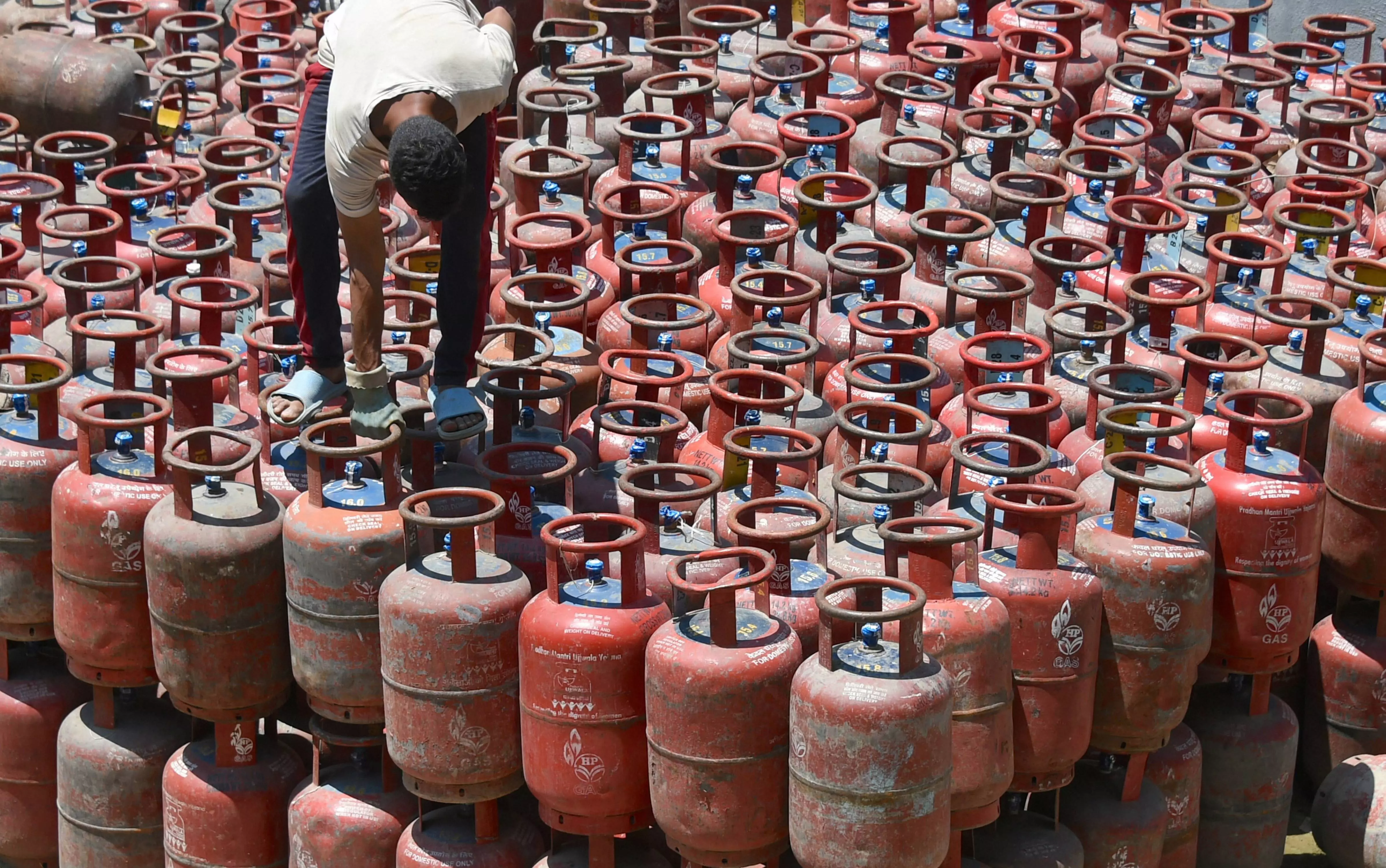
LPG and energy shortages have triggered a reverse migration of informal sector workers from Indian cities. Rising cooking gas prices are compelling migrant workers to return to their villages where they hope cheaper cooking alternatives like biomass will be available.
The optics of this “reverse migration” is different from the one induced by the lockdown during the Covid-19 pandemic. It is unfolding more slowly. Its scale may still be in tens of thousands as compared to the one to two crore workers who returned to their villages during the pandemic. It is also specific to sectors dependent on LPG such as textiles, foundries, power looms, gig work and kitchens.
The shortage of LPG has impacted daily-wage workers, gig workers and hospitality staff most acutely as their livelihoods depend on affordable cooking fuel. The government subsidises and regulates the price of the LPG cylinders (14.5 kg) for domestic use. However, the price of the 5 kg mini-cylinder as well as the 19 kg commercial LPG cylinder and the 47.5 kg bulk LPG cylinder are deregulated, and their prices left to be determined by the market. There are no subsidies at the two ends of the spectrum — for the poor not registered with the LPG supply companies and the commercial and industrial users.
While the price of the domestic LPG cylinder has increased by about Rs 60 from about Rs 853 (Delhi, February 2026) to Rs 913 (Delhi, March 2026), a significant portion of migrant workers in cities rely on the deregulated 5 kg LPG cylinder sold under various names such as Mini, Appu and Chhotu by the gas companies. Its price (officially about Rs 349) has nearly doubled because of shortages and black marketing. The price of the commercial 19 kg cylinder has gone up from
Rs 1,695 to Rs 2,085 officially and that of the bulk industrial use cylinder of 47.5 kg from Rs 42,000 to Rs 45,000. And then there are supply chain delays and black marketing.
Households who are not registered users of LPG are not protected by government regulation, the poorest are hit the most along with the informal sectors where they were self-employed or that employs them. Delays in the refilling of cylinders and soaring black-market prices have made their crisis worse. Migrant workers are reported summing up their hardship saying, “No gas, no work”.
While there is no definitive data available, anecdotal information suggests that the crisis is intensifying. Media reports from Mumbai claim that the inability to secure LPG cylinders has encouraged migrant workers from Bihar, Jharkhand and West Bengal to leave. A newspaper which tracked passengers on three trains departing Mumbai — the Kamayani Express to UP, the Rajgir Express to Bihar and the Howrah Mail to West Bengal — reported that nearly half the passengers claimed they were returning home due to the LPG shortage. Apparently, some of them are feeding their children biscuits because they could not afford to cook.
This is also true of textile workers in Surat, where media reports suggest that over 1,50,000 workers have left in the last one month. Even when work is available, some migrant workers said they were unable to live without cooking gas and that they would return only after the LPG supply improves.
In Telangana, where the hospitality industry employs nearly 50,000 workers from Bihar, UP, Assam and Karnataka, news reports say workers are beginning to return to their villages as eateries face uncertainties.
The impact of LPG shortage on the MSME sector is also significant. In Gujarat’s ceramic and tiles centre of Morbi, nearly 5,00,000 workers have reportedly been impacted with over 100 factories shutting down. In Khurja (UP), smaller pottery and ceramics units face reduced production and the prospect of closure.
Surat (Gujarat), India’s largest textile hub, is heavily reliant on LPG for dyeing and processing. It is reporting both factory shutdowns and reduced shifts. In the textile towns of Tiruppur (Tamil Nadu), Panipat (Haryana) and Varanasi (UP), textile units — knit-ware, carpets and weaving — are reeling under fuel price shocks and production disruption. In the automotive hubs of Pune (Maharashtra), Chennai (Tamil Nadu), Sanand (Gujarat) and Gurgaon/ Manesar (Haryana), auto component makers are reporting workers returning to their villages due to cooking fuel shortage.
In the steel clusters of Jamshedpur (Jharkhand), Bhilai (Chhattisgarh) and Rourkela (Odisha), where high temperature steel processing requires LPG/ propane use, the steel ministry has sought emergency intervention to ensure supplies. The condition of pharmaceutical hubs (Hyderabad, Baddi and Ankleshwar/ Vapi), medical devices and chemicals centres of Delhi NCR, Gujarat and Tamil Nadu, and the glass hub of Firozabad in UP are no better due to LPG shortages, which is building up pressure for reverse migration.
The government needs to have both an immediate and a long-term plan to control the volume of reverse migration and prevent it snowballing into a crisis.
In terms of immediate actions, the prices of the 5 kg mini and the 19 kg commercial LPG cylinders need to be regulated and subsidised. This will shield the migrant workers, street vendors, small eateries and small industries from extreme volatility in prices. Simultaneously, there needs to be an emergency special industrial quota for LPG intensive industrial hubs. In other words, the government ought to identify migration hot-spots and address their energy needs.
There may be yet room for public discussion about structural safety nets for migrant workers that were begun after the reverse migration during the pandemic. The post-Covid initiatives have been patchy and ineffective in schemes like the expansion of the Pradhan Mantri Garib Kalyan Anna Yojana for distribution of free foodgrains to migrant workers, announcement of Affordable Rental Housing Complexes for low-cost housing for migrant workers to re-enter the workforce, and skill development programmes.
There is a need to extend the “One Nation One Ration Card” to cover health insurance and pensions to ensure that benefits follow the migrants across India. Ayushman Bharat needs to be made fully portable for the migrants. Although the present dispensation may not be in favour of such schemes, there is perhaps a need to launch an Urban Employment Guarantee Scheme to cushion migrant workers from the shocks created by energy and other volatility. Most importantly, the government might consider direct income support to informal sector workers during such crises.
None of this will suffice, unless the government also builds energy resilience by diversifying sources of conventional energy and simultaneously developing and incentivising industry to move towards dual-fuel systems (like LPG plus biogas, electricity) to prevent complete shutdowns.
The writer is a senior journalist based in New Delhi