Secondly, the vulgar abuse stifles all legitimate debate. One after another, the debates in public spaces turn into crudefests of foul language, mired in disgusting words rather than proceeding with cogent thought
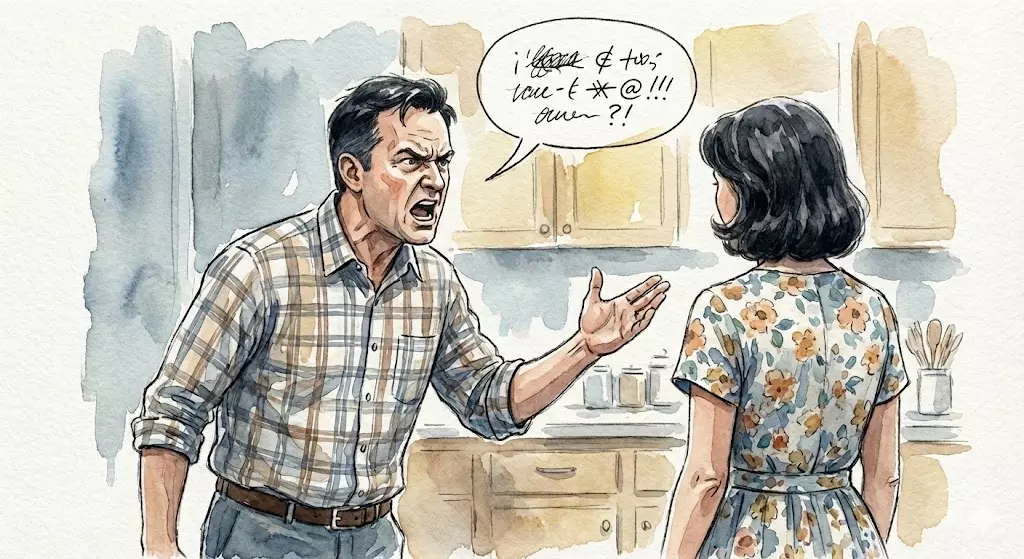
We are in a crisis of effective civil communication. There seems no longer to be any civilising influences left in public life. Stateswomen and men, public intellectuals and leaders who debated bitterly but civilly, without resorting to swearing and abusing, and who created and upheld standards of public discourse are no longer at hand to set an example. There is no decorum, no coda of behaviour that could serve as guardrails, either for public figures or for anyone in public spaces. This is the reason why the honourable home minister lets slip a colloquial abuse in the most august of houses in a democracy, and it merely raises smirks and laughter from the government benches. It is also the reason a cabinet minister uses a crude word when questioned by a journalist about deaths from contaminated water in his constituency and gets away unscathed. When public figures behave so, a frustrated citizen, otherwise educated and proudly sanskari, through a process of habituation, desensitisation and misdirected anger, feels entitled to let loose the vilest of abuses on meeting obstacles that thorn everyday life.
This trend of bad language at the slightest provocation everywhere, from parliament to political platforms, from streets to social media is very worrisome. There are several reasons for my concern. Firstly, the abuses are mostly, if not entirely, misogynistic and sexual, full of gendered violence and often, caste slurs. Whether it is a casual usage of the term for wife’s brother or explosive abuses relating to incest and rape, the abuse words involve and denigrate women, even if the target is a man. This verbal violence desensitises us and subtly inoculates us against the actual violence we see everywhere. These everyday incivilities, which are as much a violation of human dignity as a blow is of bodily integrity, accustom us to all sorts of attacks on self-respect, all indignities against personhood. An irate driver rolling down the window and shouting abuses for an out of turn overtaking, to a policeman slapping a citizen for exercising their right to protest are all in the continuum of this everyday verbal violence.
Secondly, the vulgar abuse stifles all legitimate debate. One after another, the debates in public spaces turn into crudefests of foul language, mired in disgusting words rather than proceeding with cogent thought. Shouting abuses, the cruder the better, takes the place of making arguments. Bystanders, initiated in the easy violence of bad language or fearful of the gutter-flow turning upon themselves, cheer or join the abusers and instead of a debate or a conversation a verbal fight fulminates. Increasingly on social media, people who are knowledgeable about their fields, those who put forth information or informed opinions and are clearly capable of engaging in arguments, answer abuse with crude abuse too. Whether they do it out of exasperation or feel they need to defend themselves with the same blade as the abusers, is irrelevant, the very fact that they do so signifies how the loss of standards of a civic discourse have eroded public conversations and how the ignorant and the malignant have been allowed to take such discussions down to the swear-swamps. This loss forms a vicious cycle with more and more people following the pattern, so much so that even well-intentioned questions are met with swear words.
Then again, as a lover of languages and sounds of words, as a believer in the beauty and potency of words, in the Shabd Brahm and Naad Brahm, I ache at the ugly sounds of these words that are often referred to by those who do not want to repeat them as “mother-sister abuses”. These abuses use relational terms, combine them with sex acts and manage to produce the vilest sound and meaning. The swear words in English, those that crudely refer to excreta, or sex-acts or private parts, come nowhere near the pain and repulsion these vulgarities in my mother-tongue inflict on ears. They are devoid of all creativity and i struggle to see any strength or emotional arousal or depth of feeling in them. They are merely, and uniformly, ugly. They do not carry the energy of Vir Ras, nor the fire of Raudra, they do not even revolt to produce Vibhatsa Ras, they repulse the very idea of Ras, the essential theme that beauty could reside in the most disgusting. They are a failure of language, of expression and expressiveness, they are the worst parts of us that exist in, and are revealed through, language. They are abhorrent and to be shunned and shun them we must, should we wish to preserve sense and civility in public discourse, and indeed public discourse itself.
In a world with urgent and severe problems, why am I talking about swearing and abuses? Is this a kind of self-indulgence on my part, a wish to stand apart, lecture and comment, to pontificate in the worst tradition of the privileged looker-on? Or does my deep dislike for the use of bad language and verbal violence come from a desire to restore some semblance of order to debates grown noisy, shrill and polarised? Is swearing ever defensible, for example when it is the only means of opposition available to the otherwise defenceless? How about when the words are used in camaraderie and not as abuse? While these are valid questions to mull over, I firmly and with finality plant my flag against abuses and against ugliness and violence of every hue.
Anukrti Upadhyay is a bilingual author with works published in Hindi and English. Her latest, a short story collection in Hindi titled Belly Dancer tatha Anya Kahaniyaan will be out shortly from Vani Prakashan