Sources contend that the new chairman is the first to have superseded the traditional board-level hierarchy.
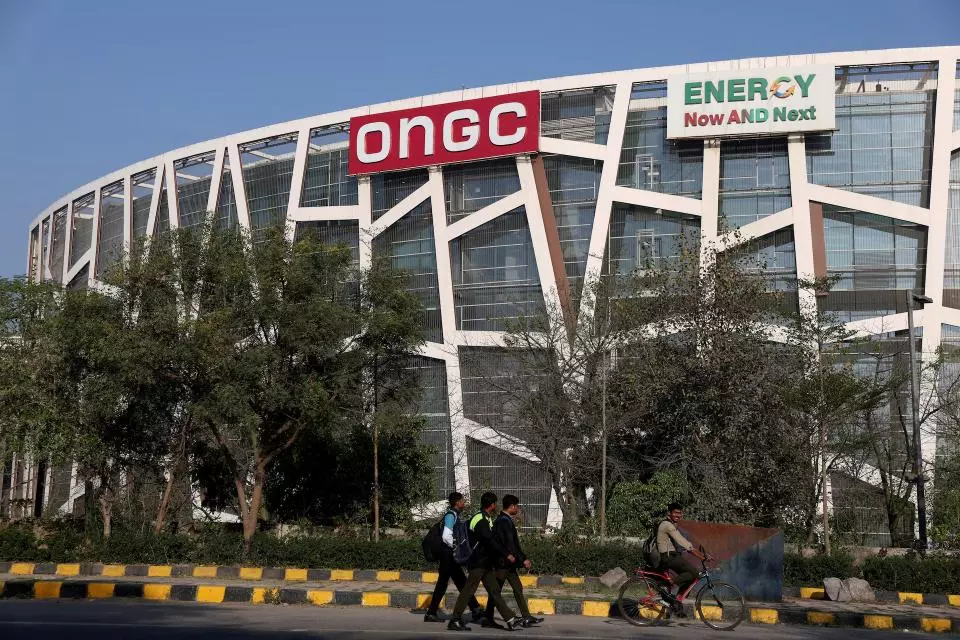
Two crucial issues cloud the appointment of Sunil Kumar as ONGC’s chairman. They contest the value of merit-seniority, and side-step existing rules for such selections. Although approved by the Appointments Committee of the Cabinet on October 22, 2026, the appointment superseded seniors within ONGC, and bypassed the PESB (Public Enterprises Selection Board)-based route. Mr Sunil Kumar is from Giridih (Jharkhand) and may take over on or after December 7, 2026. The first surprise is that Mr Kumar was chosen over two shortlisted ONGC insiders, Vikram Saxena, and Satyan Kumar, who currently sit on ONGC’s board of directors. Another candidate was Ranjit Rath, CMD, Oil India, a prominent PSU Maharatna. Mr Kumar, in comparison, is the asset manager of ONGC’s Mehsana Asset, which is among the firm’s highest-producing assets, and spans an area of 6,000 sq. km in Gujarat. Although he is designated as executive director, it is not a board-level position and ranks below Vikram Saxena and Satyan Kumar. Sources contend that the new chairman is the first to have superseded the traditional board-level hierarchy.
Then there are problems with the selection process. Critics allege that the eligibility norms were revised; for example, the maximum entry age was revised to 59. The initial three-year tenure was extendable by two years, with contractual appointment beyond 60. Yet another surprise: instead of the PESB, a search-cum-selection committee constituted by the petroleum ministry finalised the new name. The conventional mechanism was avoided or evaded. This is not merely a case of a selection of a chairman. ONGC produces nearly 75 per cent of domestic crude oil and natural gas. Mr Kumar needs to arrest lower output from ageing fields, revive production from Mumbai High, expand deepwater exploration, manage energy transition, and reduce import dependence. There are murmurs that an eminent oligarch played a prominent role in Mr Kumar’s appointment. Of course, there are questions of governance and institutions.
IAS or IPS: Centre first, states later
The elite who join the IAS and IPS know the drill. They initially work in the districts, and rise upwards to the states’ capitals and the Centre. But there are indications that the model is being turned. The new motto: Centre First, states later. It began with IAS and was extended to IPS. Earlier, an IPS officer began training at the grassroot level, as an assistant superintendent of police (ASP) under the district SP. As ASP, the officer looked at FIRs (First Information Reports), case diaries, old police records, and inputs from the local intelligence unit (LIU). The IPS officer indulged in late-night patrols in obscure and crime-prone areas. The principle was simple: learn the mechanics of policing before commanding it. This was not so with the 2025 IPS batch, 78th Regular Recruit (78RR), which had 151 trainees. It was instead attached to the Union (Central) Home ministry, after Phase-I training at the Sardar Vallabhbhai Patel National Police Academy. The ministry controls the overall IPS cadre, and oversees allocations, deputation, and service matters. In the case of the last batch of IAS, the officers did not start with exposures in state institutions. They were introduced to Union government's priorities. One is not sure if this new process will continue. If yes, how will it define duration, assessment mechanism, and future applicability? What is of significance is whether the changes in IAS and IPS imply administrative familiarisation, or beginning of a new top-down culture in civil services?
Doda burfi, diamonds and Diwali
Over the years, Diwali celebration in the bureaucracy has witnessed a transformation. Those humble boxes of sweets such as kaju katli, doda and pista burfi, and laddoos have vanished. Their place is taken by dry fruits, foreign chocolates, kitchen appliances, dinner sets, crystal crockery, and decorative home pieces. For some corporate givers, even this is not enough, and does not show their real appreciation. The new currency of Diwali gifts is diamonds. Different cities, especially Delhi and Mumbai, have distinct rules and norms of gifting. However, there is one unwritten rule, which relates to bureaucratic hierarchy. The higher the designation of a civil servant, which denotes the influence, the more exclusive and expensive is their Diwali. Of course, this is followed elsewhere — gifts reflect the importance of both the giver and receiver. Corporate houses have a way to grade and classify the bureaucrats. The officers fall into three clearcut categories: ones who make and influence policies, those who move the government files, and the rest who merely watch the processes. Each is allocated a gift, diamonds or dry fruits, based on their position on the hierarchical ladder. But it is not necessary that each agrees to become a receiver. Delhi’s former chief secretary Rakesh Mehta was a refuser. He kept the home's main door locked and instructed the security guard to inform visitors that Saheb was not home. He would not entertain unsolicited callers, or their offerings. In September 2026, Mehta committed suicide, which had no links with gifts. In his memory, we can possibly give him the best Diwali. There is a case to bring back the joy and innocence of kaju katli, and victory of light over darkness, not diamonds over discretion. Happy Diwali to everyone.